The Chicago issue
Gold Coast, Chicago: mansions, martinis and the lakefront life
Chicago’s Gold Coast is where Gilded Age facades, Oak Street luxury and a beach at the foot of the Magnificent Mile still share the same polished, walkable few blocks.

By Marisol ReyesChicago's makers, block by block
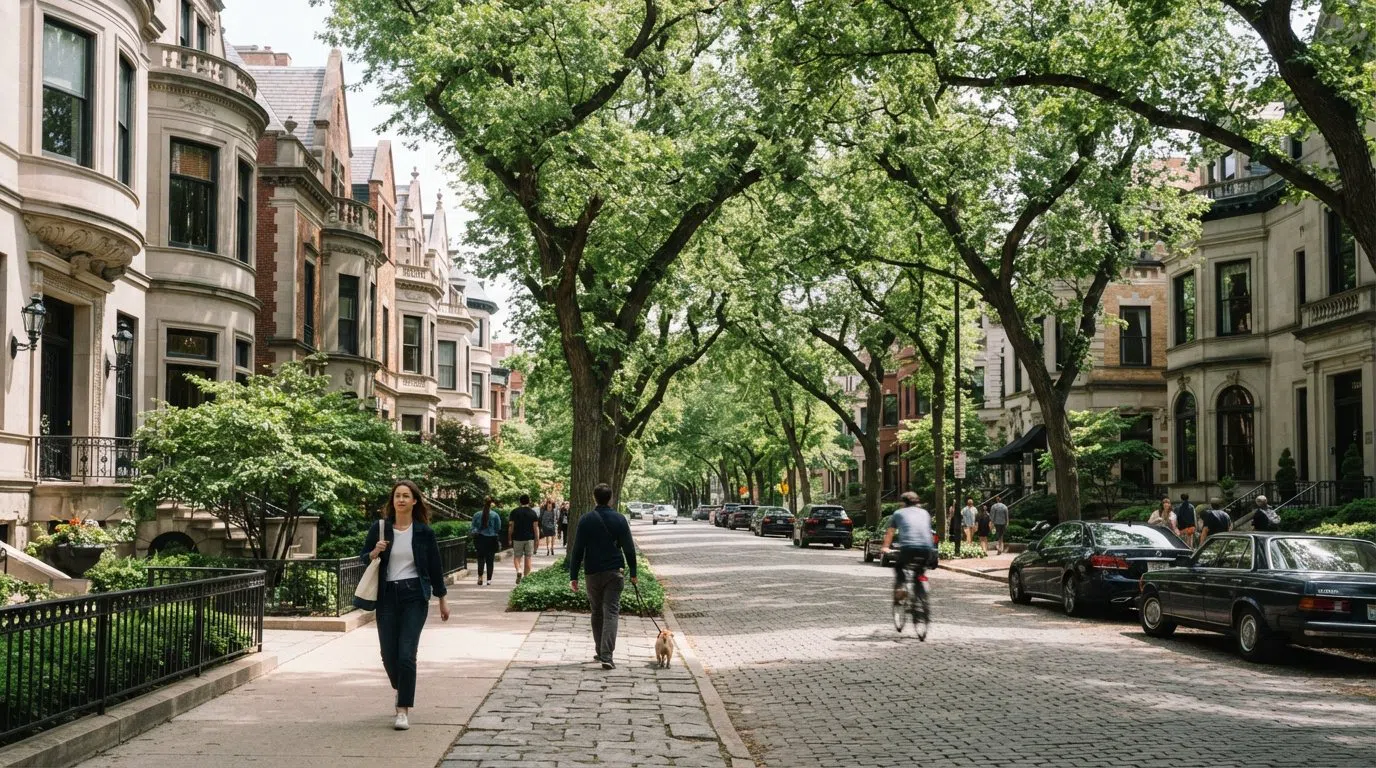
Potter Palmer built his turreted limestone castle on swampy lakefront nobody wanted in 1882, and Chicago did what Chicago so often does: it followed the money north and made a neighborhood out of the wager. That is the Gold Coast in one sentence and, honestly, in one mood. The blocks here are short, the sidewalks are tidy, and the whole district feels like it has been pressed flat and creased just so — mansions, boutiques, steakhouse windows, a sliver of beach, then the lake, all within a ten-minute walk if you’re moving with purpose.
What the Gold Coast is known for
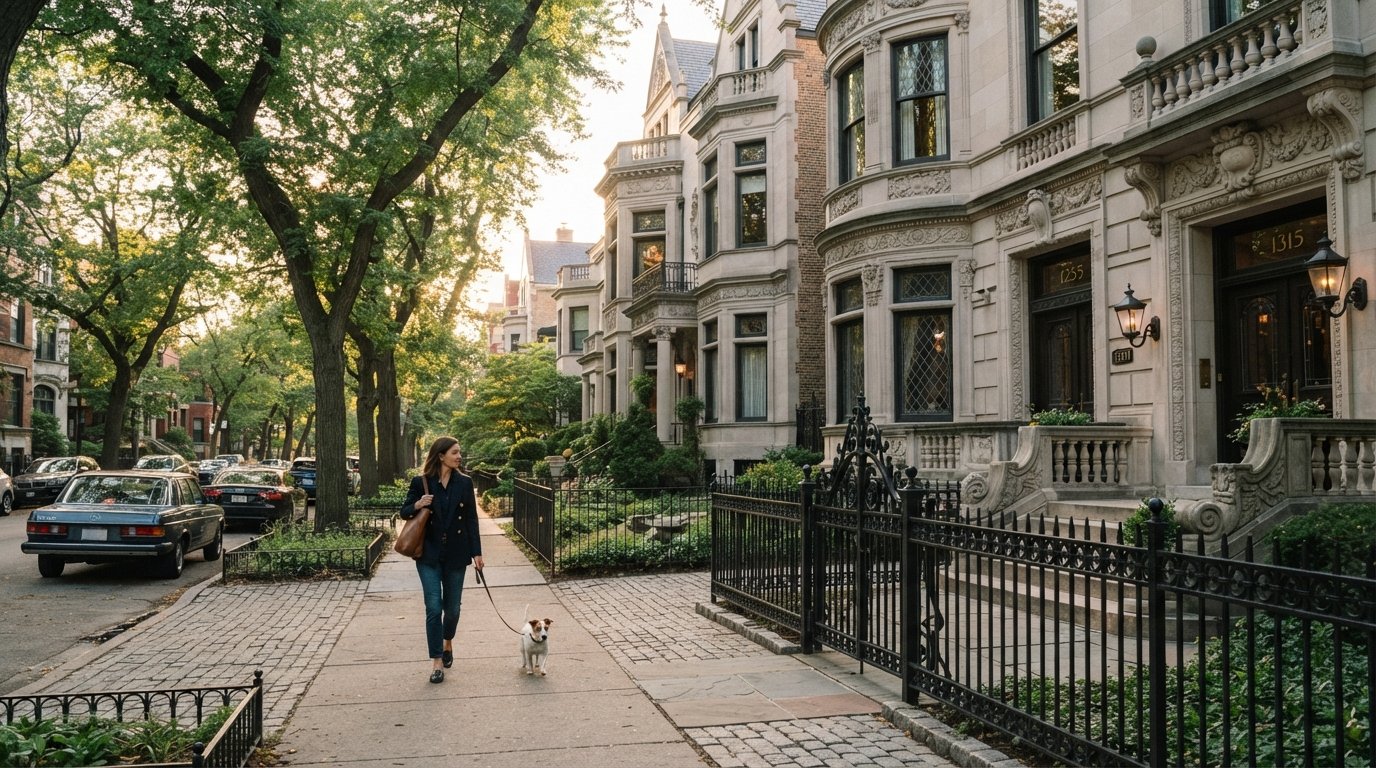
The Gold Coast is Chicago at its most polished, and it knows it. Its calling card is not one thing but a trio: mansions, money, and the lake. The neighborhood grew from Palmer’s audacity on the swampy edge of the city into the enclave where meatpackers, merchants, and press barons built their homes within a couple of decades. That origin story still hangs in the air here. You feel it most strongly on Astor Street, where the architecture is so intact it can make you slow down without meaning to. Queen Anne, Georgian Revival, Romanesque, Tudor, a little mid-century modern — the styles stack up house by house like a very serious collection.
The best free walk in the neighborhood is the Astor Street District, and it is the kind of street that rewards a patient eye. At 1365 N. Astor, the Charnley-Persky House sits at Astor and Schiller, an 1891–92 Adler & Sullivan commission with a young Frank Lloyd Wright on the drafting table. It is now the headquarters of the Society of Architectural Historians and open for tours, which feels exactly right for a house that looks as if it has been waiting for a careful visitor. Nearby, the Patterson-McCormick Mansion keeps the block’s old-money gravity in place, and a little farther along North State Parkway, the former original Playboy Mansion — a James Gamble Rogers house from 1899 — stands as another reminder that the Gold Coast has always specialized in grand addresses and private lives.
Down the hill, the neighborhood changes tone. The residential hush gives way to commerce, and the lake starts to pull the eye. Oak Street is the city’s luxury row, and it earns the comparison to Rodeo Drive not by hype but by density: three tree-lined blocks of designer windows and discreet doors, all very polished, all very expensive. A block south, the Magnificent Mile brings the bigger retail energy, but the Gold Coast’s version is more intimate, more appointment-only, more likely to hand you a glass of water while you consider a fitting room. That’s the whole point here: this neighborhood does not perform ease. It simply assumes it.
Plan your Chicago trip
Live prices from our booking partners.
Free cancellation on many rooms. We may earn a commission when you book.
Where to eat & drink
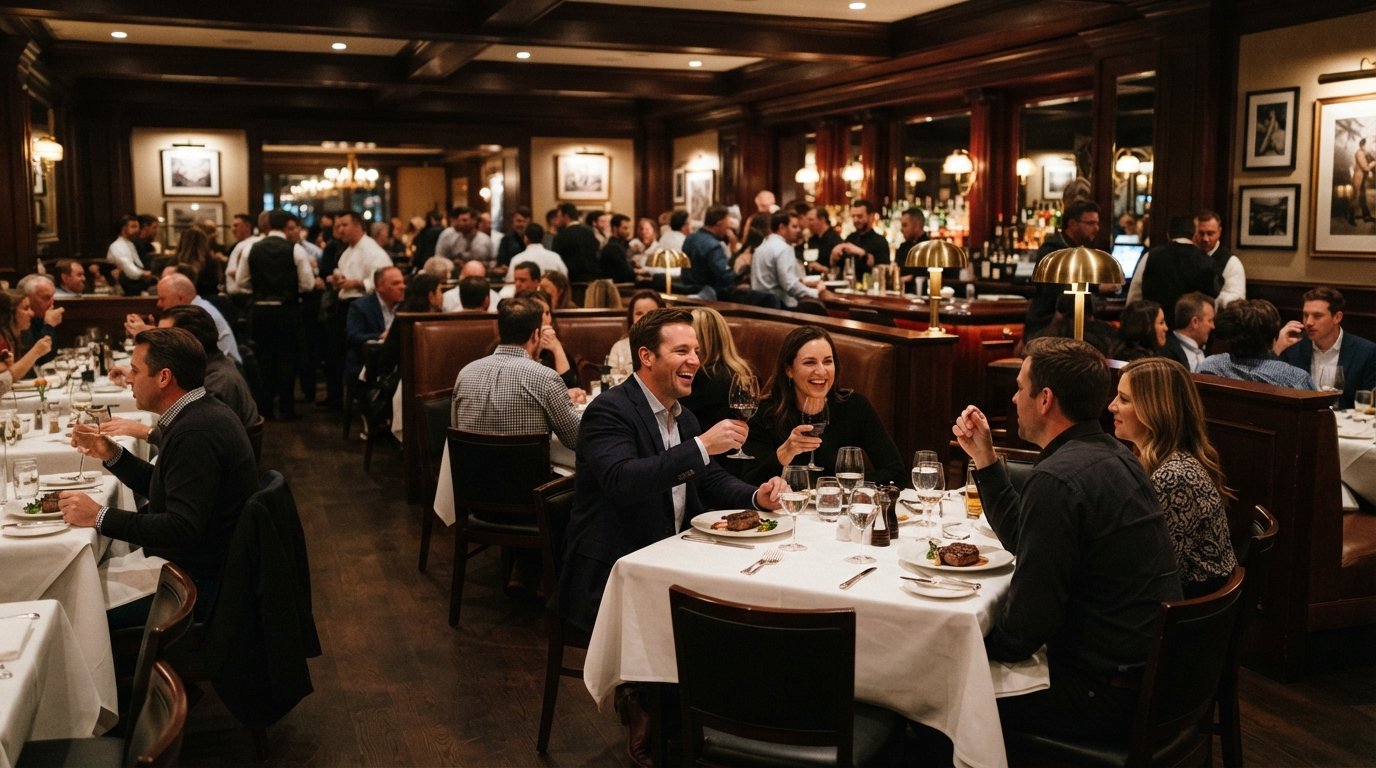
Dining in the Gold Coast is a study in confidence. This is steakhouse country, and the room that still feels most like the neighborhood’s center of gravity is Gibsons Bar & Steakhouse on Rush Street. Open since 1989, it remains the place to go when you want a slab of Gibsons Prime Angus, a bar scene that hums with seeing-and-being-seen energy, and, if you’re lucky, the sort of person who might have arrived in a Bears jacket or a tailored coat. The dessert is famously hubcap-sized, which is exactly the sort of detail that tells you the restaurant understands both appetite and theater.
A few doors away, Hugo’s Frog Bar & Fish House works the same old-school room from a seafood angle. If Gibsons is for the dry-aged steak mood, Hugo’s is for frog legs and crab cakes, the sort of meal that lets you stay in the neighborhood’s polished register without repeating yourself. It is part of the Gold Coast’s quiet genius that the dining options are not varied in a casual way; they are varied in a tailored way. You can have steak, seafood, modern Italian, Vietnamese-French, or lunch beneath a glass atrium, but you are never far from a white tablecloth or a well-set bar.
Maple & Ash, at 8 W. Maple Street, pushes the Gold Coast’s appetite for spectacle a little further. Danny Grant’s wood-fired cooking arrives in a room that is deliberately over the top, chandeliered and gleaming in a way that feels almost mischievous for Chicago. The fire-roasted seafood tower — lobster, king crab, scallops, clams, all brought tableside — is the signature move, and the wine list has its own swagger. It is a restaurant that understands that in this neighborhood, dinner is never just dinner; it is also a declaration.
Adalina, on N. State Street, answers that declaration with a more modern kind of polish. Chef Soo Ahn, a Michelin-starred Top Chef alum, has made it the neighborhood’s modern-Italian benchmark, with housemade pastas and a bone-in veal parmigiana that sound like they should be heavy but land with precision. If the Gold Coast has a culinary middle ground — and it has very little of one — Adalina is the place where formality and comfort shake hands.
Le Colonial, now in a third-floor space on Oak Street with an all-season terrace, brings another layer to the neighborhood’s dining story. The restaurant’s French-Vietnamese menu — shrimp beignets, grilled lemongrass dishes — is matched to a 1920s colonial setting that feels transportive without becoming costume. It is one of those rooms that makes you glance at the terrace and think, yes, this is exactly where a long lunch should happen.
For a softer landing, 3 Arts Club Café hides inside the Restoration Hardware gallery on Dearborn, under a soaring glass atrium that makes lunch feel slightly theatrical even when you order the truffled grilled cheese. And if the evening turns less formal, Pippin’s Tavern near the Chicago Avenue end keeps an ambitious bar-food kitchen going late, which matters more here than it would in a neighborhood with a dive-bar ecosystem. The Gold Coast does not do cheap and it does not do rough around the edges. It does, however, do a very good late-night kitchen when the martinis have run long.
Going out
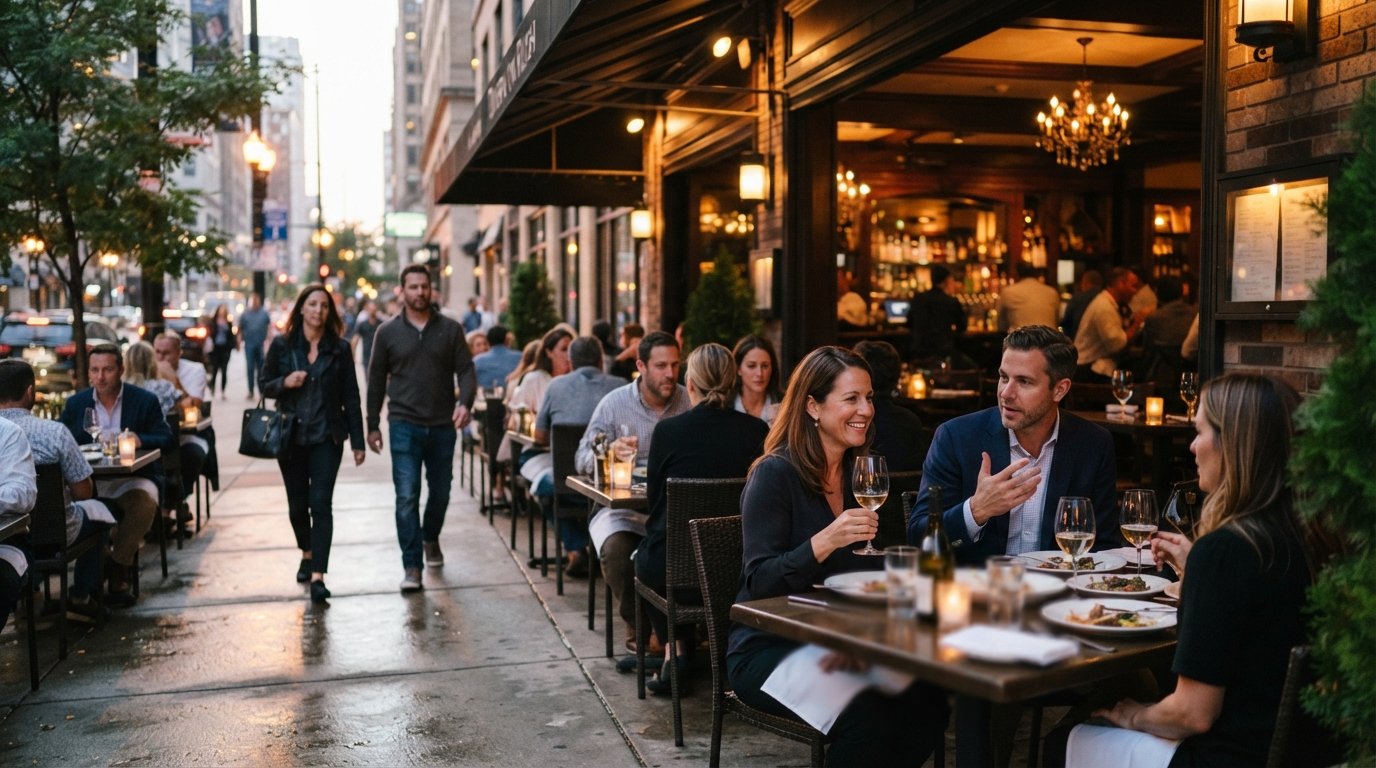
Nightlife in the Gold Coast does not roar; it glows. The center of the action is the small wedge where Rush, State, and Cedar meet, the so-called Viagra Triangle, where older, well-heeled crowds fill patios on summer evenings and the sidewalks become part of the room. It is an area built less for clubbing than for lingering — a long dinner, a second drink, a little people-watching, then a stroll home under the streetlamps. If you want the city at 4 a.m., you are in the wrong neighborhood. If you want a room with good lighting and the sense that everyone has somewhere to be tomorrow, this is your place.
Tavern on Rush sits squarely in that orbit. Reopened in autumn under the Stefani group, it has a bigger room and the same prime sidewalk people-watching that has always made this block feel like a stage set for Chicago social life. Luxbar, on the same block, is the more casual option — burgers and beers, less ceremony, still very much part of the Gold Coast’s evening circuit. And then there is Gibsons again, because in this neighborhood the same address can belong to both dinner and the after-dinner crowd.
If you want the most atmospheric drink in the neighborhood, head downstairs into Coq d’Or in the Drake Hotel. The room opened on December 6, 1933, the day Prohibition ended, and it still carries that history in the wood paneling, red leather, and low light. Live music on weekends gives it a little extra pulse, but the real pleasure is simply being in a room that has remembered how to hold a night for decades. The Gold Coast may be polished, but Coq d’Or gives it a little old Chicago smoke at the edges.
Things to do
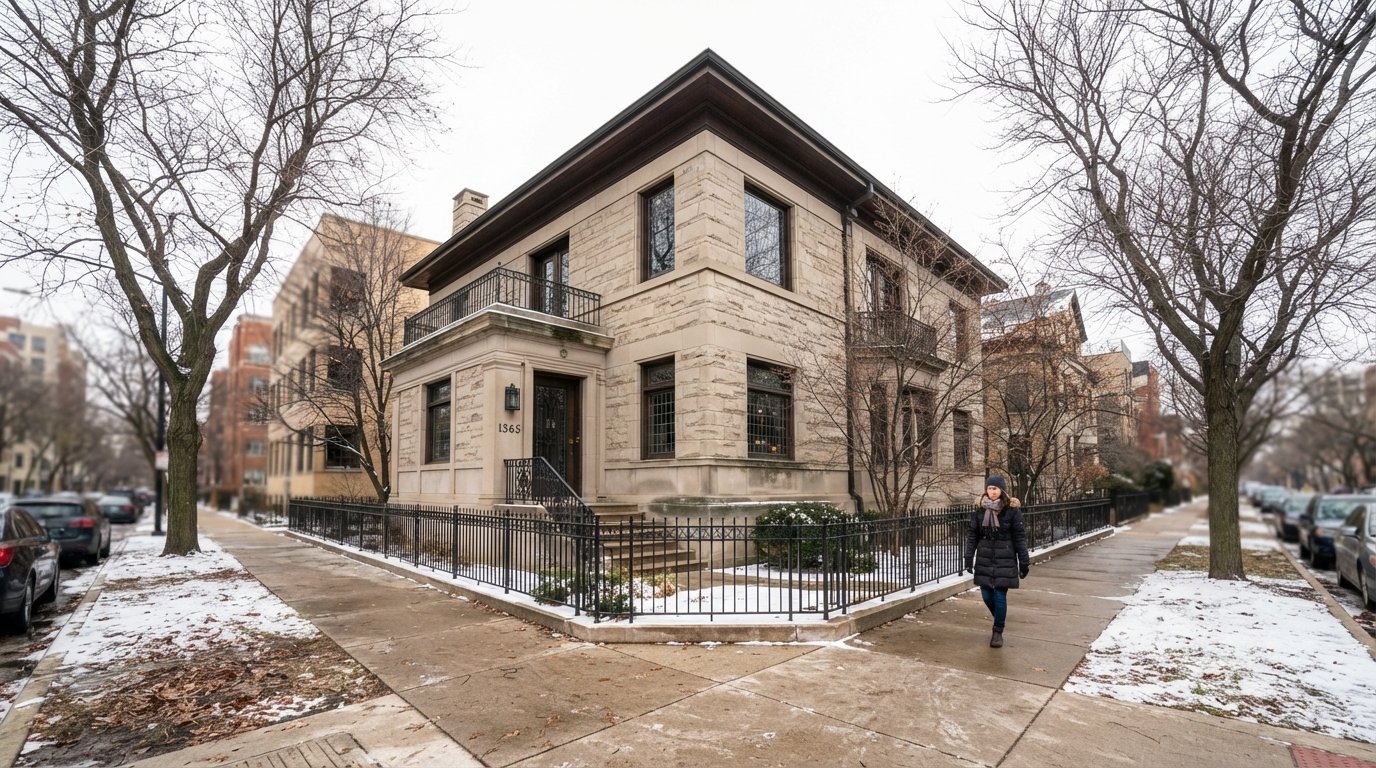
Start with a slow walk up Astor Street. This is the neighborhood at its most legible and its most beautiful, a free self-guided walk through a landmarked district where the houses feel less like individual objects than like chapters in a very expensive family history. The Charnley-Persky House is the one to step inside if you want the architecture to speak directly: Adler & Sullivan, 1892, with Frank Lloyd Wright in the background before he became the main event. Around the corner and up the block, the original Playboy Mansion on North State Parkway and the Patterson-McCormick Mansion keep the narrative of wealth and taste in view. It is a walk that makes you aware of how much Chicago once expressed itself through domestic architecture.
A block west, the International Museum of Surgical Science gives the Gold Coast a wonderfully strange counterpoint. It sits inside the 1917 Eleanor Robinson Countiss House, a lakefront mansion designed by Howard Van Doren Shaw to echo Marie Antoinette’s Petit Trianon at Versailles. That alone would justify a visit, but the museum also runs through four floors of exhibits that move from ancient trepanning to X-rays. It is a reminder that the Gold Coast is not only about beauty and wealth; it is also about the city’s appetite for collecting, preserving, and displaying unusual things in very fine buildings.
On the western edge of the neighborhood, the Newberry Library offers a different kind of pause. It is free, founded in 1887, and packed with rotating exhibits and research materials, facing Washington Square Park. The park itself, Chicago’s oldest, is better known as Bughouse Square, the historic free-speech soapbox where the city argued with itself from the 1910s to the 1960s. That tradition still lingers in the annual debate held there. It is one of my favorite Gold Coast adjacencies: a wealthy neighborhood that can still look across the street at public argument and make room for it.
And then there is the lake. Oak Street Beach, a downtown crescent of sand at the foot of the Magnificent Mile, is the neighborhood’s most surreal sight. The skyline rises behind the sand, lifeguards keep watch, volleyball games flicker into view, and the whole thing feels like a city briefly deciding to become a resort. On hot days, that contrast is the point. On cooler days, the beach is still worth the walk for the view alone.
Don’t miss in Gold Coast
The Astor Street Historic District
Oak Street Beach
The Charnley-Persky House
Shopping & markets
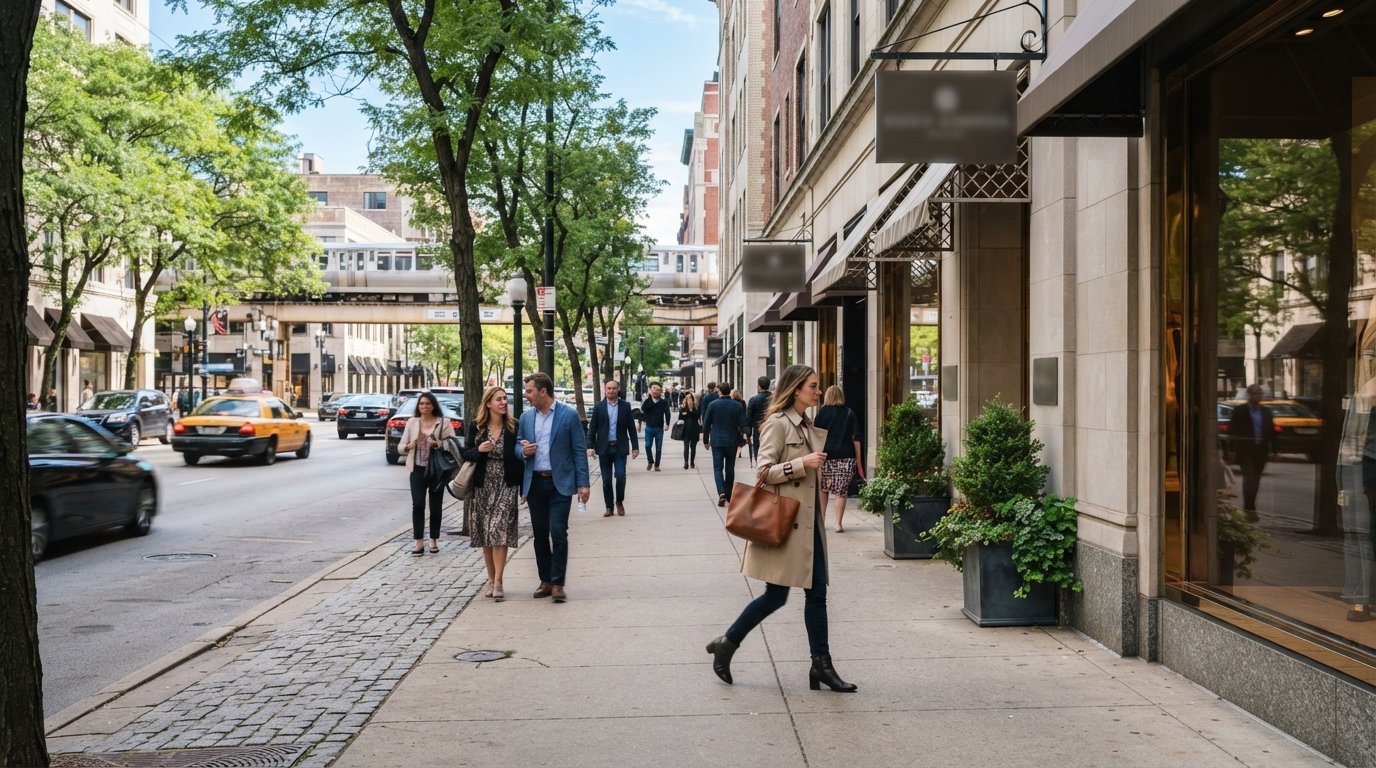
If you come to the Gold Coast to shop, you are coming to Chicago’s luxury-shopping capital. Oak Street is the address everyone means when they say that the neighborhood has the city’s most serious retail. The three tree-lined blocks between Michigan Avenue and Rush Street hold a run of flagships that reads like a luxury roll call: Hermès, Chanel, Prada, Dolce & Gabbana, Bottega Veneta, Tom Ford, Loro Piana, Christian Louboutin, Moncler, and jewelers including Van Cleef & Arpels, Graff, Harry Winston, and Cartier. The whole street has the composed hush of a place where people arrive by appointment and leave with glossy bags tucked carefully under the arm.
The nice surprise is that the shopping district feels intimate rather than overwhelming. It is quieter than the Magnificent Mile, which sits just to the south with its department-store energy and broader brand mix. That difference matters. Oak Street is where the serious shopping happens, and it shows in the pace: fewer crowds, more attention, more room to breathe between purchases. One block over, Rush Street extends the fashion conversation with names like Celine, Dior, and Versace, so the whole area becomes a kind of open-air luxury corridor.
For something that costs nothing, the Restoration Hardware Gallery on Dearborn is worth a wander even if you are not furnishing a house. The converted 1914 building is grand enough to justify the detour on architecture alone, and the glass-atrium café inside makes the place feel like a retail cathedral with a lunch service. There is no street-market tradition here, no stalls, no browse-and-bargain ritual. The Gold Coast trades in doormen, fitting rooms, and polished thresholds.
Where to stay in the Gold Coast
This is one of the best-located and most luxurious places to sleep in Chicago, and the reason is simple: you can walk to the lake, the Magnificent Mile, River North, and the Loop, then come back to streets that still feel calm after dark. The Drake is the grande dame, built in 1920 where Michigan Avenue meets Lake Shore Drive, with old-world afternoon tea and Coq d’Or downstairs. The Waldorf Astoria Chicago, tucked on a quiet courtyard just off Rush Street, is the polished modern-luxury choice, with a Forbes-rated spa. Thompson Chicago brings a more design-forward, contemporary feel a couple of blocks in, while the Ambassador Gold Coast — formerly the Ambassador East and once home to the legendary Pump Room — trades on nearly a century of celebrity history after a 2025 refresh.
The sweet spot is the cluster of blocks around Rush, State, and Oak, where you are steps from the shopping and dining and still only a short walk from the beach. Stay farther north toward Astor Street and the mood gets calmer and more residential, though you give up some convenience. Budget beds are genuinely scarce here, and that is part of the territory. Travelers watching costs often base themselves in River North or Streeterville and come into the Gold Coast for the day. {{HOTELS}}
Getting around
The Gold Coast is compact enough to move through on foot without thinking too hard about it. You can cross it end to end in about twenty minutes, and the Magnificent Mile, River North, and the lakefront are all a short stroll away. That is one reason the neighborhood works so well as a base: you can spend a whole day here without ever feeling trapped by transit, but you are also close enough to the rest of central Chicago that the city opens up easily.
The nearest CTA L stop is Clark/Division on the Red Line, about a five-to-ten-minute walk from most of the neighborhood, with a direct ride south to the Loop or north to Wrigleyville. Buses do a lot of the connective work: the #36 Broadway runs along Clark and State through the heart of the area, the #151 Sheridan hugs the lakefront on Michigan Avenue and Lake Shore Drive, and the #22 Clark heads north to Lincoln Park. Rideshare and taxis are plentiful, especially around Rush Street at night.
Driving is the weak point. Street parking is scarce and pricey, and most hotels charge a steep valet rate, so a car is more hindrance than help. From the Loop it is about a 10-minute cab ride or 15 minutes on the Red Line. For the airports, allow roughly 30–45 minutes by cab or rideshare to O’Hare, or a Red Line-to-Blue Line transfer, and a similar or slightly shorter run to Midway, traffic depending.
The Gold Coast is not the part of Chicago that surprises you with grit or edge. It is the part that reminds you how deliberate the city can be when it wants to look composed. Mansions on Astor, martinis on Rush, designer windows on Oak, sand at Oak Street Beach, and a hotel bar that has been holding the evening since 1933 — the neighborhood keeps its promises, and does so in a very good suit.
Gallery
Gold Coast in pictures
Gold Coast — your questions
Is the Gold Coast a good area to stay in Chicago?
Yes. It is one of the city’s best bases for a first visit, a romantic trip, or a shopping-and-dining weekend. You can walk to the Magnificent Mile, Oak Street Beach, River North, and the Loop, and the streets feel safe and pleasant day or night. The trade-off is cost: hotels, restaurants, and shops skew expensive, so budget travelers often look to nearby River North or Streeterville instead.
Is the Gold Coast safe?
Very. It is among the most affluent and heavily patrolled parts of central Chicago, and it is comfortable to walk at night, including around the Rush Street bars. Use the usual big-city common sense, but there is no area in the Gold Coast that visitors need to avoid.
What is the Gold Coast known for?
Three things: money, mansions, and the lake. The neighborhood grew into one of Chicago’s wealthiest enclaves, and you still see that legacy in the Astor Street mansions, the Charnley-Persky House, and the original Playboy Mansion. Today it is also known for Oak Street luxury shopping, classic steakhouses like Gibsons and Maple & Ash, the Rush Street bar scene, and Oak Street Beach at the foot of the Magnificent Mile.
What is the best way to explore the Gold Coast?
On foot. The neighborhood is compact, and the best experience is a slow walk from Astor Street to Oak Street and down toward the lake. That lets you take in the architecture, shopping, dining, and beach without worrying about parking or transit.