 In this area
The Chicago issue
Lincoln Park, Chicago: Where the Park Sets the Pace
A walkable North Side neighbourhood of free zoo mornings, lakefront air, serious restaurants and calm, tree-lined streets.

By Marisol ReyesChicago's makers, block by block
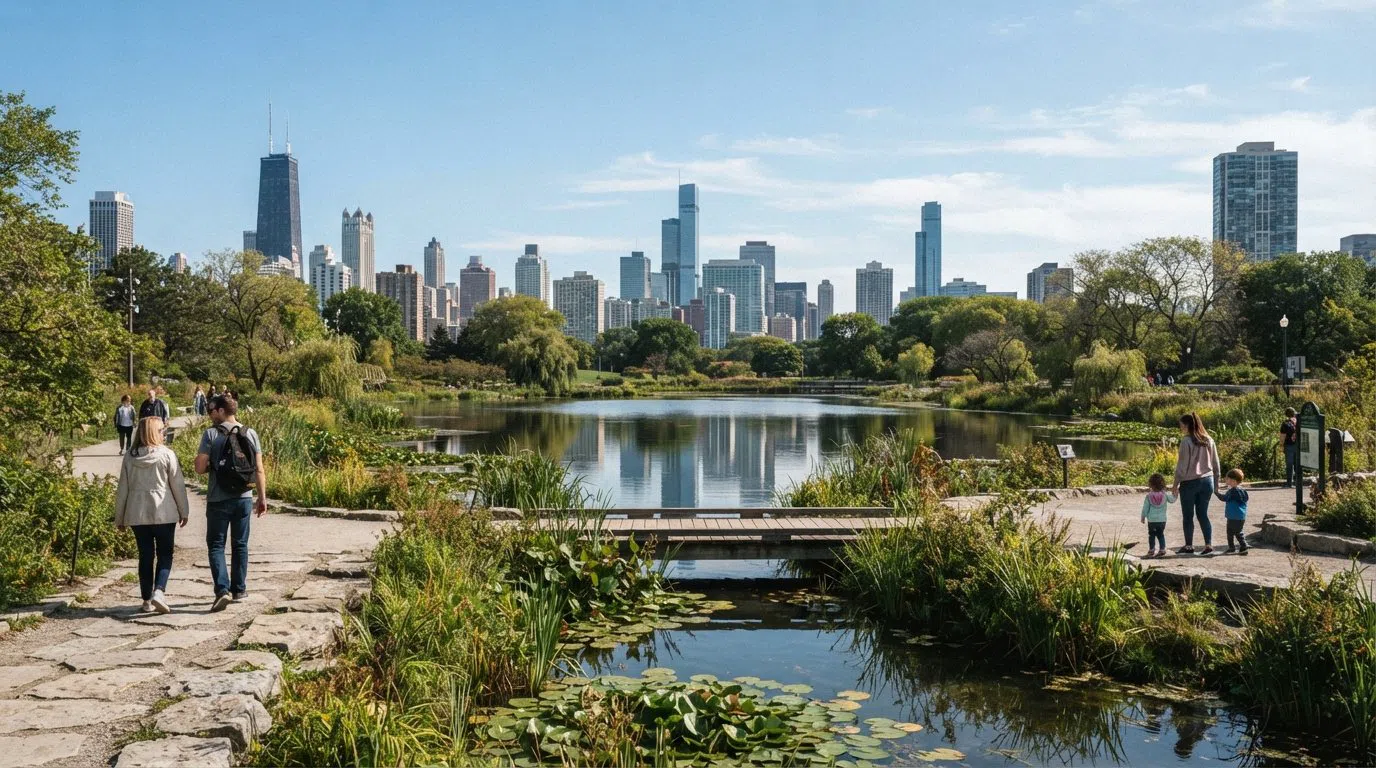
Lincoln Park announces itself in small, democratic pleasures: the free zoo opening its gates at 8am, the glasshouse warmth of the conservatory a few minutes away, and then the shock of the beach, where downtown towers stack up behind the sand before lunch. That sequence tells you almost everything. This is Chicago at a gentler volume — 1,200 acres of parkland wrapped around brownstone streets, a DePaul campus, and a dining scene that can go from pan pizza to tasting menus without ever losing its composure.
What Lincoln Park is known for
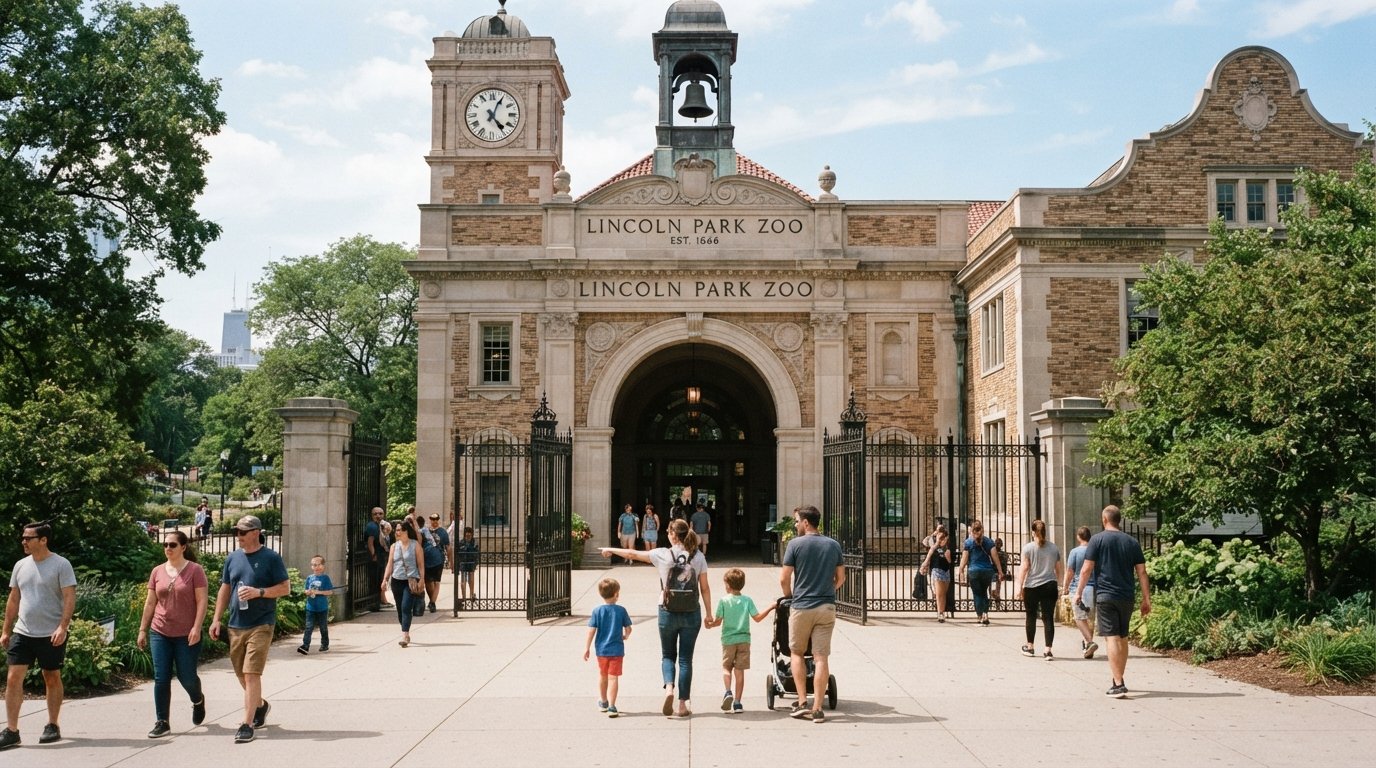
The name does double duty here: it is the neighbourhood and the park, and the park is the reason people keep coming back. Lincoln Park Zoo has been free and open 365 days a year since 1868, which still feels almost mischievous in a city where so many marquee experiences come with a line and a ticket. The lions now live in the restored Pepper Family Wildlife Center inside the historic Great Hall, and that detail matters because Lincoln Park is full of these small negotiations between old Chicago and the city it has become.
The zoo is only the first chapter. A short walk brings you to the Lincoln Park Conservatory, all glass and humidity and orchids, a place that can turn a grey day into something almost tropical. Then there is the Alfred Caldwell Lily Pool, hidden and quiet, a Prairie-style water garden that feels like a pocket of stillness tucked behind the more obvious attractions. The Nature Boardwalk shifts the mood again: a re-naturalised prairie-and-wetland pond designed by Studio Gang, with turtles, frogs and herons showing up as if the city had decided, just for a while, to let the marsh have the upper hand.
Push east and the neighbourhood opens to the lake. North Avenue Beach gives you the classic Chicago postcard — skyline behind the sand, water in motion, joggers and cyclists threading the Lakefront Trail. That trail is the great democratic spine of the area. It is where Lincoln Park stops being a residential address and becomes a way of moving through the city on foot, by bike, or simply at the speed of a long morning.
Culture sits comfortably alongside the green space. The Chicago History Museum at Clark and North holds the city’s story from the Great Chicago Fire onward, including actual wreckage from the blaze, which is the sort of fact that can make the whole neighbourhood feel more legible. The Peggy Notebaert Nature Museum brings a different kind of wonder, with its Judy Istock Butterfly Haven and more than a thousand free-flying butterflies. And then there is Steppenwolf Theatre on Halsted, the ensemble that launched John Malkovich and Gary Sinise and still keeps the area’s intellectual pulse from going soft.
Plan your Chicago trip
Live prices from our booking partners.
Guests & rooms
Free cancellation on many rooms. We may earn a commission when you book.
Where to eat & drink
For a neighbourhood that looks so settled, Lincoln Park eats with surprising force. At the top of the pyramid is Alinea, Grant Achatz’s landmark tasting-menu restaurant at 1723 N Halsted, still one of the country’s most ambitious meals even after slipping from three to two Michelin stars in the November 2025 guide. Alinea is the kind of place that reminds you Chicago does not only do generous portions and old-school comfort; it also does precision, theatre and nerve. A few steps away, Boka turns out creative seasonal American cooking under a leafy canopy on Halsted, which is a very Lincoln Park sentence in itself: polished, grounded, and just a little bit lush.
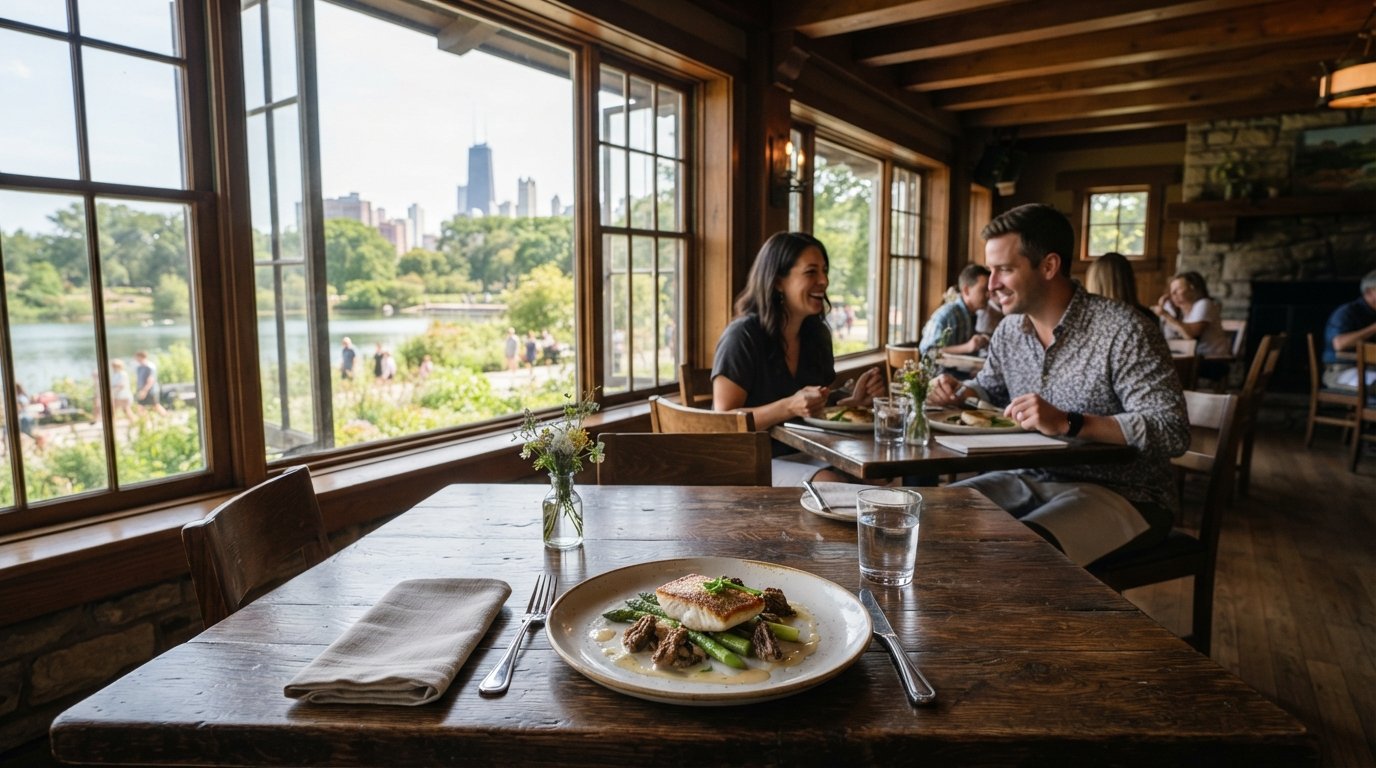
Inside the park, North Pond is the meal that seems to belong to the landscape. The six-course seasonal menu from chef César Murillo leans Latin and Asian, with produce from the restaurant’s own rooftop garden, all served in an Arts-and-Crafts warming house overlooking the water. It is the sort of room that makes you lower your voice without being told.
Galit, on Lincoln Avenue, brings a different kind of confidence: coal-roasted Middle Eastern spreads, silky hummus and a Michelin star, with a prix fixe that runs around $98–$105. Next door, Cafe Yaya keeps the same team’s voice going in a more casual register, with shakshuka buns, date cake and baklava. That pairing says a lot about how Lincoln Park eats now. The neighbourhood likes range, but it likes consistency too.
For the daily rhythm of the place, the reliable names matter just as much. Pequod’s Pizza on Clybourn does the definitive Chicago pan pizza, the kind with a caramelised ring of cheese around the crust that makes people argue in a pleased, almost ritual way. Café Ba-Ba-Reeba! on Halsted has been pouring sangria and sending out shareable tapas since the 1980s, and it still feels like a room built for long conversations. Del Seoul on Clark built its following on Korean short-rib tacos and kimchi fries, while the Athenian Room on Webster remains a decades-old Greek room known for kalamata chicken and fries. If your idea of a proper evening is candlelight and live guitar, Geja’s Café is the survivor that keeps that mood alive.
Brunch, the local sport
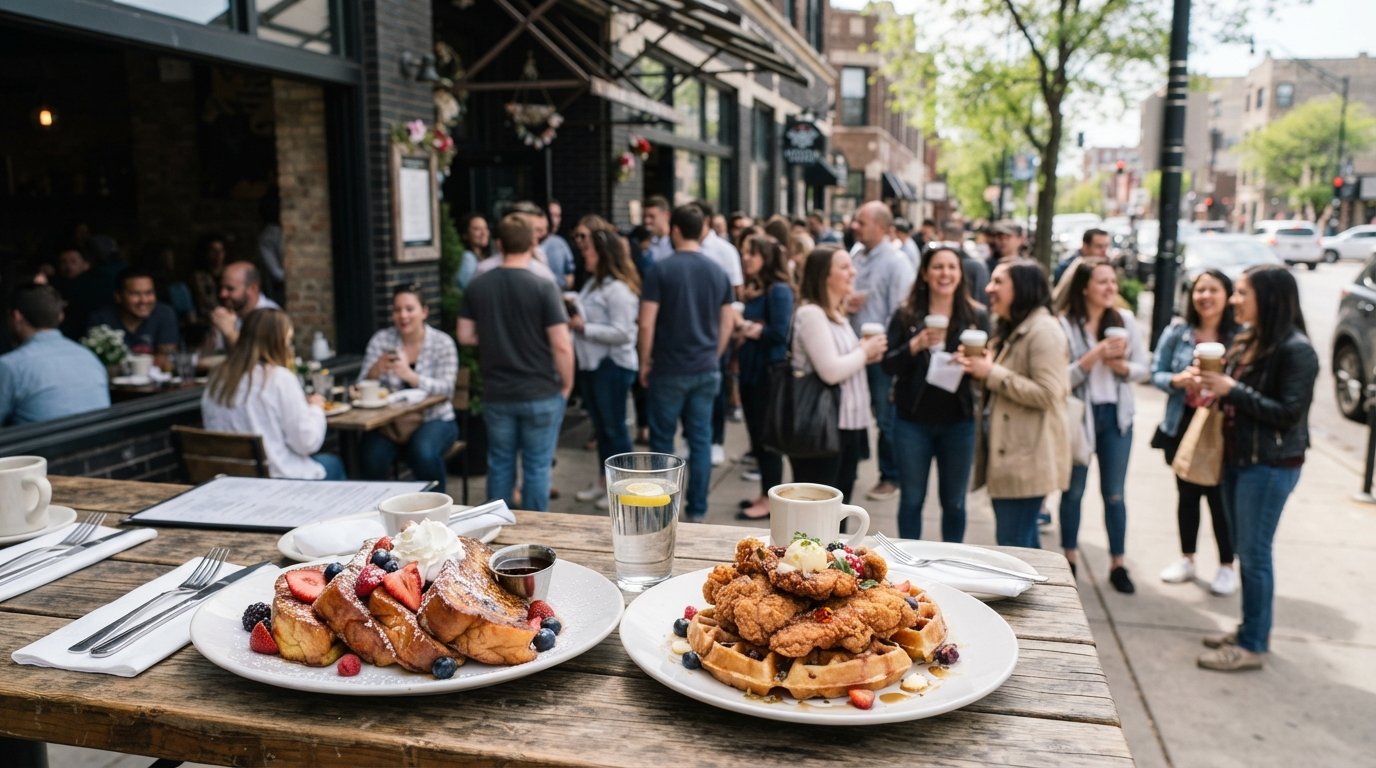
If Lincoln Park has a weekend religion, brunch is it. Batter & Berries at 2748 N Lincoln Ave is the pilgrimage stop, and the French Toast Flight — four rotating slices in strawberry, blueberry, lemon and caramel — has the sort of reputation that makes people plan around a queue. There is chicken and waffles too, and the place is BYOB, which only adds to the sense that the whole room has shown up ready to make a morning of it.
Summer House Santa Monica on Halsted leans bright and Californian, with an in-house bakery counter and a sunlit dining room that seems designed to make winter feel negotiable. Floriole Cafe & Bakery, meanwhile, is the pastry stop that rewards the detour: proper French canelés and gateau basque, the kind of baking that is modest in tone and exacting in execution. That is the through-line here. Lincoln Park brunch is not about spectacle so much as calibration — food that is dependable, well made and best enjoyed unhurried, ideally before a walk to the lake to earn it.
Going out
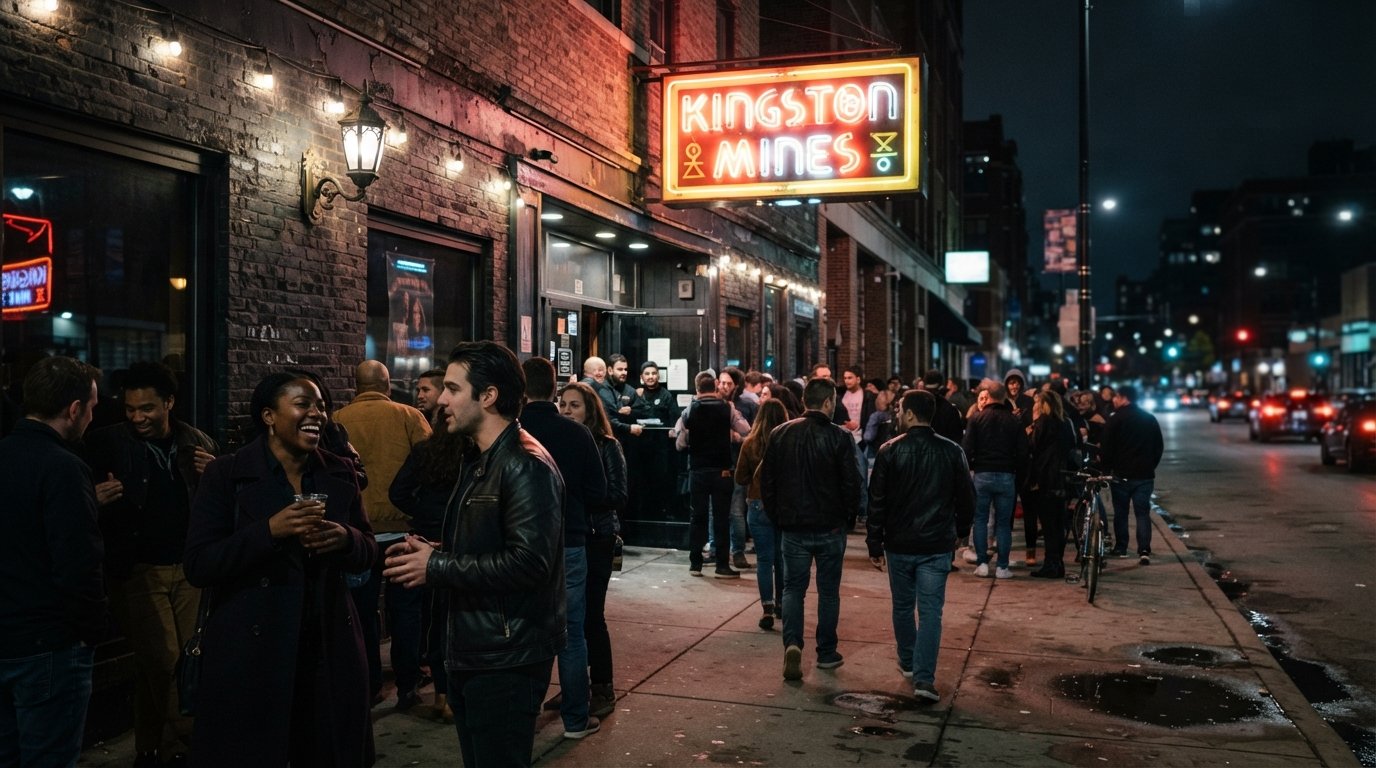
Nightlife in Lincoln Park is not trying to out-River North River North, and that restraint is part of its charm. The big exception — and the place that gives the neighbourhood its late-night backbone — is Kingston Mines at 2548 N Halsted, Chicago’s oldest and largest continuously running blues club, open since 1968. Two stages alternate so the music never stops until 4am, or 5am on Saturdays, and Doc’s Kitchen in back sends out catfish and wings for the people who are staying until the room thins out. Cover runs about $15–$20, which feels almost quaint for a room with this much history and stamina.
Beyond that, the neighbourhood’s nights are less about the club and more about the drift: student bars near the DePaul end of Halsted and Lincoln, cocktail rooms, wine bars, the occasional nightcap after a show. Park West is the beloved mid-size room where touring bands and comedy specials come through, while iO Theater keeps Chicago’s improv tradition alive with late shows. If you want the kind of proper club night that runs on bass and bottle service, you will be taking a rideshare south. Lincoln Park prefers a later dinner, a theatre ticket, and a blues set that refuses to end on schedule.
Things to do and what to see
Start with the obvious and do not apologise for it. Lincoln Park Zoo opens at 8am on weekdays and stays open till 7pm on weekends, always free, which makes it the kind of place that can structure an entire day without asking for much in return. See the lions in the Pepper Family Wildlife Center, then cross to the Lincoln Park Conservatory, where the ferns, palms and orchids turn the air heavy and green. From there, the Alfred Caldwell Lily Pool offers the opposite mood — sparse, calm, almost meditative — before the Nature Boardwalk pulls you back toward movement and open sky, with turtles and herons along the re-naturalised pond.
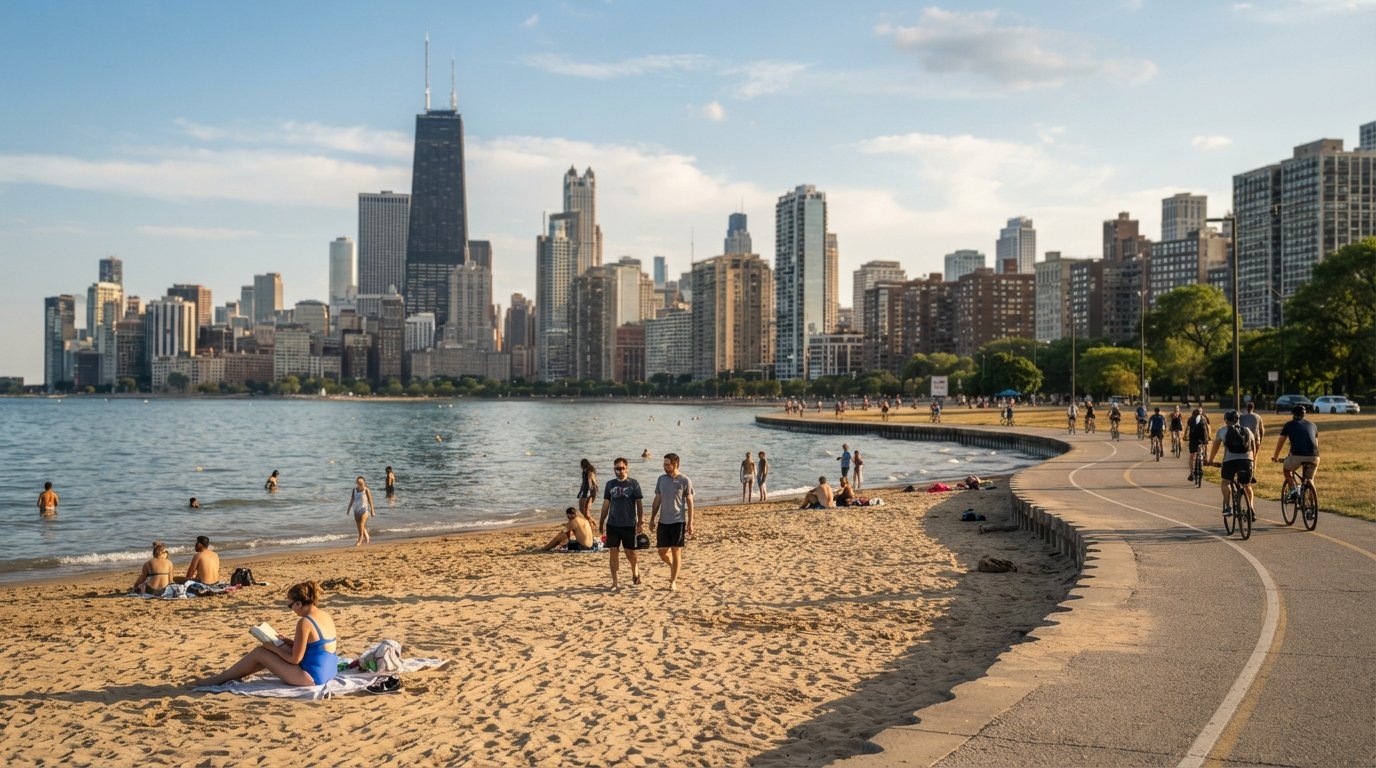
The best version of the afternoon is to keep walking east until the city gives way to beach. North Avenue Beach is the payoff, with the skyline lined up behind the sand and the Lakefront Trail carrying you in either direction. You can rent a bike and ride for miles if that is how you like to see a city: moving, not arriving.
For a rainy day or a reset, the Chicago History Museum at Clark and North tells the city’s story from the Great Fire onward, while the Peggy Notebaert Nature Museum’s Judy Istock Butterfly Haven fills a room with more than a thousand free-flying butterflies. It is a crowd-pleaser for kids, yes, but it also has the effect of slowing adults down, which may be the more useful trick.
Steppenwolf Theatre on Halsted is the neighbourhood’s cultural anchor when the lights go down. Book ahead if there is a show on. And if contemporary art is the mood, Wrightwood 659, the Tadao Ando-designed gallery, gives Lincoln Park a more austere, architectural edge. It is a neighbourhood that lets you move from zoo to conservatory to theatre without ever feeling like you have crossed into a different city.
Don’t miss in Lincoln Park
The free Lincoln Park Zoo
The Alfred Caldwell Lily Pool
The Peggy Notebaert Nature Museum
Shopping
Lincoln Park shops the way it eats: with taste, not hurry. The heart of it is Armitage Avenue, a walkable strip of independent boutiques arranged in a backwards L with Halsted. This is where you come for clothing, shoes, home goods and gifts that feel chosen rather than stocked. The street has the easy confidence of a place that knows its regulars will be back.
Art Effect has been on Armitage for around 40 years, which in neighbourhood-retail terms is practically geological. It is locally owned, clothing-forward, and still feels like part of the street rather than a brand that landed on it. P.O.S.H. leans more decorative, with vintage hotel china and flea-market finds for the home, while Margaret O’Leary brings knitwear into the mix. None of it is flashy. That is the point. Lincoln Park shopping is about the pleasure of the browse, the object that seems to have been waiting for your shelf or your coat rack.
On summer Saturdays and Wednesdays, Green City Market at 1817 N Clark turns shopping into a breakfast ritual. It runs roughly 7am–1pm from April through November and is Chicago’s flagship sustainable farmers’ market, the place where many of the neighbourhood’s chefs shop for produce, cheese and flowers. Come hungry. The prepared-food stalls and pastries make it as much a morning out as a grocery run.
Where to stay in Lincoln Park
Lincoln Park works best as a quieter, more residential base than downtown. If you want green space and calm streets over the constant hum of the Loop, this is a very good fit. The strongest pockets are near the park’s southern edge around North Avenue and Clark, where you can walk to the zoo, the History Museum and the beach, and around the DePaul and Fullerton area, where the ‘L’ gets you into the Loop in 10–15 minutes.
Hotels in Lincoln Park
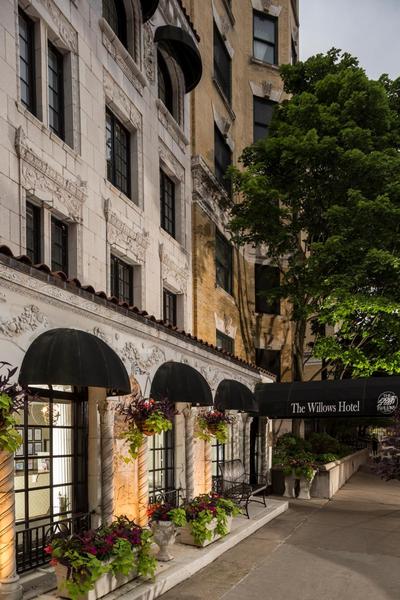
Our best-rated stays in this neighbourhood. Prices are approximate “from” rates — confirmed at the provider when you continue. We may earn a commission if you book through our partners — at no extra cost to you.
In this area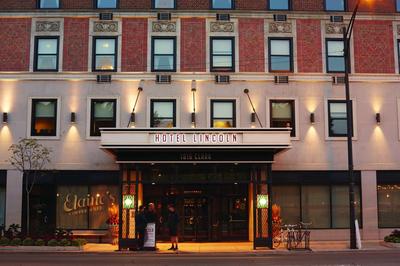 In this area
 In this area
Hotel choices are limited and tend to lean boutique rather than big-brand, which suits the neighbourhood’s scale. Expect mid-range-to-upscale prices in line with the polish of the streets. It is a smart base for families, for travellers who like to jog the lakefront in the morning, and for anyone who would rather wake to trees than traffic. If your trip is built around nightlife or downtown museums, you will spend more time on transit. If it is built around walking, eating well and being near the water, Lincoln Park makes a lot of sense.
Getting around
The workhorse here is Fullerton, served by the Red, Brown and rush-hour Purple Line trains, right by the DePaul campus. The Red Line runs 24/7 and gets you into the Loop in about 10–15 minutes. Sedgwick and North/Clybourn cover the south end of the neighbourhood, while buses fill the gaps: the 22 Clark, 36 Broadway, 8 Halsted and 74 Fullerton all run through, and the 151 travels along the park to the lakefront and downtown.
A single train ride is around $2.50 and a bus ride about $2.25, paid through Ventra. But the real answer in Lincoln Park is still walking and cycling. The Lakefront Trail and Divvy bike-share make it easy to cover ground along the water, and the neighbourhood rewards the slow look: the red-brick and greystone rowhouses, the mature trees arching over Cleveland and Orchard, the way the park keeps appearing between buildings like a held breath.
O’Hare is roughly 30–45 minutes by car or a straight Red-then-Blue Line ride. Midway is a similar drive to the southwest. In other words, Lincoln Park is not remote at all. It just prefers to make arrivals feel less frantic.
Gallery
Lincoln Park in pictures
Lincoln Park — your questions
Is Lincoln Park a good area to stay in Chicago?
Yes — if you want a calm, walkable, green base rather than the middle of downtown. You’re on the doorstep of the free zoo, the lakefront and the beach, with strong restaurants and easy ‘L’ access to the Loop in about 10–15 minutes. It’s especially good for families and slower-paced trips. The trade-off is fewer hotels and a longer hop to big nightlife and the downtown museums.
Is Lincoln Park safe?
It’s one of Chicago’s safer, more affluent residential neighbourhoods, with tree-lined streets, families and a visible police presence near the CTA stations. As anywhere in a big city, keep normal awareness late at night around the busier bar blocks on Halsted and Lincoln and around ‘L’ platforms, but by Chicago standards it’s a comfortable, low-key place to stay and walk.
What is Lincoln Park best known for?
The 1,200-acre park and its free attractions — above all Lincoln Park Zoo, free every day of the year, plus the Conservatory, the Nature Boardwalk and North Avenue Beach. It’s also known for reliable dining, a serious weekend brunch culture, Steppenwolf Theatre, and blues till dawn at Kingston Mines.
How do you get around Lincoln Park without a car?
Use the Fullerton, Sedgwick and North/Clybourn ‘L’ stations, plus buses like the 22 Clark, 36 Broadway, 8 Halsted and 74 Fullerton. Walking and cycling are genuinely the point here, especially along the Lakefront Trail.