 Nearby
Chicago
Trump International Hotel & Tower Chicago
9.4· 2,222 reviews
approx. from£1,218 / nightSee prices
The Chicago issue
Around a traffic circle crowned by a Doric column, Logan Square turns historic Chicago bones into one of the city’s most compelling places to eat, drink and stay out one more round.
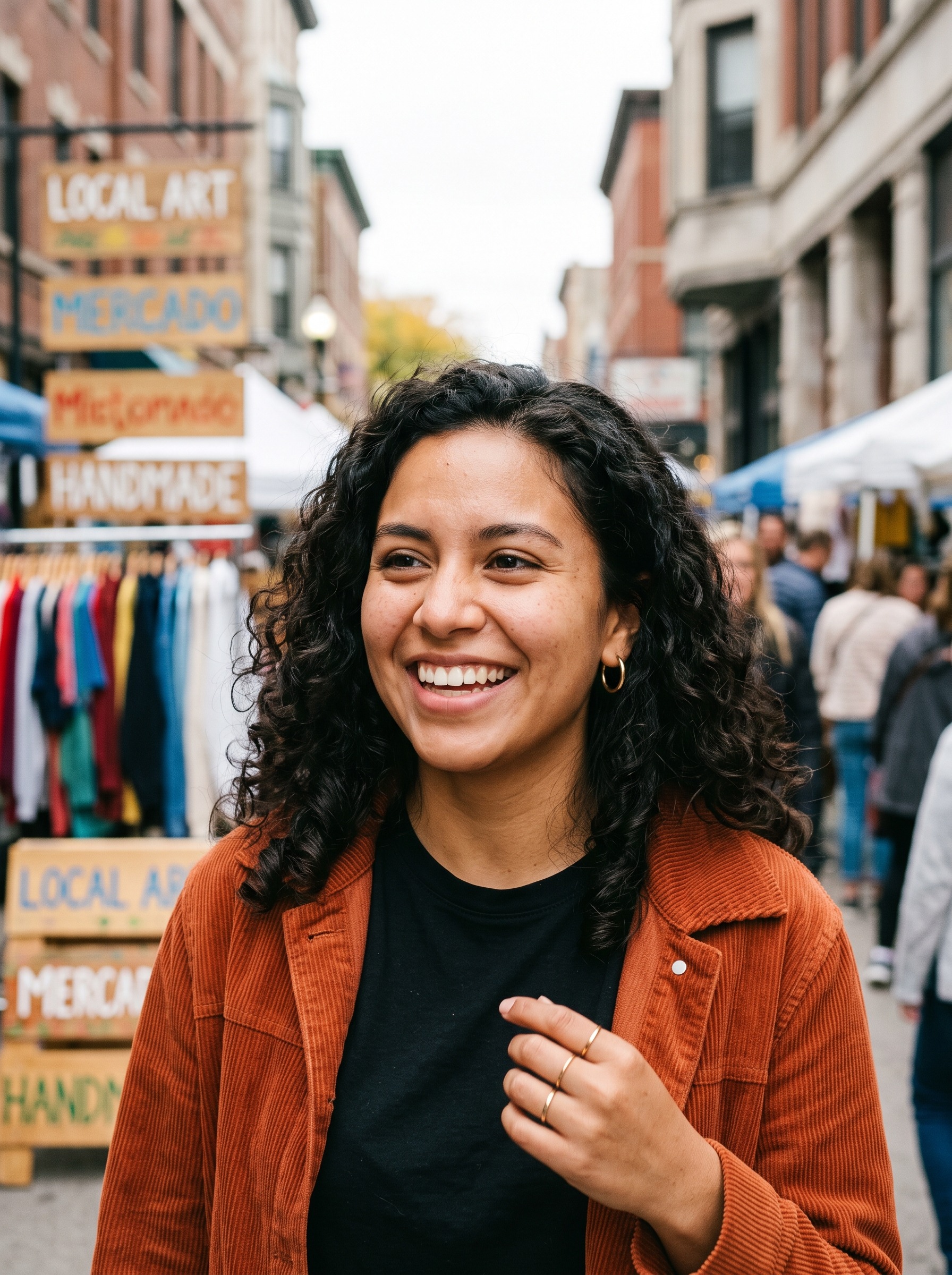
By Marisol ReyesChicago's makers, block by block
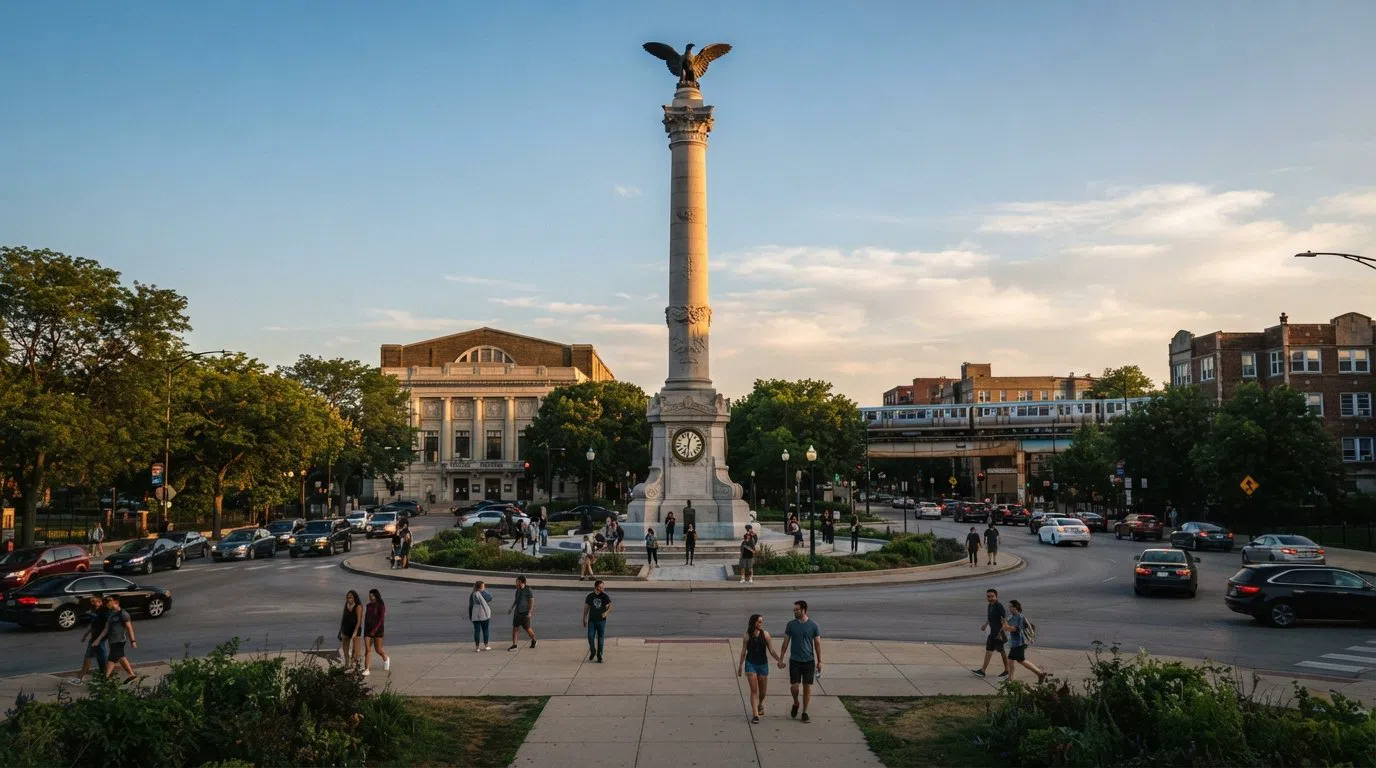
The first thing you clock in Logan Square is the column. It rises from the traffic circle where Logan, Kedzie and Milwaukee meet, a 68-foot Doric marker with an eagle at the top, and it gives the whole neighbourhood a kind of civic poise that feels almost theatrical. Stand there long enough and you start to see what the place is built on: grand boulevards laid out for carriage promenades in the 1870s, greystones and three-flats, the Blue Line rattling overhead, and, on the right Sunday, a market crowd thickening the boulevard beside the monument. Logan Square does not perform Chicago for visitors. It lives its own life, and the pleasure is in slipping into it.
Two identities dominate here, and they are both visible from the same patch of pavement. The first is the boulevard city: Logan, Kedzie and Humboldt, those wide historic streets modelled on European promenades, lined with stone greystones, vintage two-flats and the sort of front stoops that make you slow down without meaning to. The second is the bar-and-dinner city, the one that has spent the last fifteen years stacking serious food and drink onto that old residential grid until a Michelin Bib Gourmand Mexican room can sit a block from a cash-only dive that pours Malort shots without irony.
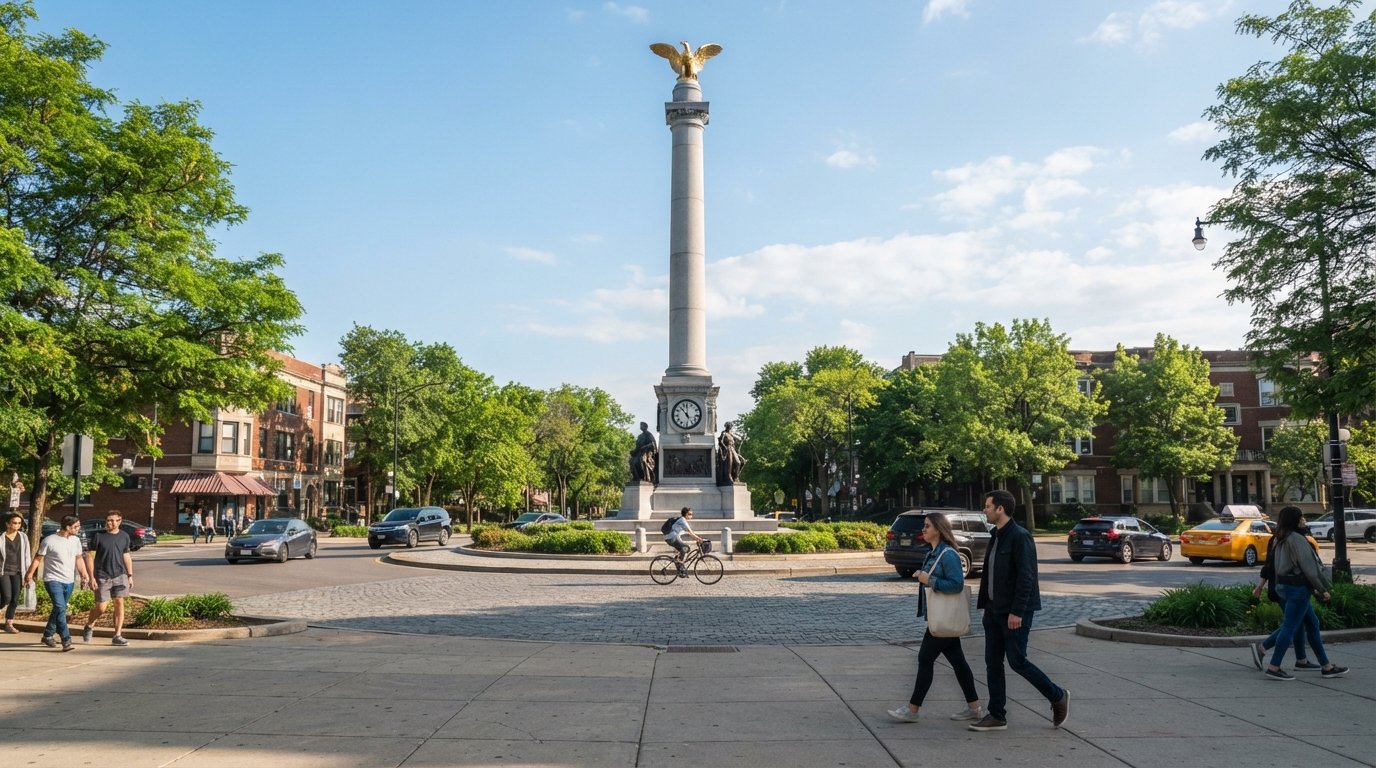
At the centre of it all is the Illinois Centennial Monument, the neighbourhood’s shorthand and its best free people-watching perch. The Doric column was raised in 1918 for the state’s 100th birthday, designed by Henry Bacon, the man behind the Lincoln Memorial, and the eagle on top still gives the whole circle a slightly formal air, even when the traffic is loud and the sidewalks are full. On Sundays from roughly May through October, the boulevard beside it fills with the Logan Square Farmers Market, repeatedly named the city’s best by the Chicago Reader, and the neighbourhood gets wonderfully practical: regional produce, farm meat, bread, prepared food, people carrying flowers home in paper sleeves, everyone pretending they are just passing through when really they have come to stay awhile.
What gives Logan Square its edge is not just abundance, but density with character. It is widely cited as the centre of Chicago’s craft-cocktail movement, and the claim feels less like branding than a map fact once you start walking. Within a few blocks you can move from a gin bar to a live-music lounge, from an agave room to a brewery taproom, from a precise whiskey list to a dive where the point is that the booth is a little worn and the room is a little loud. The crowd skews thirties, arty, hospitality-adjacent; there is a long-standing Puerto Rican and Mexican community whose taquerias and jibarito counters were here long before the natural-wine wave and will still be here after the next one. That friction — old neighbourhood, new money, real local life — is part of why Logan Square never feels like a theme park. It feels worked, argued over, and very much alive.
The neighbourhood’s northern edge also links it to the wider city through The 606, the Bloomingdale Trail, a 2.7-mile elevated park built on a disused freight line. It is a clean, easy way to understand the area’s shape from above, with skyline views, grasses and a steady stream of walkers and cyclists moving east toward Bucktown and Wicker Park. If the monument is Logan Square’s civic face, the 606 is its connective tissue.
Live prices from our booking partners.
Free cancellation on many rooms. We may earn a commission when you book.
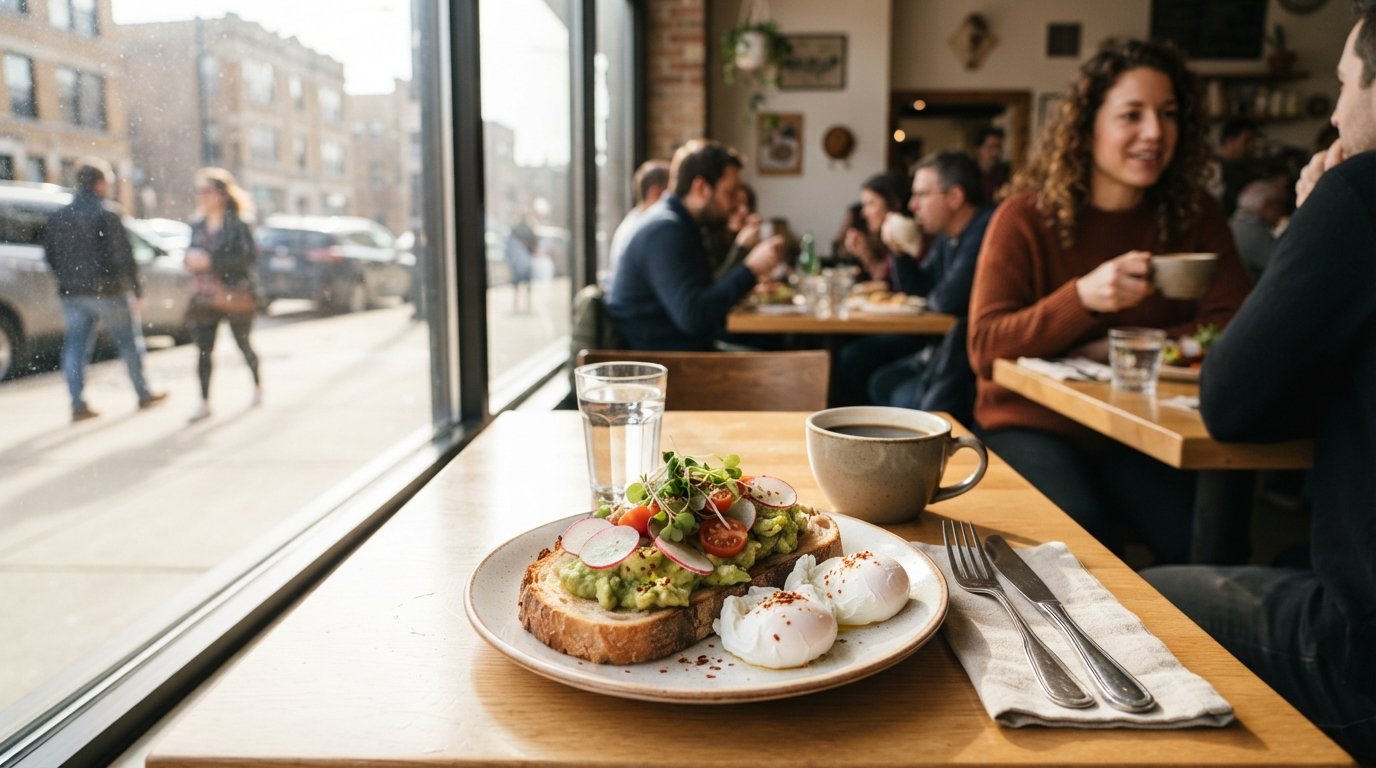
If you come here hungry, start at the place that helped make the neighbourhood’s modern reputation: Lula Cafe on Kedzie, open since 1999 and still one of the clearest arguments for why Logan Square became a destination for people who plan trips around dinner. The room has the quiet confidence of a place that never needed to reinvent itself every season, even though the menu keeps shifting with the produce. Breakfast is seasonal, the pasta yiayia is famous, and the Monday farm dinner has the kind of loyal following that tells you this is not a trend stop but a habit.
From there, the current generation of Logan Square dining starts to reveal itself. Daisies on Milwaukee is the sustainability-minded, Michelin-listed pasta restaurant with deep ties to Midwestern farms, and the draw is the handmade agnolotti and produce-forward cooking that makes vegetables feel like the point rather than the obligation. Nearby, The Radicle, opened early 2026 by the same team, pushes the mood toward seafood-leaning bar food and cocktails that run around ten dollars, with mushroom pizzas in the mix. It is the sort of place that says a neighbourhood can still absorb a new room without losing its sense of appetite.
For Mexican, Mi Tocaya Antojeria on Logan Boulevard is essential. Diana Davila’s Bib Gourmand room has the kind of dishes people talk about on the train home, especially the queso fundido with goat birria, and it sits within a neighbourhood that has always had a strong Mexican backbone. That matters here. The old-guard counters, jibaritos and mofongo spots are not decorative heritage; they are the everyday grammar of the place.
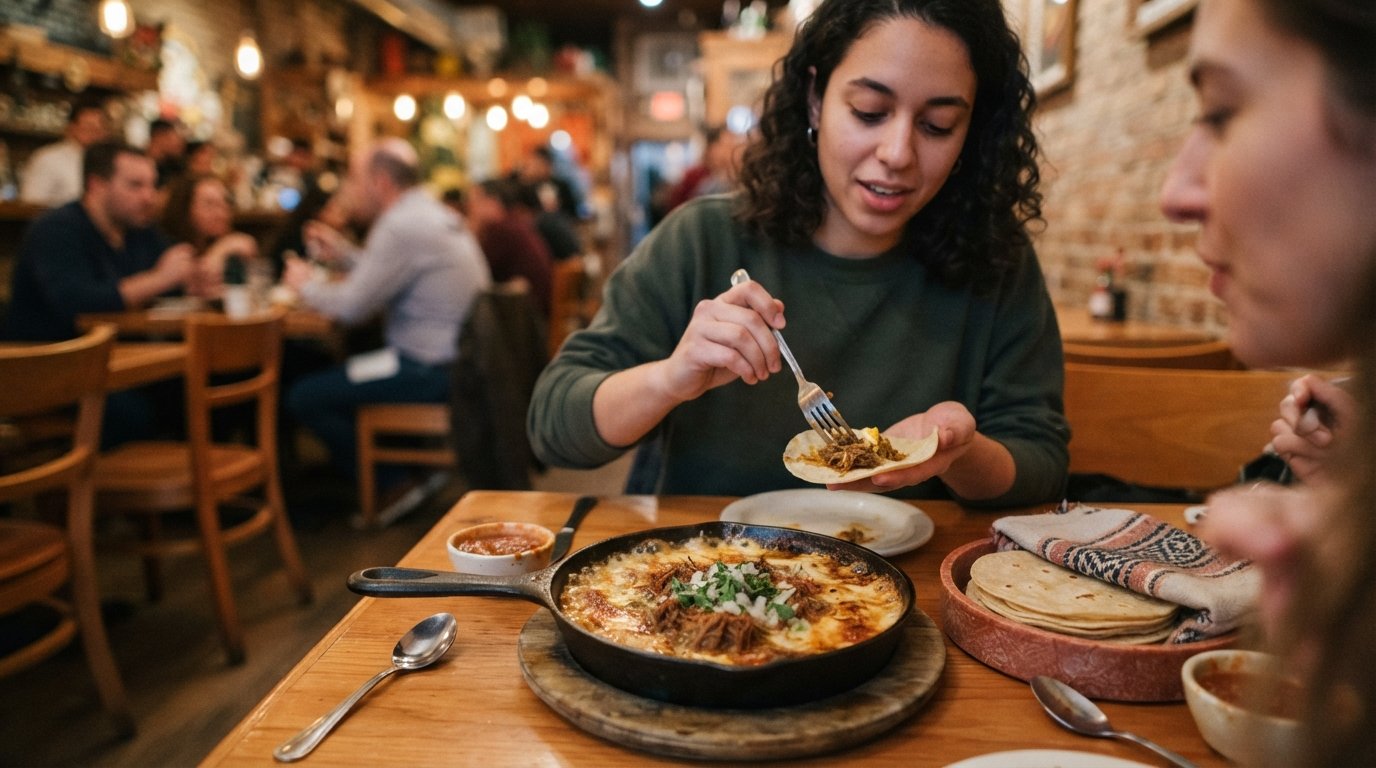
The range gets delightfully specific as you keep walking. Superkhana International on Diversey does playful Indian-fusion with a butter-chicken calzone and palak-paneer pizza that sound like a joke until you taste how well they work. Andros Taverna on Milwaukee is the loud, excellent Greek room where grilled octopus and saganaki can turn a casual dinner into a long one. Osteria Langhe on Armitage gives you Piedmont in Chicago, and the tiny hand-pinched agnolotti called plin are exactly the kind of thing that make a neighbourhood feel cosmopolitan without being precious.
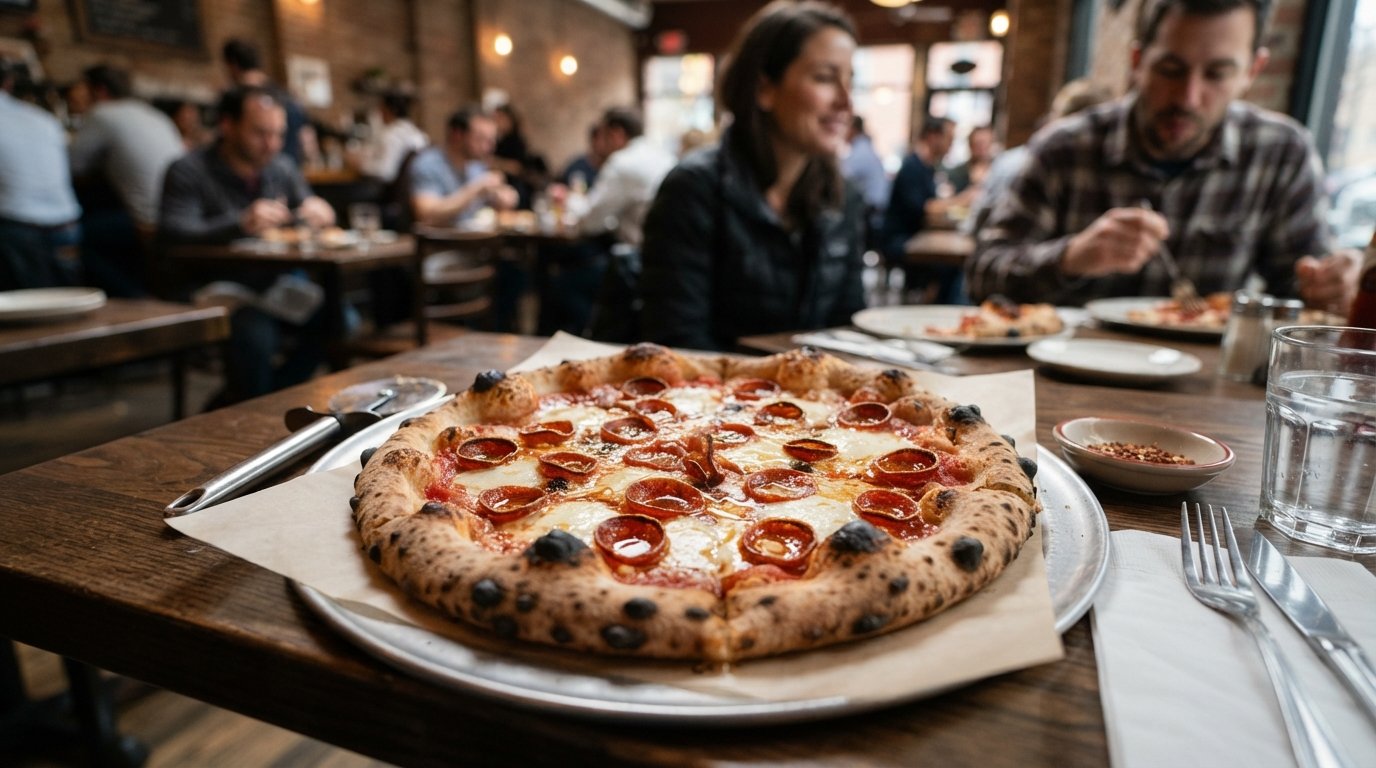
Then there are the splurges and the crowd-pleasers. Kyoten on Armitage is an eight-seat omakase counter with a multi-course tasting menu that asks for commitment and pays it back in concentration. Giant, also on Armitage, is the tight, always-booked New American room people still mention for saffron tagliatelle with crab. Paulie Gee’s on Milwaukee keeps the mood looser with the hot-honey Hellboy pizza, while Akahoshi Ramen on California draws queues for the Akahoshi miso bowl. If you want a bakery-bistro with a Bib Gourmand halo and natural wine beside the bread, Cellar Door Provisions on Diversey is the move. And if the night needs to end with something cheap and unshowy, Redhot Ranch on Armitage turns out a griddled double cheeseburger and fries for under ten dollars until midnight.
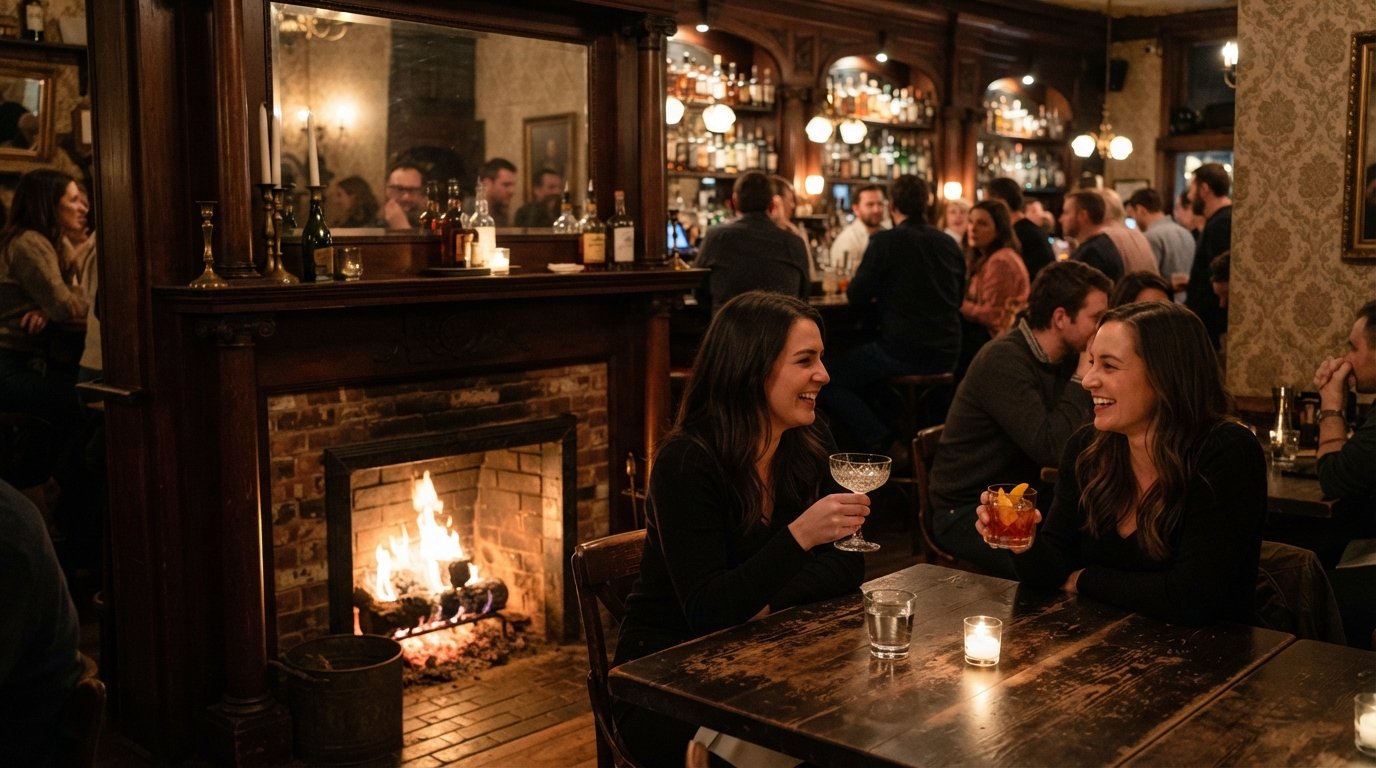
The drinking side of Logan Square is its own ecosystem. Scofflaw on Armitage is the signature: gin-led, open since 2012, with a Victorian-salon look, a crackling fireplace and free chocolate-chip cookies at midnight. It more or less announced the cocktail era that followed. A few doors away in spirit, The Heavy Feather sits above Slippery Slope with a 1970s-styled lounge mood that feels like the right amount of polish for this strip. The Whistler on Milwaukee is essential for live music — tiny, cocktail-forward, part gallery, part record label, with jazz, DJs and bands seven nights a week and usually no cover. Cole’s Bar keeps things unpretentious with free local shows and open-mic comedy. Estereo is bright by day and agave-heavy by night, with coffee, tequila, mezcal and vintage vinyl. Billy Sunday on Logan Boulevard is the precise one, all careful spirits and a deep vintage-liquor list. For beer, Hopewell Brewing gives you a bright, airy taproom, and Webster’s Wine Bar has been pouring since 1994 with oysters and a broad list. When you want the opposite of polish, The Native on Milwaukee is the cash-only corner dive with leather booths, boozy slushies and the requisite Malort.
Night in Logan Square tends to unfold by degrees. You start with dinner, drift to one bar, then another, and somewhere around midnight the neighbourhood decides whether you are staying out or heading home. That’s the effect of a place with this much density: the distance between a cocktail room and a music venue is measured in a few blocks, not a rideshare.
The Whistler is the place to understand that rhythm. It is small enough that the room feels like it is holding its breath around the performance, but not so tiny that it turns precious. The programming — jazz, DJs, bands — keeps the energy in motion, and the no-cover habit makes it easy to wander in on a whim. A few doors away in the broader nightlife ecosystem, Concord Music Hall on Milwaukee handles the bigger crowds with touring acts and club nights, while Cole’s Bar offers the opposite: a neighbourhood room where the joke lands because everyone knows the room is not trying to be anything else.
For people who like a drink with some structure around it, Billy Sunday is one of those bars that rewards attention. The list is deep, the vintage-spirits angle gives the room a collector’s feel, and the whole place reads like a reminder that Logan Square’s drinking culture is not just loud and late; it is technically serious. Estereo brings a different energy, brighter and more social, with coffee by day and tequila, mezcal and vinyl by night. And if you need to strip away all the polish, The Native is waiting with cash-only simplicity and boozy slushies.
What makes going out here feel especially local is the way the neighbourhood refuses to separate dinner from music, or cocktails from the street. A warm evening on Milwaukee or Armitage can feel like one long spill of patios, doorways and small rooms with good sound leaking out. The Blue Line rumbles past overhead, someone is always carrying a takeout box, and the night keeps offering one more stop if you want it.
You do not come to Logan Square for a checklist, but there are a few things you should absolutely make time for. Start with the Illinois Centennial Monument, not because you need to admire it in a solemn way, but because it gives the neighbourhood its geometry. Sit near the traffic circle and watch how people use it: dog walkers, market-goers, people cutting through on bikes, the occasional visitor trying to orient themselves before the day starts. It is the sort of place that teaches you the neighbourhood by observation.
From there, walk or cycle The 606, the elevated linear park on the old freight line. It is flat, easy and lined with grasses, public art and skyline views, a rare piece of urban infrastructure that feels both practical and scenic. Because it runs east toward Bucktown and Wicker Park, it also acts as a reminder that Logan Square is part of a larger west-side story, not an island.
The Logan Theatre on Milwaukee is another anchor worth building into your day. Restored from its 1915 origins, it screens indie films, revivals and midnight cult titles, and the bar means you can make an evening of it rather than treating it as a quick stop. Nearby, Comfort Station offers a different kind of culture: a small Tudor building on the boulevard that hosts free art shows, film nights and live music as a community arts space. It is exactly the sort of place that keeps a neighbourhood from feeling too curated.
If you like your evenings larger and louder, Concord Music Hall brings in touring acts and club nights, while The Whistler handles the intimate end of the spectrum. And if you happen to be here on a Sunday in season, the Logan Square Farmers Market is the thing to build the day around. It takes over the boulevard, moves indoors in the colder months, and remains one of the city’s best-loved markets for a reason: it feels like the neighbourhood in edible form.
The Illinois Centennial Monument
Logan Boulevard's historic mansions
The Sunday Farmers Market
Shopping in Logan Square is less about a grand retail sweep than about collecting things as you wander. The neighbourhood’s good at that. It has become a genuine record-hunting zone, anchored by Reckless Records at 3306 W Armitage Ave and Bric-a-Brac Records, the cluttered, beloved shop where the crates are only part of the fun. There are also ’80s and ’90s collectibles, VHS tapes, toys and a punk-and-garage selection that makes the place feel like a time capsule with a pulse.
Beyond records, the action lives in independent boutiques, vintage clothing and homeware scattered along Milwaukee Avenue and the Armitage corridor. None of it asks for a dedicated shopping day. That is the point. Logan Square rewards the slow drift: coffee first, a browse through the bins, a detour into a shop you did not mean to enter, then maybe something from the farmers market if you are lucky enough to be here on a Sunday. The market is the best single stop for edible souvenirs — seasonal produce, bread, honey, prepared food from regional farms — and because it shifts indoors through the winter, it stays in the neighbourhood’s life almost year-round.
Logan Square is a residential neighbourhood first, which is part of its appeal and part of why the lodging scene stays pleasantly uncorporate. The most characterful option is the inn above Longman & Eagle on Kedzie, where a Michelin Bib Gourmand tavern sits below a small set of individually designed rooms. It is close to the Blue Line and right in the neighbourhood’s rhythm, which means you can step out into the day without feeling like you have booked a lobby.
Our best-rated stays in this neighbourhood. Prices are approximate “from” rates — confirmed at the provider when you continue. We may earn a commission if you book through our partners — at no extra cost to you.
Nearby Nearby
 Nearby
 Nearby
 Nearby
 Nearby
 Nearby
 Nearby
Most visitors end up in apartment rentals or guesthouses tucked into the greystones and three-flats around the boulevards. If you want the bars, restaurants and market all within easy walking distance, aim near the Logan Square or California Blue Line stops. If you want quieter mornings, the boulevard side streets — Logan, Kedzie, Humboldt — are greener and calmer. If you want to stumble home after a late set or a second round at Scofflaw, staying closer to Milwaukee Avenue makes more sense. The pricing feels mid-range and generally better value than downtown, but the real trade-off is philosophical: you are choosing a neighbourhood base over a hotel district.
Logan Square is unusually easy to navigate because the CTA Blue Line does so much of the work. The Logan Square station sits right by the monument and gets you to the Loop in about 14 minutes. The California stop, a few blocks south, is even a touch quicker at roughly 12 minutes. Trains run frequently, every few minutes at peak, which makes the neighbourhood feel plugged into downtown without surrendering its own pace.
The same Blue Line also runs straight out to O’Hare International Airport, roughly a 25-to-30-minute ride with no transfer, which is one of the great practical pleasures of basing here. For Midway, you generally connect downtown to the Orange Line. Within the neighbourhood, most of what matters is walkable: the restaurant and bar clusters along Armitage, Milwaukee and Diversey are all a comfortable stroll from the boulevards, and the streets are flat enough that moving around never feels like a chore.
Cycling is genuinely good here too, with The 606 offering car-free riding and bike lanes on the main avenues. Divvy docks are scattered around, buses fill in the gaps along Milwaukee, Kedzie and California, and rideshare is easy for the short hops the L does not cover — say, to Wicker Park, the West Loop or Wrigleyville after the trains thin out.
Logan Square is not trying to be all things to all people. It is a neighbourhood with a strong opinion about itself: handsome, social, slightly rough around the edges, and very good at dinner. If you stay long enough, the column becomes a landmark you use for orientation, the bars become your route home, and the streets start to feel like a conversation between the old Chicago and the one still arriving.
Gallery
Yes — if your trip is about eating, drinking and neighbourhood life more than being on the doorstep of downtown sights. Logan Square has one of Chicago’s strongest runs of restaurants, bars and a great Sunday farmers market, plus fast Blue Line access to the Loop and direct service to O’Hare. The trade-off is that lodging is mostly rentals and small independent stays rather than big hotels.
Broadly, yes. It is a busy, well-populated neighbourhood with lots of foot traffic around the main restaurant and bar strips, and most visitors have no issues. As in any big city, use normal caution late at night, stick to lit main streets, and be aware around quieter blocks and transit stops once the crowds thin out.
Take the CTA Blue Line. From Logan Square station it is about 14 minutes to the Loop, and from the nearby California stop it is closer to 12. Trains run frequently, and the same line goes straight to O’Hare in roughly 25 to 30 minutes without a transfer.
Its historic boulevards and traffic circle, plus a dense food-and-drink scene. The Illinois Centennial Monument anchors the neighbourhood, while restaurants, cocktail bars, live-music rooms and the Logan Square Farmers Market give it its modern identity.