The Chicago issue
Walking Chicago's Chinatown from the gate to the river
The arch dates from 1975, the dim sum still comes on trolleys along Wentworth Avenue, and there is a pagoda on the water; the opening days decide the order you walk it in.

By Bram de WitThe long way round any city
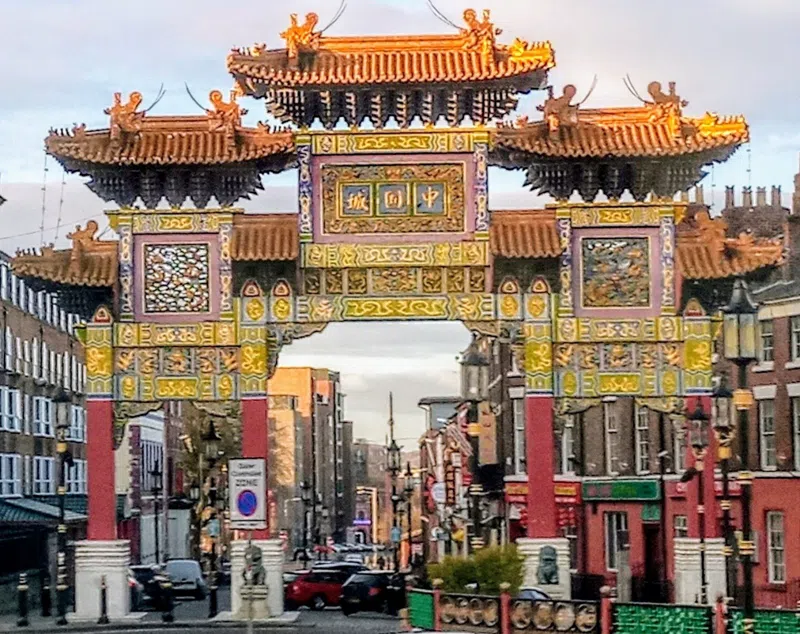
The gate over Wentworth Avenue went up in 1975, and the gold characters on its blue panel read tian xia wei gong, all under heaven is for the people. North of Cermak Road, 12 bronze zodiac animals ring the plaza that doubled the size of the district in the 1990s. The river end has a pagoda, a red zigzag bridge and a kayak dock.
Wentworth Avenue from the gate
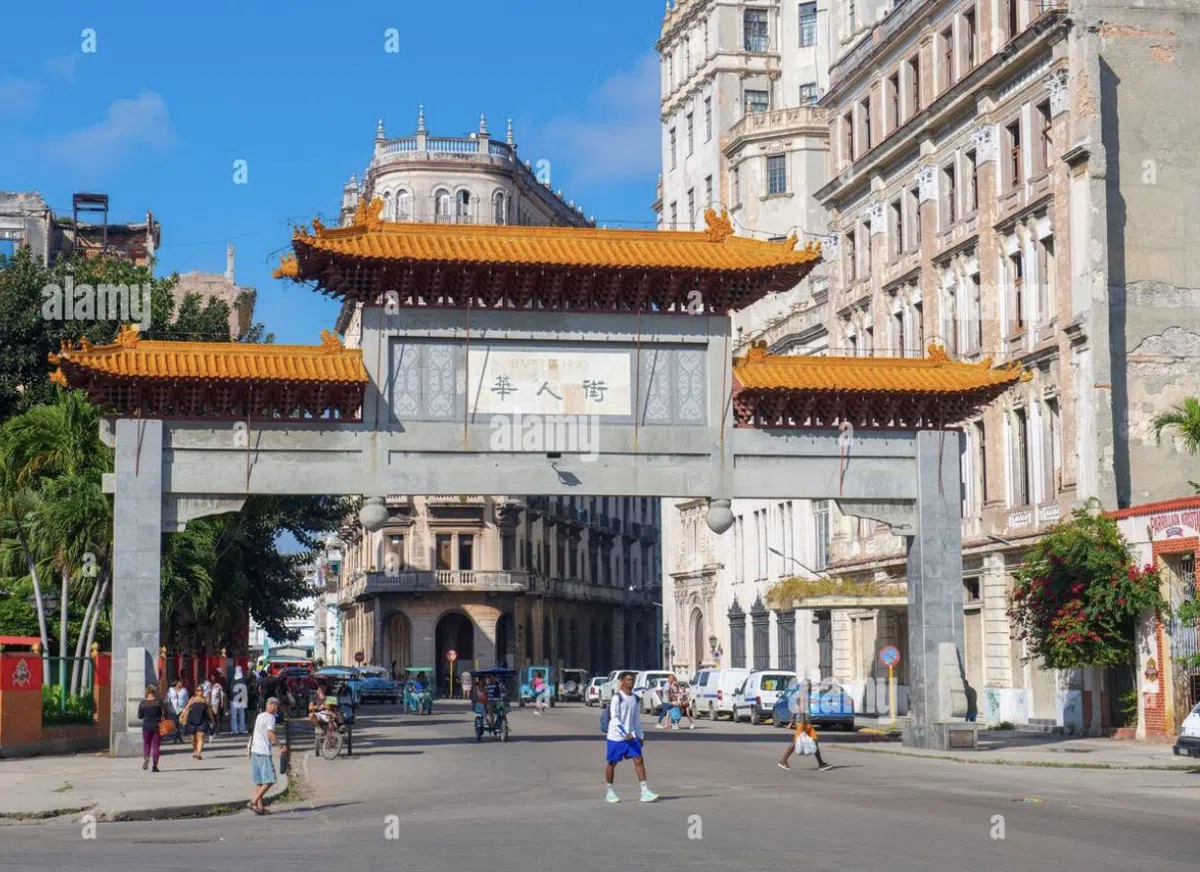
Start under the Chinatown Gate (Wentworth Avenue at Cermak Road), a green-tiled pagoda roof carried on red pillars across the full width of the street. The CTA Red Line embankment runs behind it, above the low-rise shopfronts. Nothing is charged and nobody is turned away. It is the standard photograph of the district, and it has been the neighbourhood's front door since it went up.
Cross the street for Pui Tak Center (Wentworth Avenue), built in 1928 for the On Leong Merchants Association and the most ornate building on Wentworth. Twin pagoda towers rise over green-and-cream glazed tile, with foo dogs and dragon medallions set into the terracotta. It was made a Chicago Landmark in 1993 and added to the National Register in 2025. The building still works as a community centre, so weekday access is limited; visitors get inside on a Saturday open day or on a tour booked in advance. Time it right and you also see the third-floor display and the balcony. Entry is free, and tours take a donation.
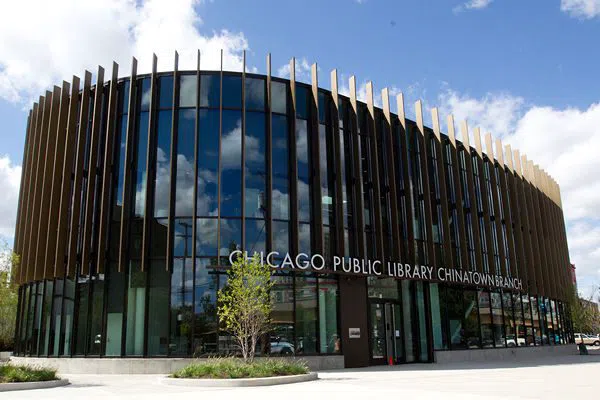
Where Wentworth meets Archer, the Chinatown Branch, Chicago Public Library (Wentworth at Archer) is a curved triangular pebble of glass wrapped in 118 vertical aluminium fins, with a green roof above and the CTA tracks alongside. SOM finished it in 2015 and shaped it to feng shui principles, so there is not a sharp corner anywhere in it. The skylit two-storey atrium repays ten minutes even if you never open a book. The 60-seat community room and the study rooms can be booked.
At Cermak Road and Princeton Avenue, the Nine Dragon Wall (Cermak Road at Princeton Avenue) stands free in a paved plaza, a faithful copy of the 15th-century wall in Beihai Park. Nine large dragons carry the composition in bright glaze on a jewel-toned tile ground, with more than 500 smaller ones worked into the tiles around them. Children hunt the small ones for longer than you expect. The plaza is open and free.
Plan your Chicago trip
Live prices from our booking partners.
Free cancellation on many rooms. We may earn a commission when you book.
Breakfast and dim sum on Wentworth
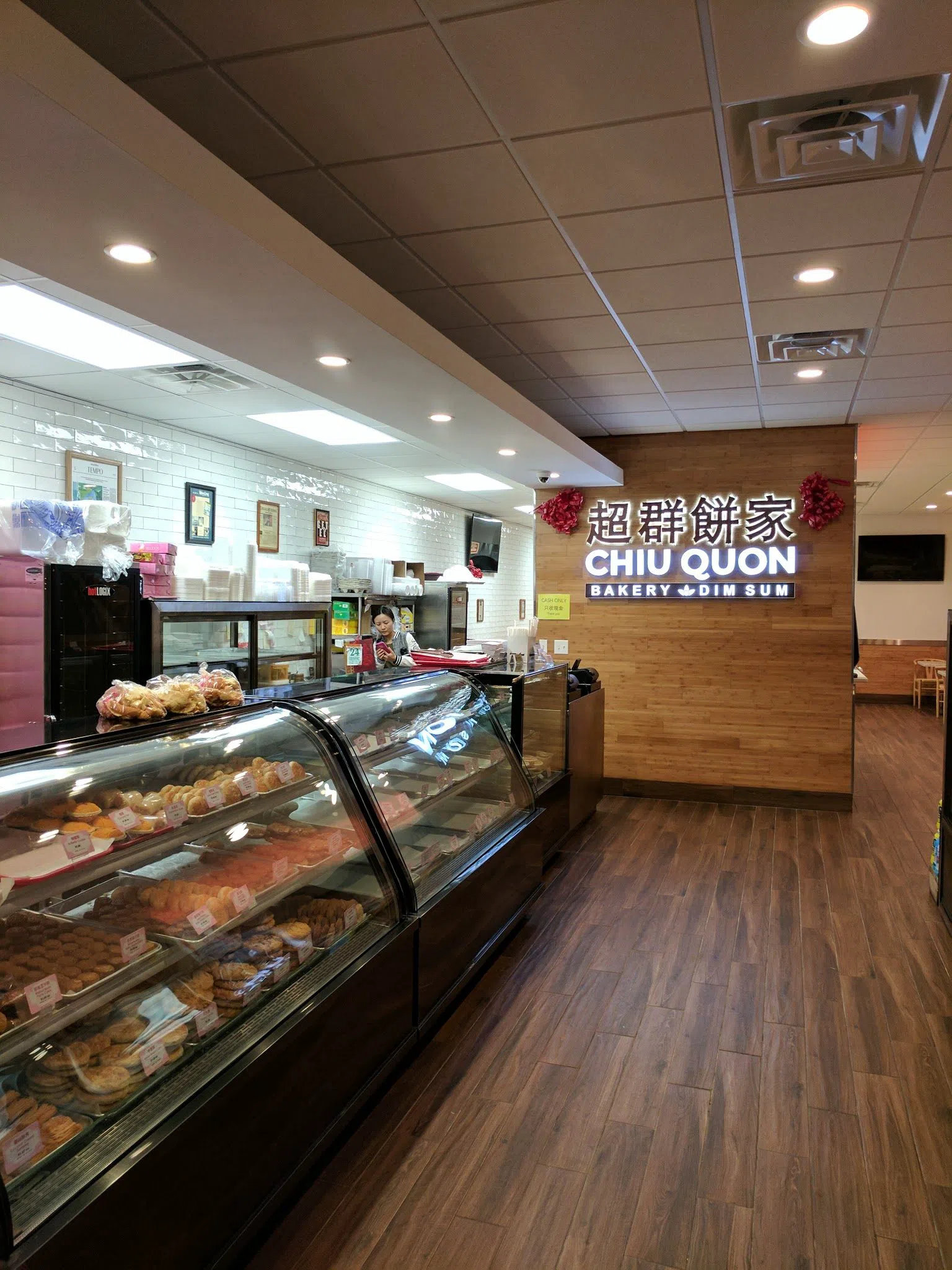
Chiu Quon Bakery & Dim Sum (2253 S Wentworth) is Chinatown's oldest bakery and the cheapest good breakfast in the district ($). The glass cases hold glossy egg tarts, pillowy baked pork buns and boxed mooncakes, and the counter staff lift them into paper bags with tongs. The shop is narrow, with nowhere to sit, so buy a tart and a pork bun and eat them walking down to the river. The original shop prefers cash.
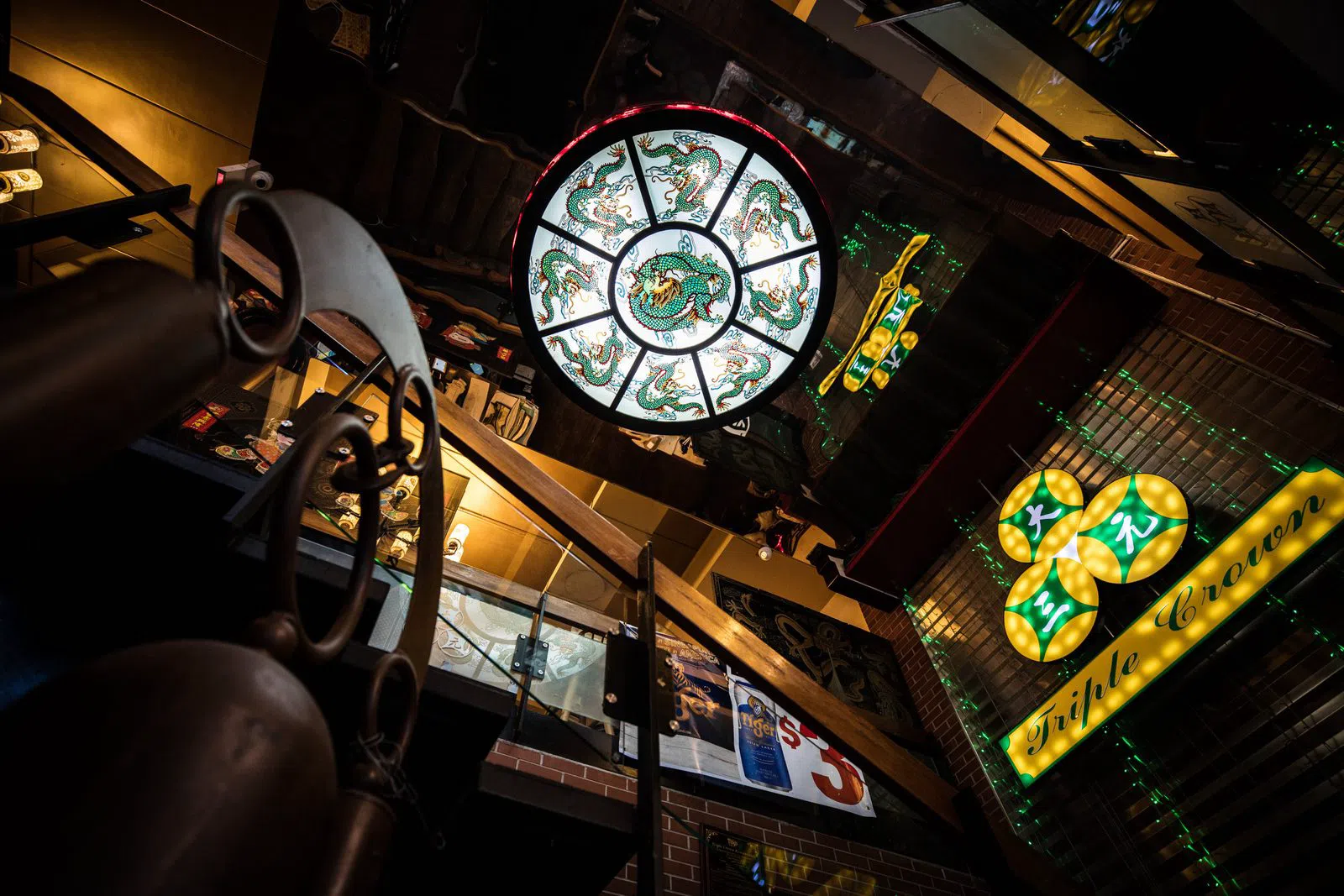
Triple Crown Restaurant (2217 S Wentworth) sits just inside the gate and has been open since 1993. In the big bright first-floor room, staff push steel steamer carts between round banquet tables with lazy Susans, and you order by pointing at what rolls past, which beats reading a tick-sheet on a first visit. Few places are still running proper trolley dim sum. Walk in without a reservation, and eat early if you want the carts without a wait; at weekend peak, expect a queue. ($$)
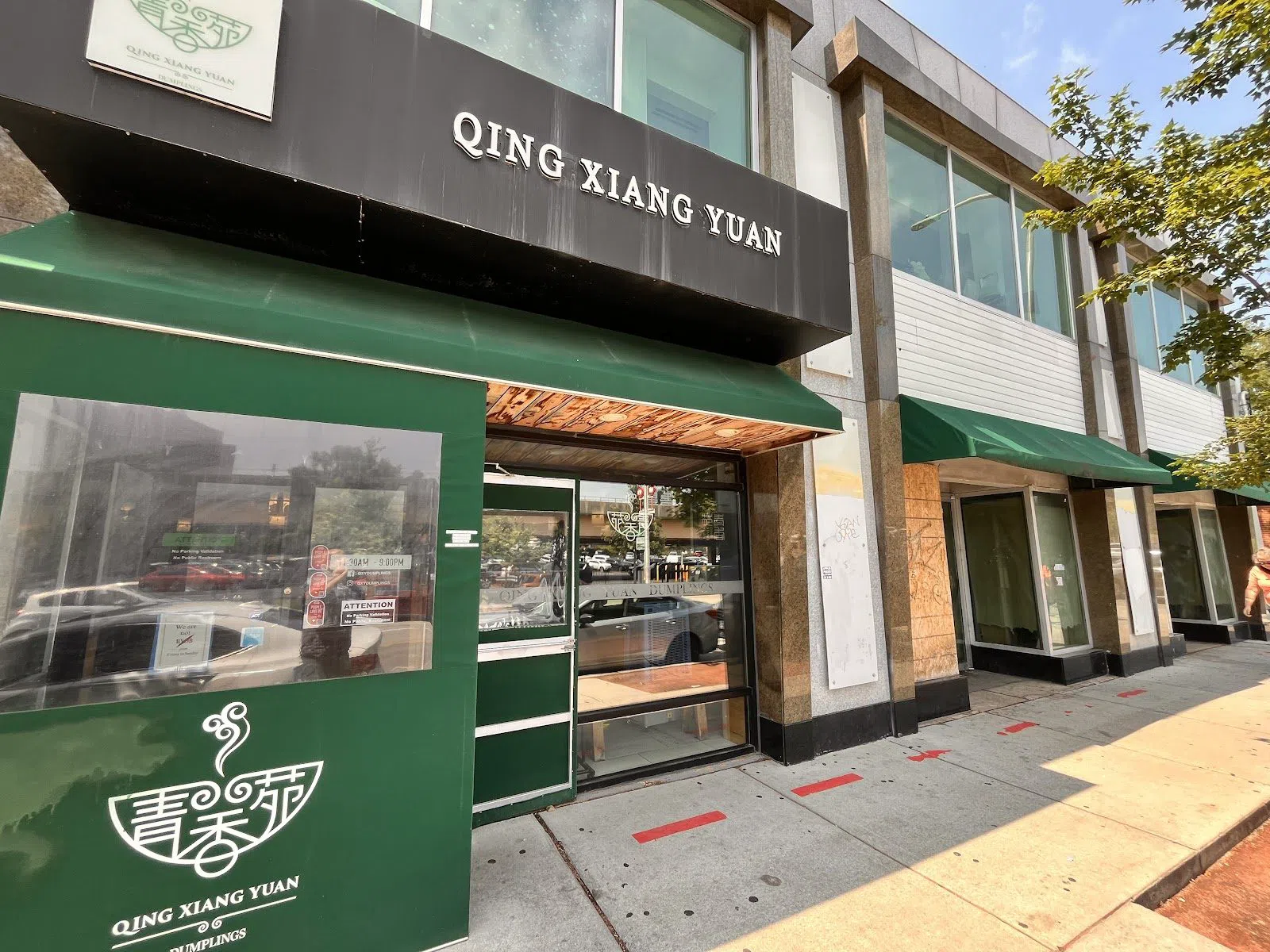
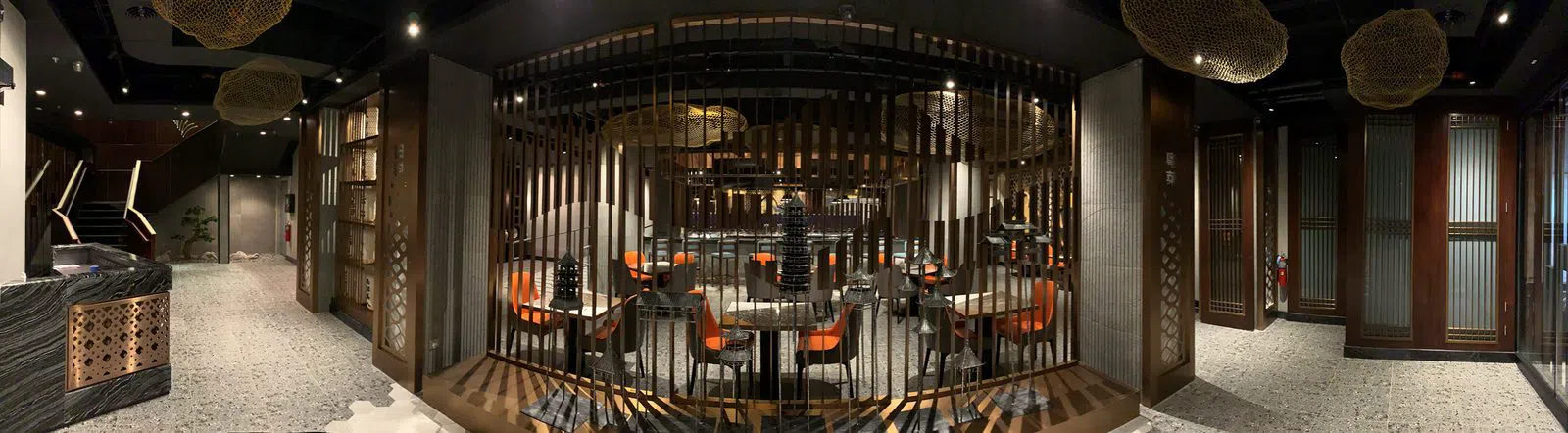
Qing Xiang Yuan Dumplings (2002 S Wentworth) works 40 fillings, each of them boiled, steamed or fried. That is more than 100 combinations, and the most interesting single plate of food in Chinatown. The room is small and warm, with bamboo-toned tables, pleated dumplings set in rings in the steamers, and chilli oil and black vinegar alongside. Six people fit; a bigger party waits, and bookings are not taken at busy times. A second branch opened in Wicker Park in 2026, but the original is the one to eat in. ($$)
Chinatown Square and Archer Avenue
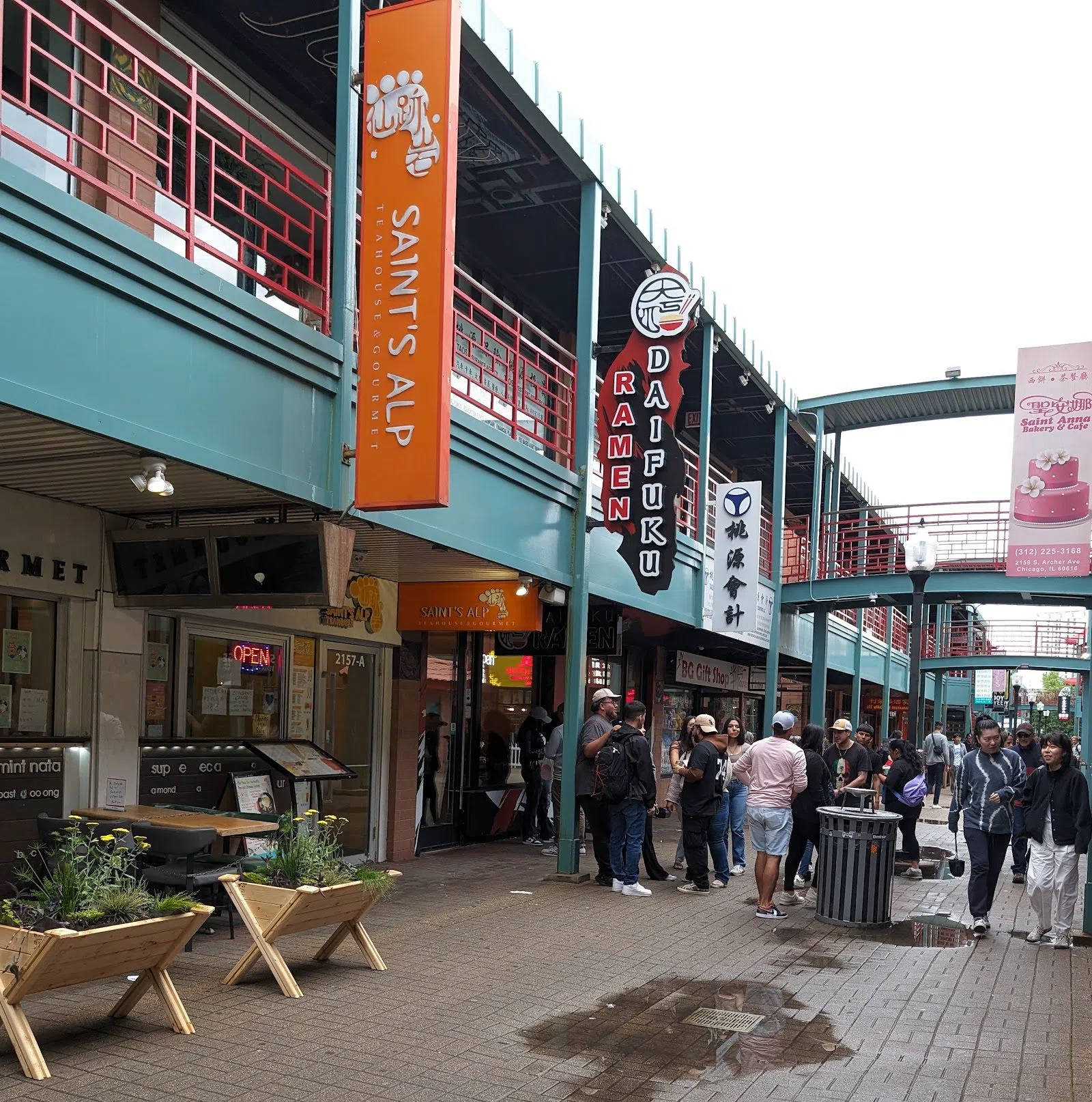
Chinatown Square (north of Cermak Road) is the 1990s expansion that doubled Chinatown, a two-level open-air plaza with red-railed upper walkways and vertical bilingual signage. Bakeries, boba counters, grocers and most of the big dining rooms open off it. The zodiac animals stand in bronze around the courtyard, which is the easiest way to keep children moving through a shopping errand. Walking it is free, and the shops run $ to $$.
MingHin Cuisine (Archer Avenue) is the neighbourhood's reference point for Cantonese dim sum, served from 10 a.m. through to midnight. Bamboo steamers of translucent har gow and stacked siu mai arrive at a polished room of pale wood and glass. If you land in the city late, this is the kitchen still working. Reservations are advised. ($$)
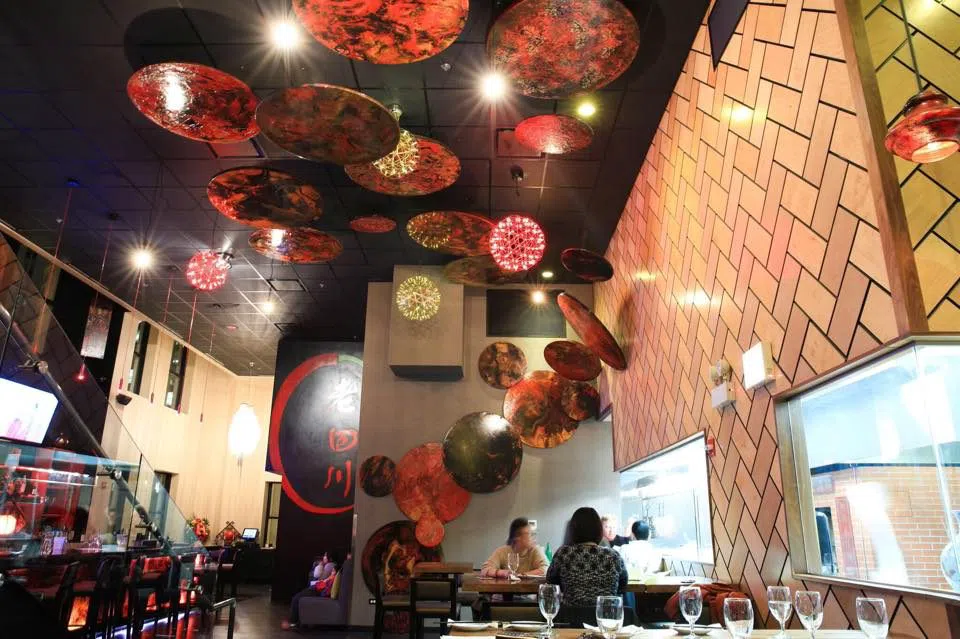
Lao Sze Chuan (Archer Avenue) is Chef Tony Hu's 1998 original, the restaurant that brought real Sichuan heat to Chicago. Platters of dry chilli chicken come out glossy with Sichuan peppercorns and whole dried chillies, under red and gold trim. Say how hot you want it, because the default is not calibrated for tourists. The long menu is built for sharing at the big round tables, and the dining room runs to midnight. ($$)
Saint's Alp Teahouse (2157 S China Place) pours milk tea into tall sealed cups over fat black tapioca pearls, with wide-bore straws and a wall menu of dozens of tea combinations. It has outlasted the wave of international boba chains now filling the neighbourhood, and it keeps café cooking going alongside the tea. Most nights it stays open past midnight. ($)
The museum and the church
Chinese American Museum of Chicago (W 23rd Street) occupies the Quong Yick building on quiet W 23rd Street, three storeys of red brick with arched windows and a bilingual banner sign. The galleries hold laundry irons, trunks and hand-sewn garments, and this is the Midwest's only museum of Chinese American life, rebuilt after a fire in 2008. It opens Wednesday, Friday, Saturday and Sunday, and shuts Monday, Tuesday and Thursday, so check the day before you travel. Entry is free, with a suggested donation of $8 for adults and $5 for students and seniors. Groups of more than 10 should book ahead, as the galleries are small.
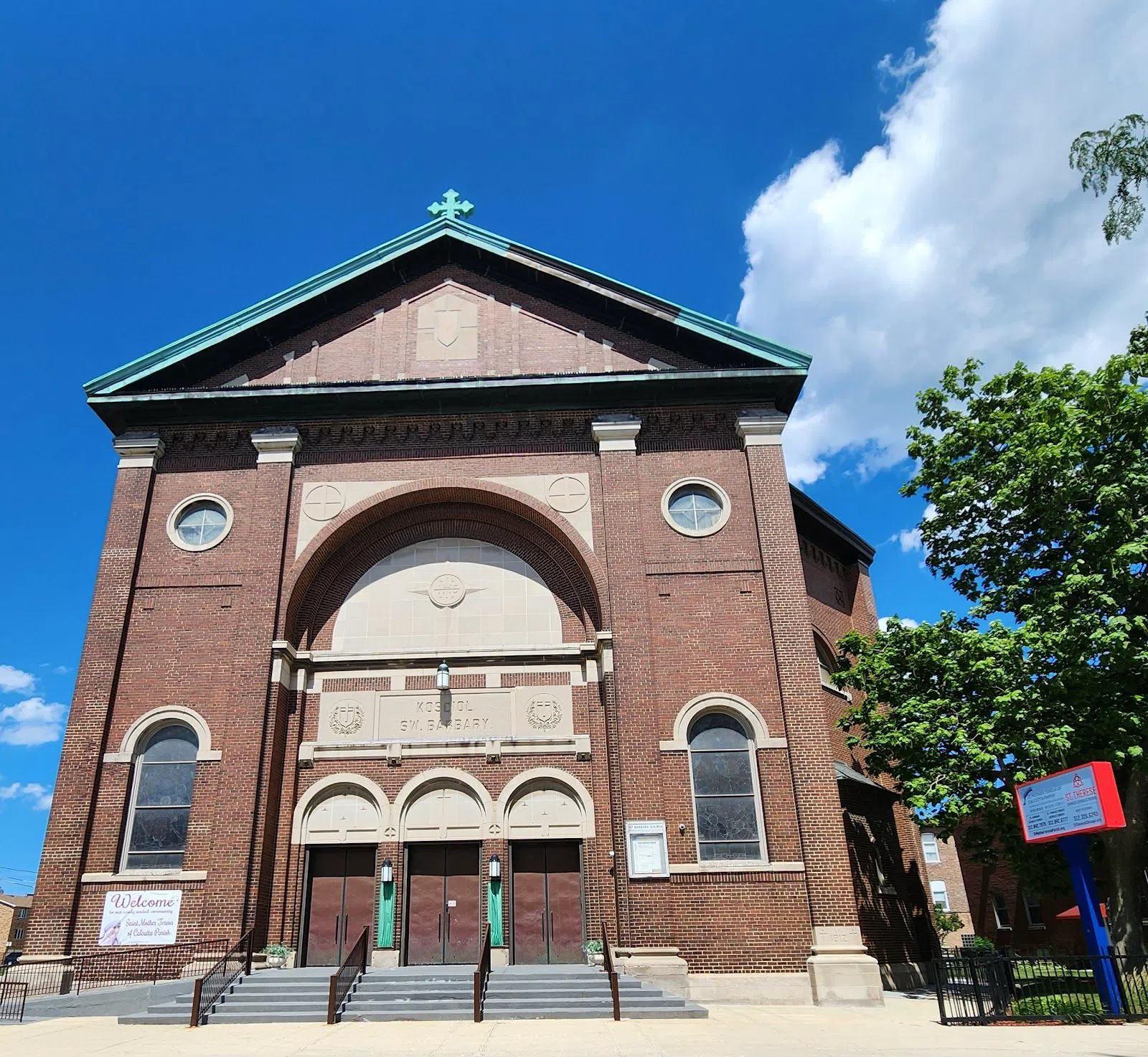
St. Therese Chinese Catholic Mission (W Alexander Street) was founded in 1947 in a former Italian parish church and remains the Midwest's only Chinese Catholic parish. Chinese lions flank the steps of the red-brick Italianate building, under a square bell tower. Inside, Catholic statuary sits among Chinese lanterns and bilingual signage. Cantonese Mass is said on the first Sunday of the month and Mandarin on the fourth. Visit quietly outside service times; entry is free.
Ping Tom Memorial Park and the water
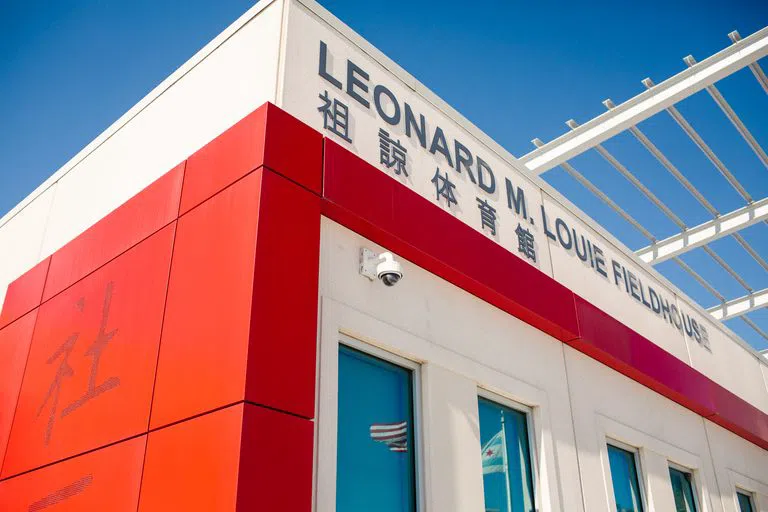
Ping Tom Memorial Park (Chicago River south branch) runs 17 acres of open riverfront, with a red-and-green pavilion under an upturned tiled roof, carved dragon poles and a red zigzag bridge. From the bank, the downtown skyline sits framed by a black railway bridge upriver, and that is the view to walk down for. The park was dedicated in 1999 after the civic leader who fought for it, and the riverwalk extension continues north under the rail bridges. The pavilion and the fieldhouse can be booked for larger gatherings.
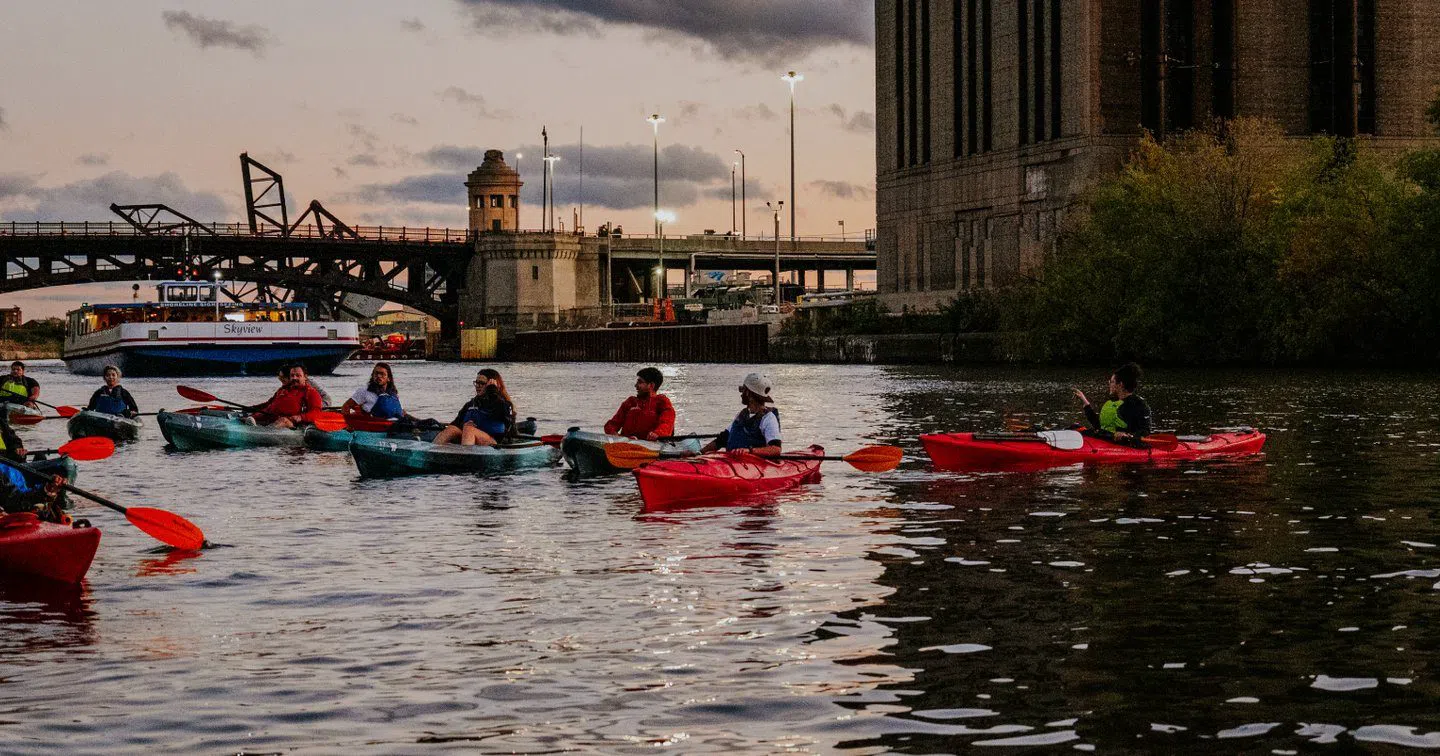
Chicago Outdoor Collective at Ping Tom Boathouse (300 W 19th Street) rents singles at $30 an hour and tandems at $40, plus tax and fees. Red and yellow kayaks sit in rows on a low floating dock below the boathouse, and the paddling runs up a narrow channel of the south branch with steel rail bridges and skyscrapers ahead. For the money it is the best skyline view in the city, and the only one you paddle to. The dock operates from late spring to Labor Day, so check the dates before you build a day around it, and book ahead in summer.
Planning the day
Build the day around a Saturday, the one day Pui Tak Center opens to visitors and the museum also trades. Reserve at MingHin, book the kayaks in advance, and bring cash to the bakery. See the Chicago guide and the Chicago hotel search.
Before you go
Which days is the Chinese American Museum of Chicago open?
Wednesday, Friday, Saturday and Sunday. It shuts Monday, Tuesday and Thursday, so check before you travel. Entry is free, with a suggested donation of $8 for adults and $5 for students and seniors. Groups of more than 10 should book ahead, as the galleries are small.
Where should a first-time visitor eat dim sum in Chinatown?
Triple Crown Restaurant at 2217 S Wentworth still runs trolley service, so you order by pointing at the carts instead of filling in a tick-sheet. MingHin Cuisine on Archer Avenue serves dim sum from 10 a.m. through to midnight and advises reservations. Both are $$.
Can you see inside Pui Tak Center?
Only on a Saturday open day or a tour booked in advance. It is a working community centre, so weekday access is limited. Entry is free and tours take a donation. You go for the third-floor display and the balcony.
How much does it cost to kayak at Ping Tom Memorial Park?
Chicago Outdoor Collective at the Ping Tom Boathouse, 300 W 19th Street, charges $30 an hour for a single and $40 for a tandem, plus tax and fees. The dock is open from late spring to Labor Day, and in summer you should book ahead.
What stays open late in Chicago's Chinatown?
On Archer Avenue, MingHin Cuisine and Lao Sze Chuan both serve until midnight. Saint's Alp Teahouse at 2157 S China Place stays open past midnight most nights for milk tea and café food.