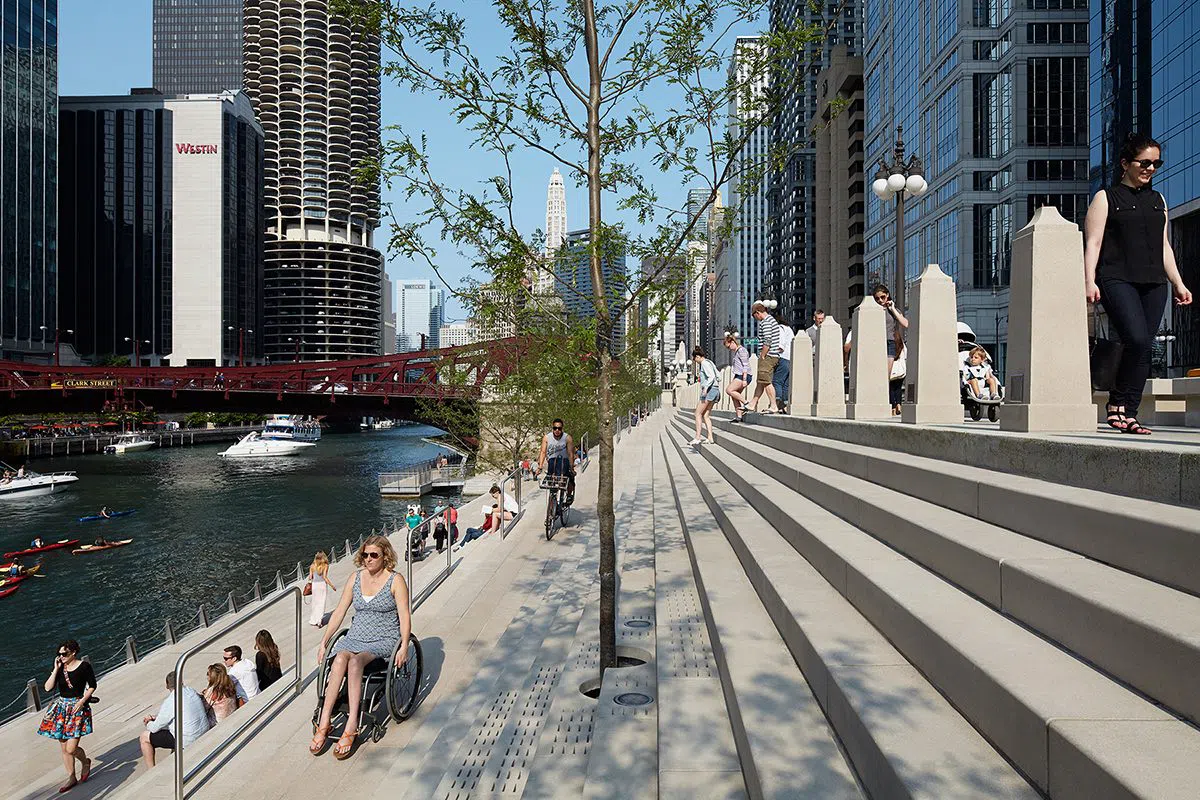

The Chicago River runs the wrong way on purpose. Engineers reversed it in 1900, pulling the flow away from Lake Michigan and sending it inland so the city would stop drinking its own sewage, and the result is a working waterway threading a canyon of consequential tall buildings. September is when that canyon is at its best (low light, no humidity, water still warm enough to paddle) and also when it starts shutting down for the winter, which makes the month more rewarding and less forgiving than July.
A river that was engineered rather than found
Three things are worth holding in your head before you buy anything. First, the reversal above: the water in front of you is heading away from the lake, not into it. Second, the shape. The main branch runs a little over a mile west from the lake to Wolf Point, where it forks, the north branch bending up past River North and Goose Island, the south branch dropping along the western wall of the Loop. Every boat on this list works some combination of those three legs, and knowing which legs you are buying is most of the decision. Third, the bridges. They are movable bascule spans built when this was a shipping channel, hinged at one bank and counterweighted inside stone towers, and they still lift on a seasonal schedule to let masted boats through.
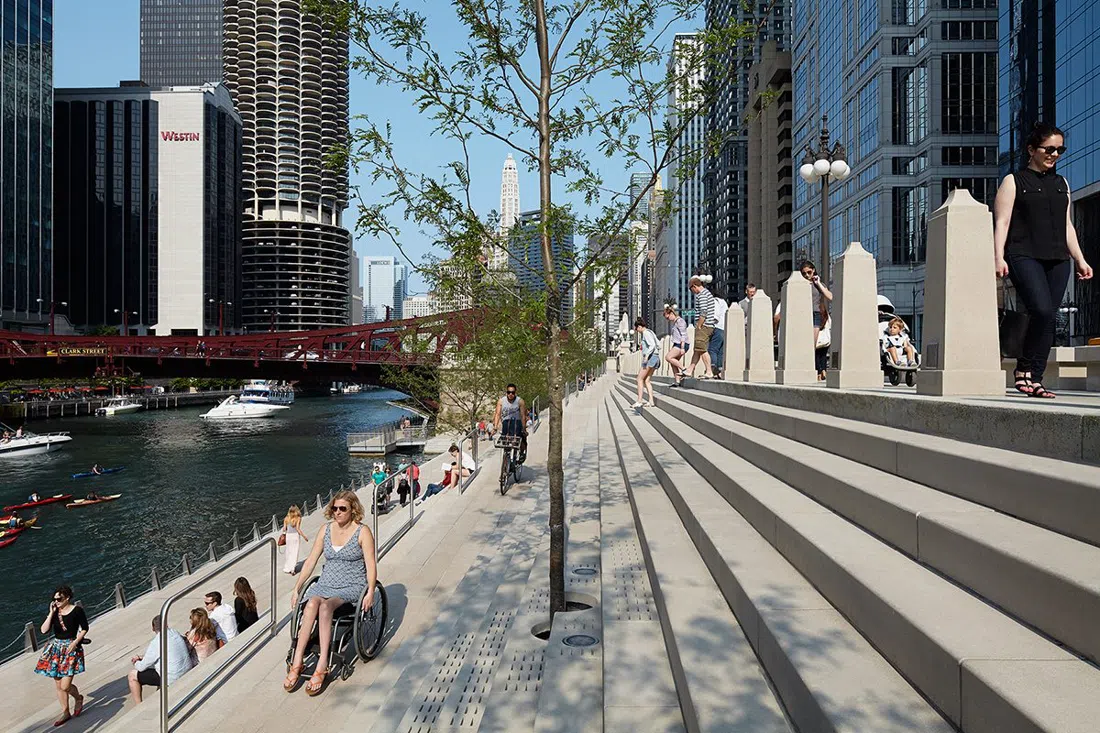
The newest layer is the Chicago Riverwalk (the Loop's south bank), a promenade cut into the seawall block by block over years of civic patience. It is free, open daily 6am to 11pm, and it is the spine of this piece: every dock, museum and bar below sits on it or beside it. It takes groups of any size, though it pinches to single file under the bridge underpasses at rush hour and on Saturday evenings, so a party of ten will arrive at the bar strung out over a hundred metres. In late September it is also the cheapest way to see the river at golden hour, which matters, because most of its bars and kayak hires shut down in late October.
What you actually see from water level
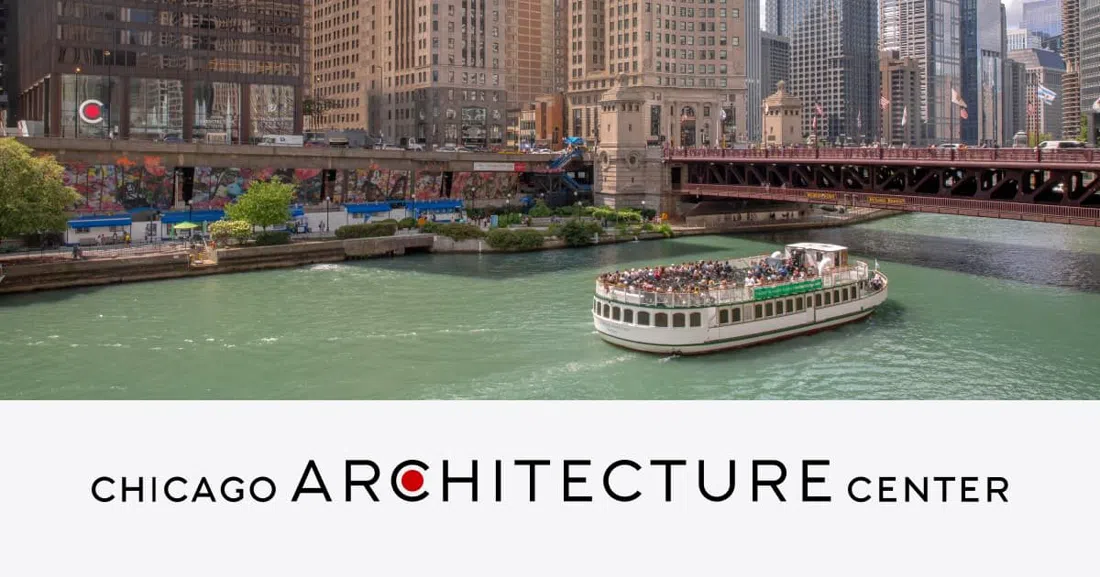
A river cruise here reads as a section drawing rather than scenery. From the water you see the bases of buildings, the setbacks, the plazas, the places where a tower meets the ground badly, which is exactly the part you cannot read from the pavement. You get the 1920s terracotta towers at the Michigan Avenue crossing, the black steel and bronze glass of the mid-century, and the last two decades of blue-green curtain wall crowding in behind, all in one continuous sweep. The turn at Wolf Point is the moment most people remember: the walls open out, three branches meet, and the boat pivots inside a bowl of glass.
The docent-led operators talk for the whole run. A trained volunteer naming a cornice is worth the extra money over a recorded loop, and September adds a bonus: by five in the afternoon the light is low enough that the west-facing façades go copper for half an hour. Cruises run 45 to 90 minutes. Ninety is the honest length for the main, north and south branches; forty-five covers the main branch and gets you back to a dinner reservation.
Choosing your boat
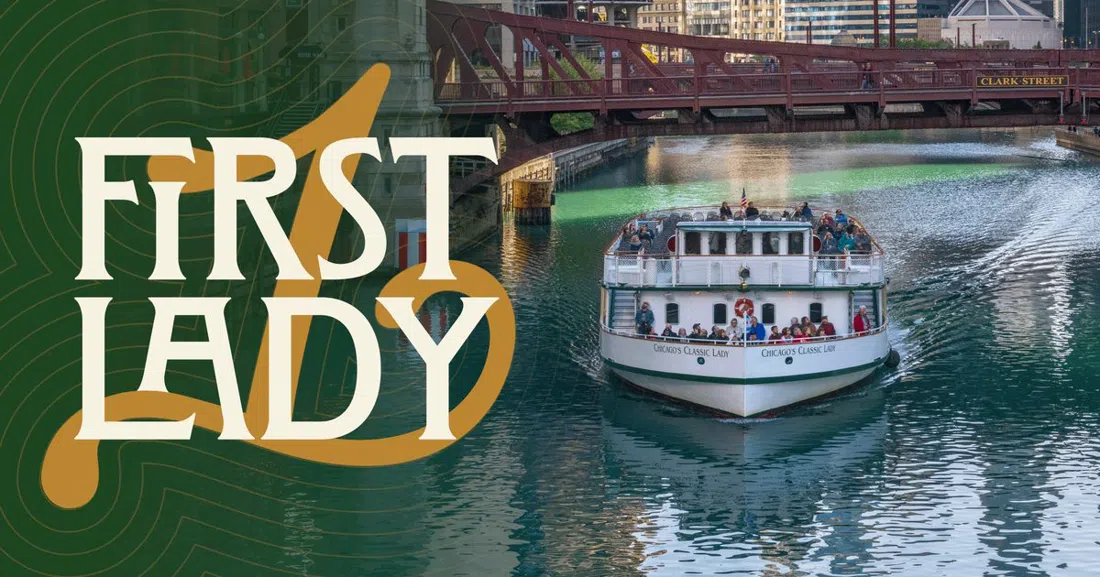
The benchmark is Chicago's First Lady Cruises (Riverwalk dock beside the DuSable Bridge, the Loop), the cruise run with the Architecture Center's own trained docents. Ninety minutes, from $57, and the cabin is climate-controlled, so it sails rain or shine, a real consideration in a month that can hand you 26°C and a squall in the same afternoon. Its 2026 season runs to 22 November. Arrive thirty minutes early; miss the departure and there is no refund. Every passenger needs a ticket, infants included, and parties of 20 or more buy through the group and private tours desk rather than the public page.
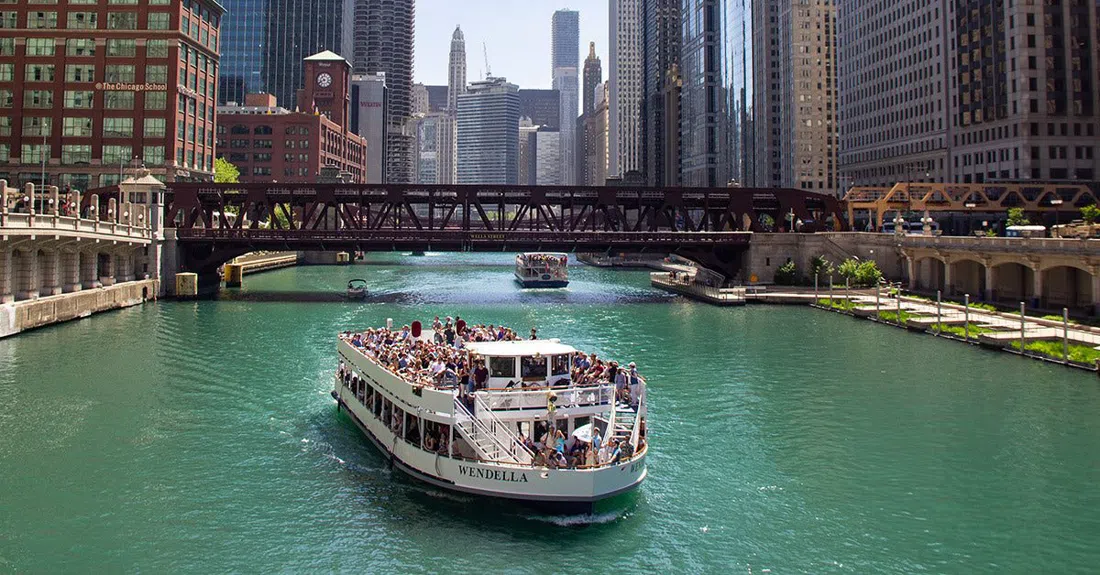
Wendella Boats (the north bank at Michigan Avenue) is the family-run operator and the best-value short option: roughly $28 to $36 for the 45-minute run, about $45 adult and $20 child (ages 4 to 12) for the 90-minute river tour. The short departures go often enough that a group of twenty can split across back-to-back sailings without anyone waiting long, and Wendella keeps sailing later into the autumn than most Riverwalk businesses.
Shoreline Sightseeing (docks on both the river and the lakefront) has the largest fleet, so it absorbs groups most easily and rarely leaves you waiting for the next boat. Its architecture tour starts at $39 for 60 or 75 minutes, and there is a Spanish-language departure from $46, which solves a mixed-language party neatly. Shoreline also runs a water taxi network linking Union Station, Michigan Avenue, Navy Pier and the Museum Campus, charged separately, and it works as real transport rather than a novelty. Its fireworks cruise is out of season by late September.
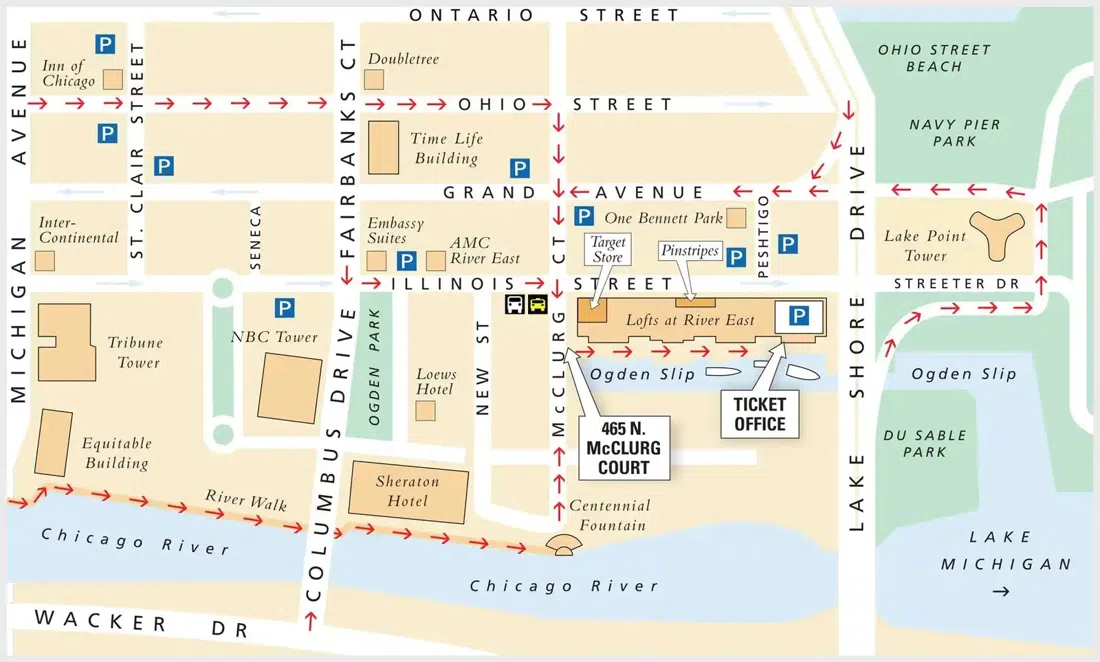
Chicago Line Cruises (the north bank, Streeterville) was the original architecture river cruise here and remains the quiet one: a docent, a smaller boat, the least crowded deck of the big operators, covering all three branches in 90 minutes. Its 2026 season started on 12 March and runs into late autumn, weather depending. September costs you the themed wine, whiskey and fireworks sailings, which finish at Labor Day, so the architecture run is all that is left. A party of thirty will need splitting across boats.
Odyssey Chicago River (Streeterville) is the upmarket, weather-proof outlier and the only river boat where a large group can sit down to a served meal. A glass roof means the skyline still reads through drizzle, and it is the river's only brunch cruise: around $172 adult and $131 child for brunch, weeknight dinner from about $169 per person. Semi-formal or cocktail dress is expected. That is several times the price of a standard architecture ticket, and you are buying the dining room as much as the river.
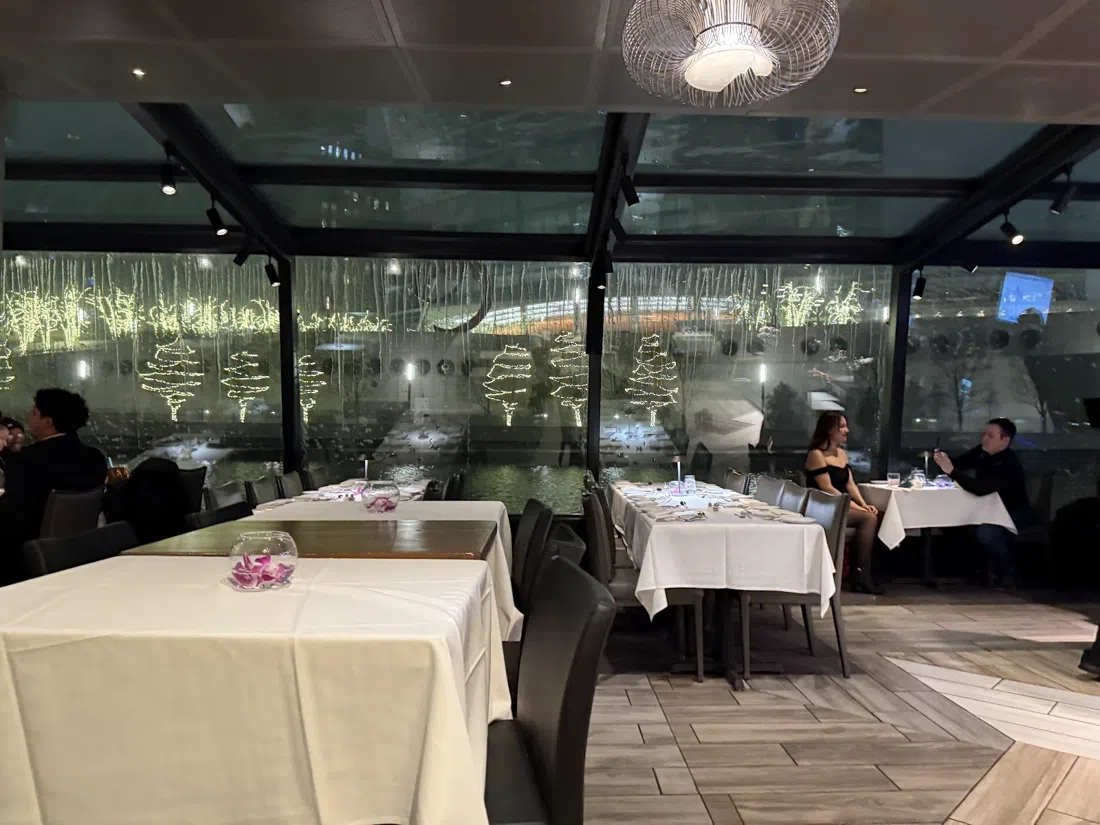
For scale: the mainstream architecture cruises start from 39 USD per person, they run seven days a week, and the most-booked of them holds a 4.8 out of 5 from 17,031 reviews. These are well-trodden boats, and September is still high season on the water.
Steering yourself or paddling
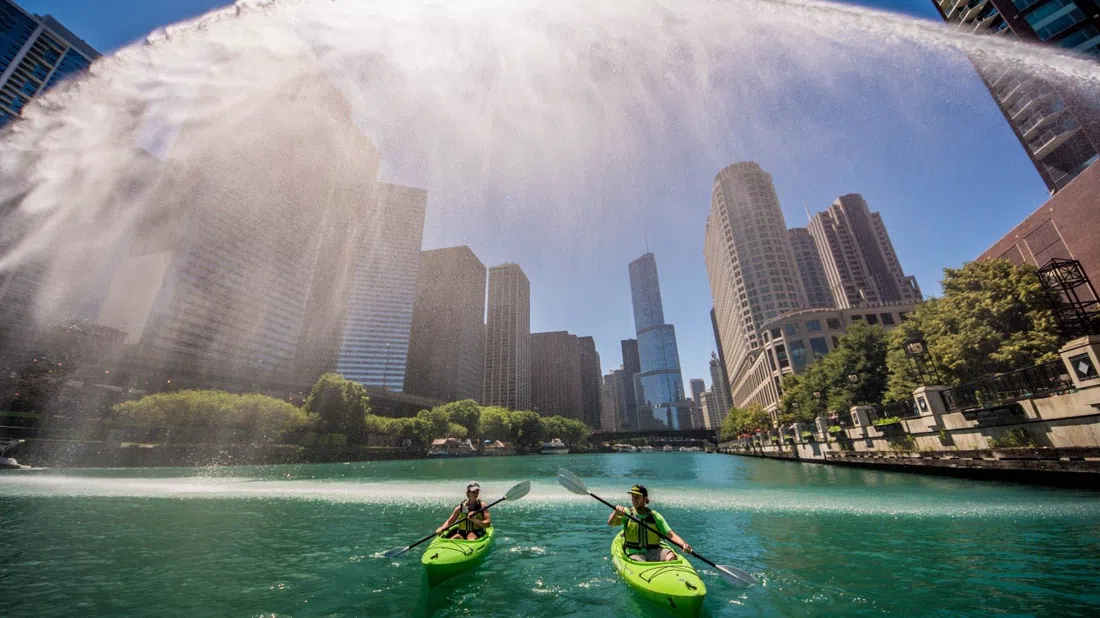
Urban Kayaks (Riverwalk, the Loop) is the one entry on this list a late-September visitor has to do first or miss entirely: the Riverwalk location's 2026 season ends around 1 October. Reckon on about $25 per person for the first hour and roughly $7.50 per 15 minutes after that, with pricing that moves by day and time. Solo renters must be 18 or over with photo ID and prior paddling experience on this river; beginners are put into tandems or a lesson, which is the correct call. Barge traffic, bridge shadow and cold water make it a poor choice for non-swimmers or nervous first-timers.
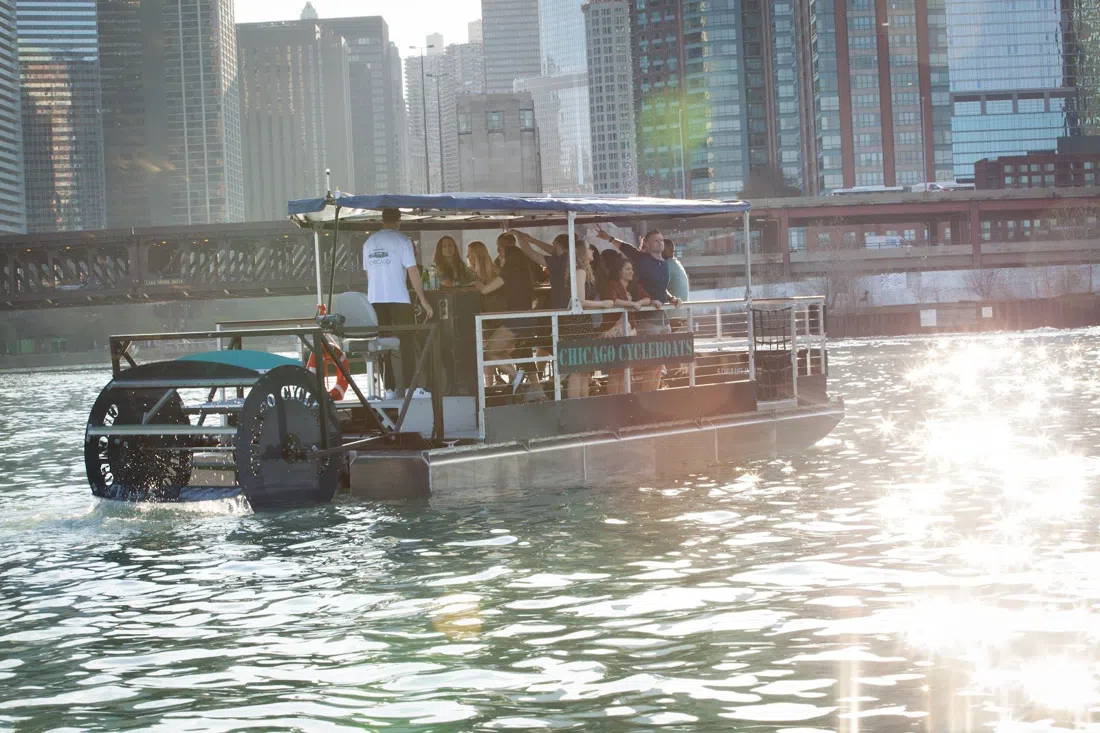
Chicago Boat Company (the north bank; the old Chicago Electric Boat Company name now redirects here) is the best group product on the water. No licence is required: Duffys seat 8 to 12 from about $155 an hour, luxury Duffys $225 to $235, pontoons take 10, and there is a party barge and a cycleboat. Yachts run $750 to $950 an hour, and a hired captain is $75 an hour with a two-hour minimum. That last one catches groups out, because taking a captain drops your legal capacity to six passengers. The nominated driver must be 21 or over with a valid licence and must not drink. You bring your own food and drink, which makes this the cheapest way to put a dozen people on the river with a cooler.
Bridges, gear rooms and a wet afternoon indoors
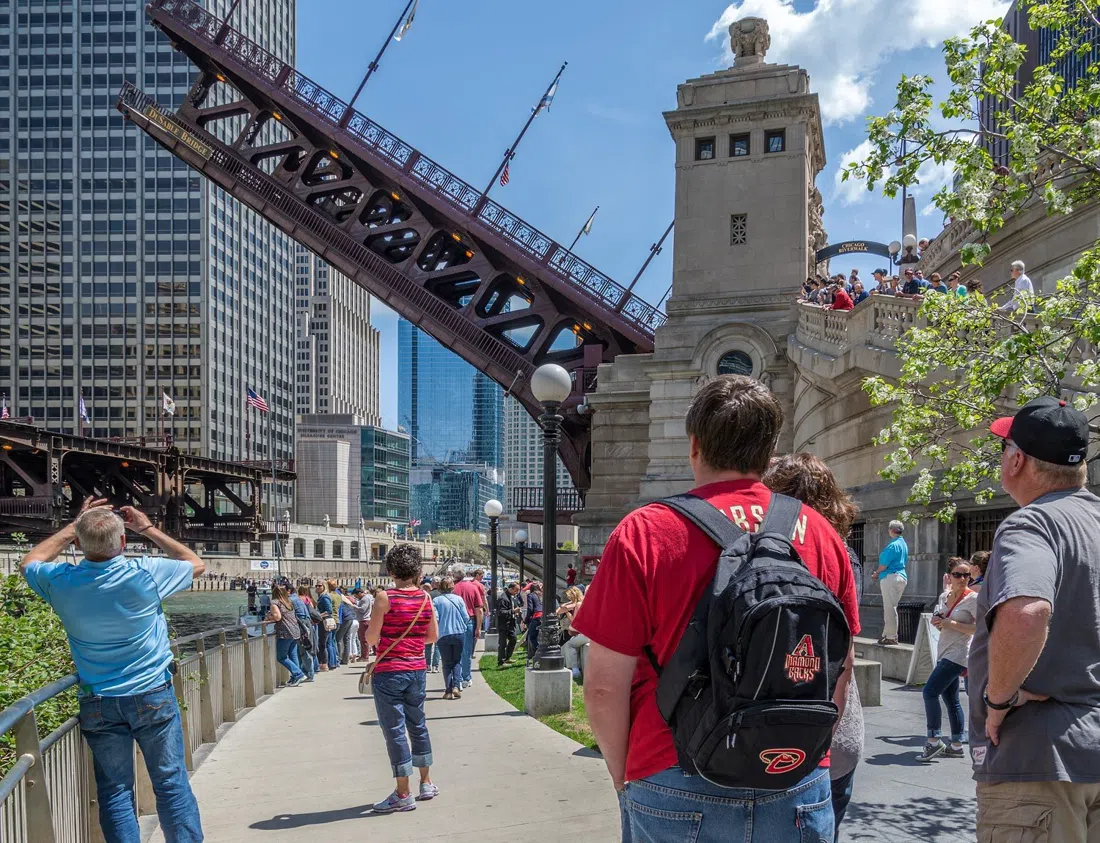
McCormick Bridgehouse & Chicago River Museum (inside the bridge tower at the DuSable Bridge, the Loop) is the most seasonal thing on the river and, for anyone reading in September, the anchor of the trip. General admission is pay-what-you-can; guided tours and bridge-lift viewings are $15. Guided tours run June to October, with Spanish-language tours on Saturday afternoons, and the 2026 season ends on 25 October. The autumn bridge-lift viewings put you inside the gear room while the bridge opens above you, and they fall on Saturdays 3 and 10 October, 9.15am entry, advance booking required. Closed Monday and Tuesday. The building is small, so groups are arranged with the museum director rather than booked online.
Across the water, the Chicago Architecture Center (the Loop, at the DuSable Bridge) is the answer to a wet afternoon and the best pre-cruise briefing available: $15 adult, $10 student with ID, free under 5, and a cruise-plus-Center combination drops admission to about $5. Its city model does the thing no boat can, which is show you the plan you are about to float through. Galleries absorb crowds far better than a boat deck does, so this is where a group of twenty should start; parties of 20 or more go through the group and private tours desk. Last entry is an hour before close (Sunday to Thursday 5pm, Friday and Saturday 7pm).
River North after dark, for nothing
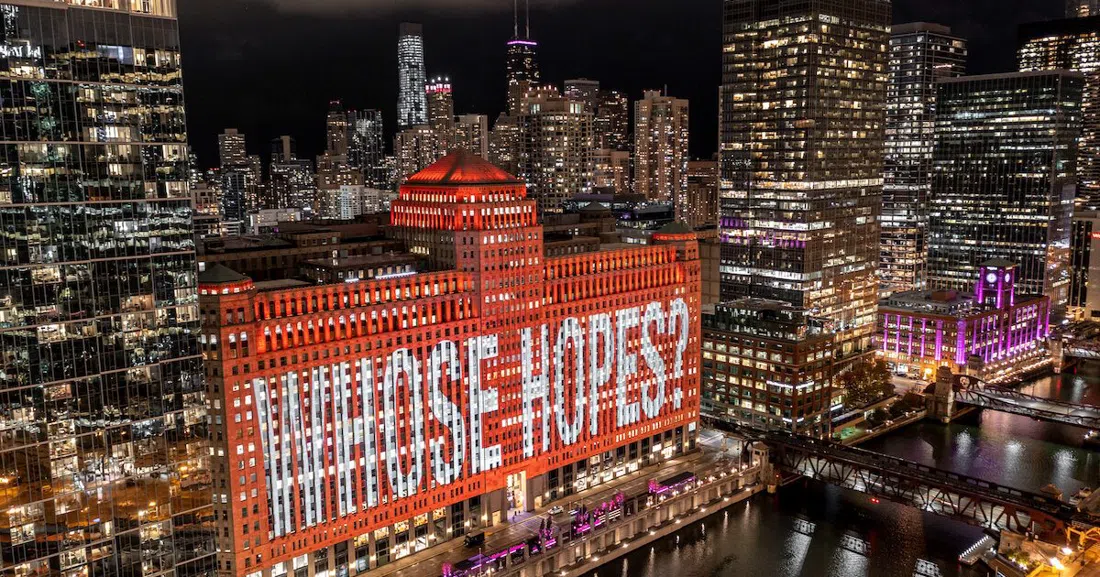
ART on THE MART projects onto the Mart's river façade in River North and is watched from the Riverwalk between State and Franklin. It is free, unticketed and open-air, with ADA ramps down to the walkway at State, Clark and Franklin, and it is the clearest argument for autumn over summer: from 10 September the show moves to 7.30pm to 8pm, Thursday to Sunday, so you no longer wait until nine for dark. Half an hour a night, four nights a week. Turn up for the start or you have missed it.
Eating and drinking at water level
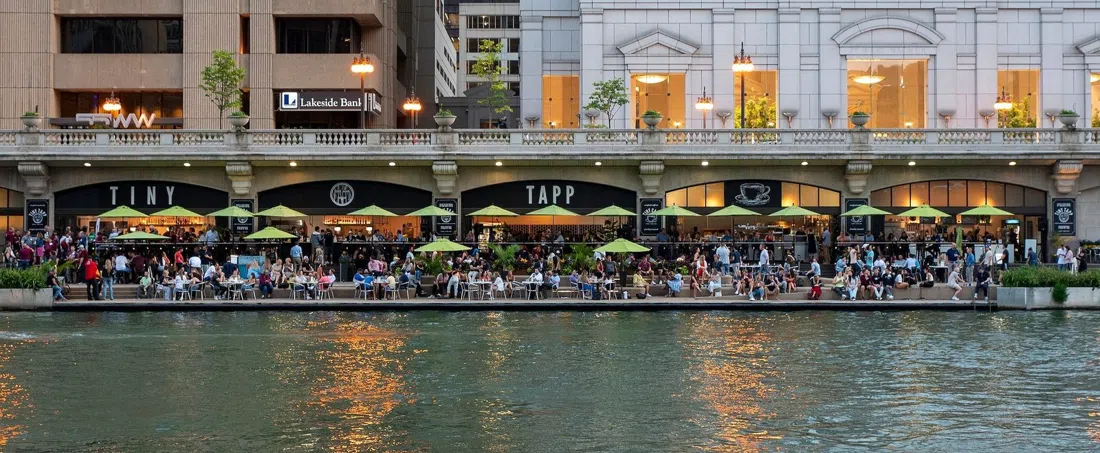
Tiny Tapp & Café (Riverwalk, the Loop) opens earliest, café from 7.30am, kitchen 8am, bar 11am, which makes it the practical first stop for the quiet, empty-walkway hour before the boats start. Coffee, ice cream, local beer and cocktails, a few dollars to low teens, free live music on Thursdays 6 to 8pm and Sundays 5 to 7pm. The footprint is small and reservations are taken only for semi-private events, so a party of fifteen should go elsewhere.
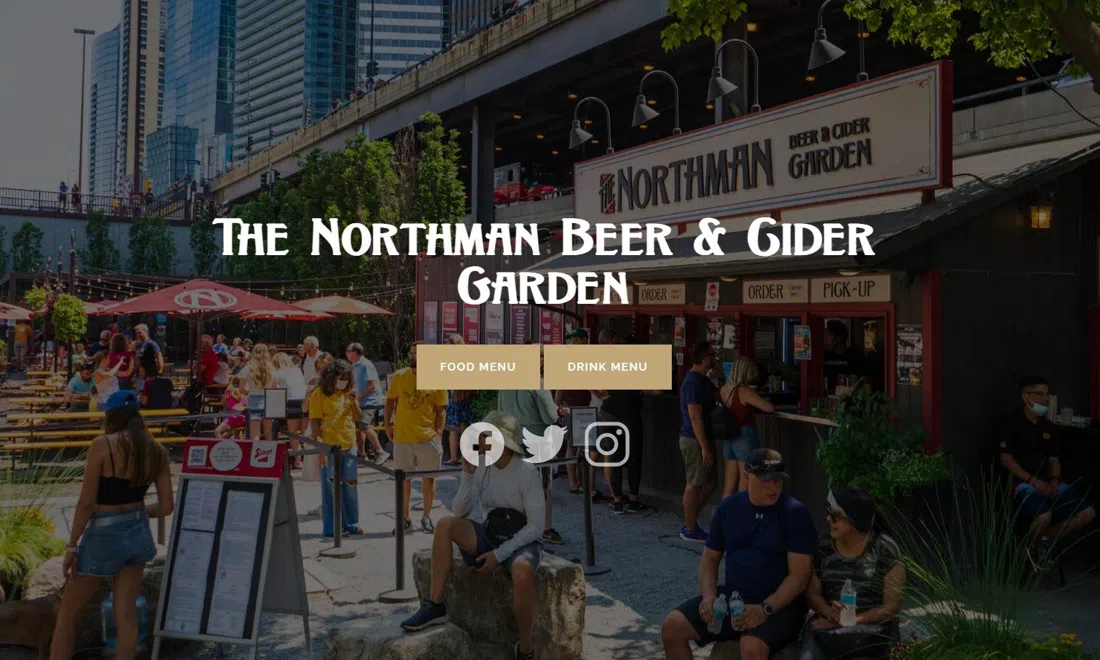
The Northman Beer & Cider Garden (Riverwalk, the Loop) is cider-led rather than beer-led and feels more European than its neighbours. Communal picnic tables suit groups, but it is largely walk-up, so arrive early on a festival weekend. Its ninth Oktoberfest runs three weekends, 18 to 20 and 25 to 27 September, then 2 to 4 October 2026, with Hofbräu Oktoberfestbier and Dovetail Festweizen in commemorative steins, plus stein-hoisting, nail-driving and polka. Around $10 to $20 a head for a drink and a snack.
Island Party Hut (Riverwalk, the Loop) is the loudest seasonal booking on the river. Fall Fest runs every Saturday from 19 September to 31 October 2026, with hayrides on the river, a pumpkin patch, apple cider donuts and live music in two blocks, 1pm to 4pm and 5pm to 8pm. Tickets start around $5 early-bird and rise closer to the date; food and drink are extra. The fine print matters here, because your ticket time is an entry window rather than a seat. Ticketed windows, private charters and hut boats make it easy for a group and wrong for a quiet drink.
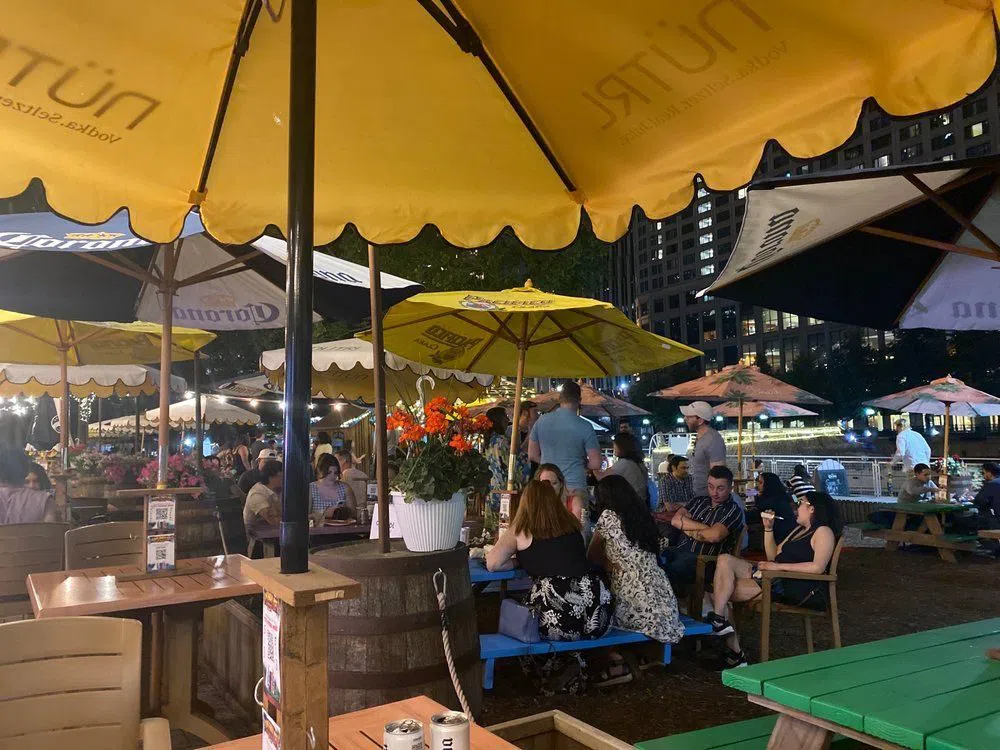
City Winery at the Riverwalk (Riverwalk, the Loop) is the hedge against an early cold snap: a retractable climate-controlled enclosure keeps it trading while neighbouring vendors board up for winter. Open daily 10am to 10pm, though hours shift around its own gigs, with private rooms and a private dining room for groups and reservations through Resy. Expect $30 to $60 a head for wine by the glass, boards and a main.
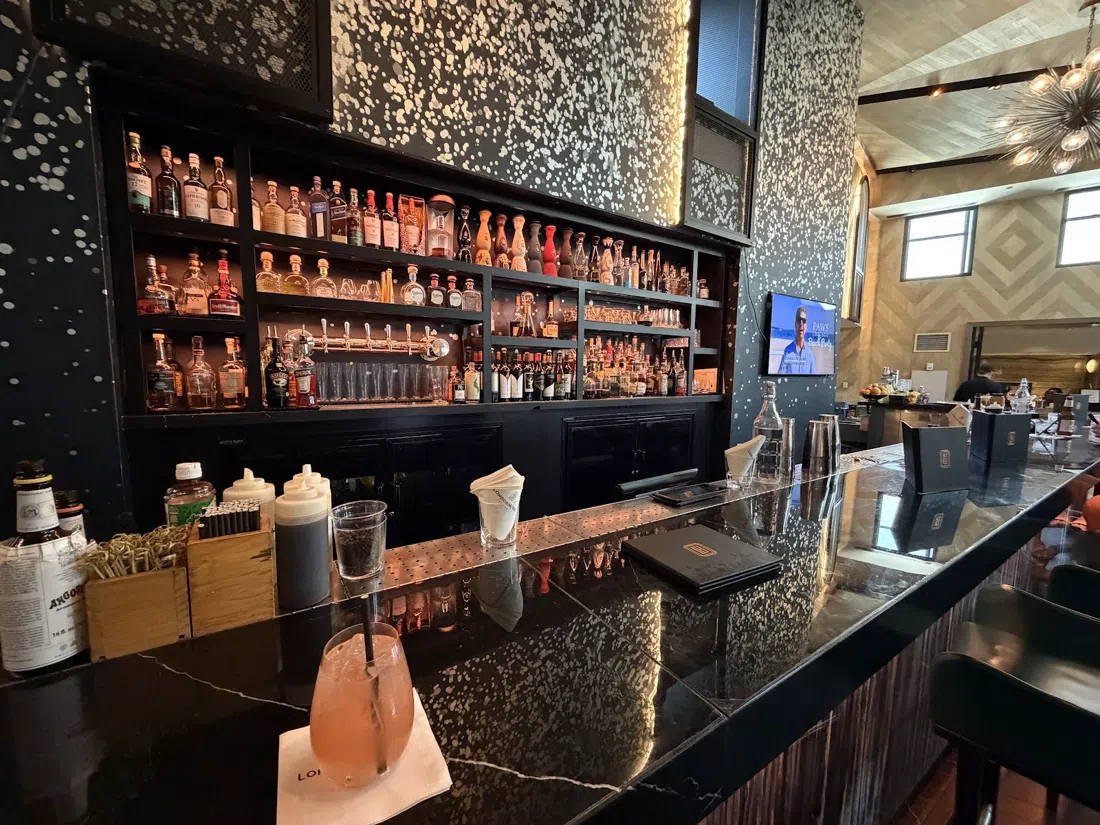
LH Rooftop at LondonHouse Chicago (the Loop, at Michigan Avenue and the river) is the counterpoint to all of the above: the top-down view of the same bend the cruises show you from water level, and the best place in the city to watch the light go at this time of year. Roughly $20 to $70 a head, open daily 11am to midnight with food until 11pm and weekend brunch 11am to 2.30pm. Reservations are strongly advised and made online; a large group is better handled as a booked event than a walk-up. The rest of the city sits in our Chicago guide if you want to build the other days around this one.
Two half-days that work
The first Saturday route: 7.30am coffee at Tiny Tapp on an empty walkway, 9.15am into the bridgehouse gear room for a lift viewing, an hour in the Architecture Center with the city model, then a midday cruise, then Oktoberfest at The Northman until the light drops. That is a full day and it only exists on 3 and 10 October.
The second, better in the last week of September: kayak at 10am while the season still holds, lunch on the walkway, a 45-minute cruise mid-afternoon, drinks on the rooftop for sunset, then down the ramp at State or Clark for the 7.30pm projection. The finish is free and there is nothing to queue for.
Tickets, queues and booking ahead
Walk-up works on the shorter departures and the big-fleet operator most weekdays; it works badly on Saturday afternoons and on the docent-led 90-minute boats, where the cruises run seven days a week and demand is steady enough (4.8 out of 5 from 17,031 reviews on the most-booked run) that the good departure times go first. Book the cruise ahead, book the bridge-lift viewing ahead because it requires it, and buy the combined cruise-and-Center ticket if you want both, since it cuts museum admission to about $5. Groups of twenty or more should assume a group desk rather than a checkout, on every boat here. A guided option is bookable alongside this page if you would rather not shop around.
Best time to go
Day of week first. Tuesday to Thursday is the river at its most civilised: shorter dock queues, an underpass you can walk two abreast. Saturday is the opposite, and it is also when the seasonal things happen, so trade accordingly. Monday and Tuesday rule out the bridgehouse museum entirely.
Time of day second. The walkway before nine belongs to runners and delivery trolleys, and it is lovely. Boats fill between 11am and 3pm. The 4pm to 6pm sailings buy you the low copper light on the west-facing walls, and by late September the sun is gone before seven, which is why the projection now starts at 7.30pm.
Dates third, and these are the ones that decide a September trip. Kayaking at the Riverwalk ends around 1 October. Fall Fest runs Saturdays from 19 September. Oktoberfest takes the weekends of 18 to 20 and 25 to 27 September and 2 to 4 October. Bridge-lift viewings are 3 and 10 October only. The bridgehouse museum closes for the year on 25 October, the docent cruise sails until 22 November, and the climate-controlled wine garden outlasts nearly everything.
Is it worth it
Yes, and specifically in this month. An architecture cruise is one of the few sightseeing boats anywhere that teaches you something you could not have read standing still, and September removes summer's two problems, heat and the nine o'clock wait for darkness, while adding a festival calendar and a working bridge-lift season. It suits architecture-curious travellers, couples who want a rooftop and a projection rather than a nightclub, and groups who would rather hire a Duffy with a cooler than book a restaurant. Families do less well on the 90-minute boats, where the commentary outlasts the attention span; take the 45-minute run instead. Anyone wanting a party boat gets poor value, because the themed sailings have finished, and so do nervous paddlers, who should stay on the promenade and watch.
Practical notes
The Riverwalk is walkable end to end in 25 minutes and every dock on this list sits within ten minutes of a bridge crossing, so you will not need a taxi between them; the water taxi doubles as real transport if you are arriving from Union Station or heading to the Museum Campus, charged per hop. Cards work everywhere on the river, including the cheapest café, but carry some cash for tips and for pay-what-you-can admission at the bridgehouse. Build in the thirty-minute pre-boarding call on the docent cruise, and treat any festival ticket time as an entry window. Budget per person, for a full day: around $40 to $60 on the lean plan (one short cruise, the free projection, a pint at a picnic table), $90 to $130 for the docent cruise plus the Architecture Center combo and a rooftop drink, and $200 or more the moment a dining cruise or a hired captain is involved. Bring a layer, because the water is five degrees colder than the street after sunset, and start your Chicago hotel search on the north bank or in the Loop if you want to walk to a 9.15am bridge tower.