The Chicago issue
The City That Invented the Sky: Chicago's Architecture
A measured, half-day-by-half-day route through the city that built the first skyscraper — from the river that explains everything to Wright's suburbs and two houses that changed the world.

By Bram de WitThe long way round any city
In 1885, on a corner of what is now the Loop, the engineer William Le Baron Jenney hung a ten-storey building on a skeleton of steel instead of stacking it out of load-bearing stone — and the modern city was born. Everything tall you have ever stood beneath descends from that decision, made here, in a muddy river grid that a fire had cleared just fourteen years earlier. Chicago did not merely build skyscrapers; it invented the conditions that made them thinkable, and then spent the next century arguing, in steel and concrete and poured plaster, about what a tall building should actually be.
That argument is the real subject of an architecture trip here, and it rewards planning. The sights are scattered across a compact downtown, two western suburbs, a lakeside temple to the north, and one lonely glass box an hour out on the prairie. Below is a way to see them in sensible half-days rather than as a checklist — with honest notes on what suits a couple, what suits a group, and what will cost you.
First, read the city from the water
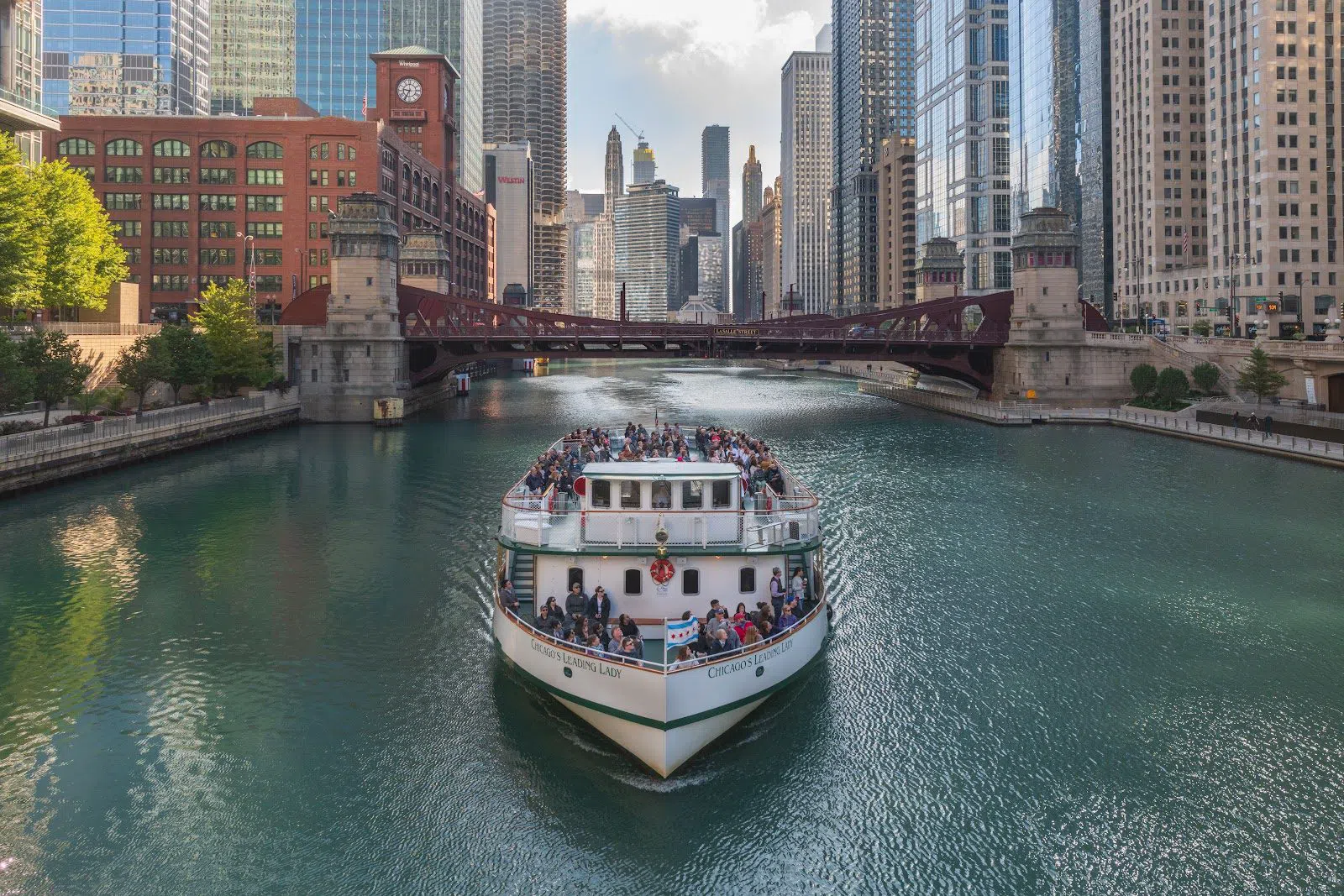
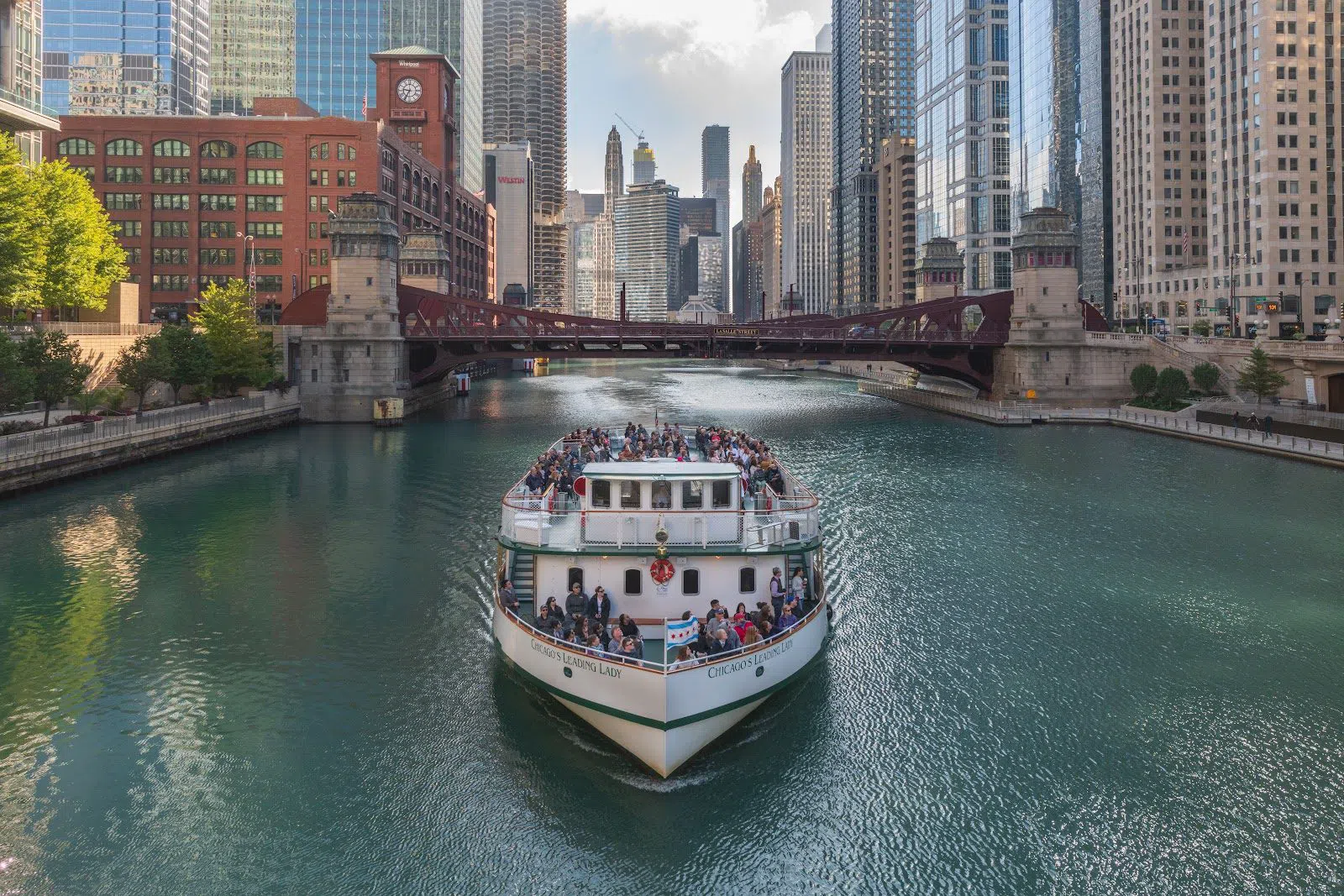
Before you crane your neck at anything, get on the river. The Chicago Architecture Center River Cruise aboard Chicago's First Lady (boarding on the Riverwalk at Michigan Avenue, in the Loop) is the single best orientation this city offers, and I say that having taken more skyline boat tours than is dignified. Trained volunteer docents narrate ninety minutes along all three branches of the Chicago River, and because the river cuts a canyon straight through downtown, you end up with a legible mental map of how the styles stack chronologically: the heavy masonry of the 1880s, the terracotta-clad towers of the 1920s, the black steel of the mid-century, the twisting glass of now.
It is built for groups — group rates and private charters are available, there's no door policy, and boarding is by pre-booked timed slot. Expect around $55–80 per person. One practical warning: it genuinely sells out in summer, so book several days ahead rather than turning up. Couples and solo travellers do just as well as tour parties here; grab a seat on the open upper deck, port side going out.
Plan your Chicago trip
Live prices from our booking partners.
Free cancellation on many rooms. We may earn a commission when you book.
Where the skyscraper was born: a Loop walking morning
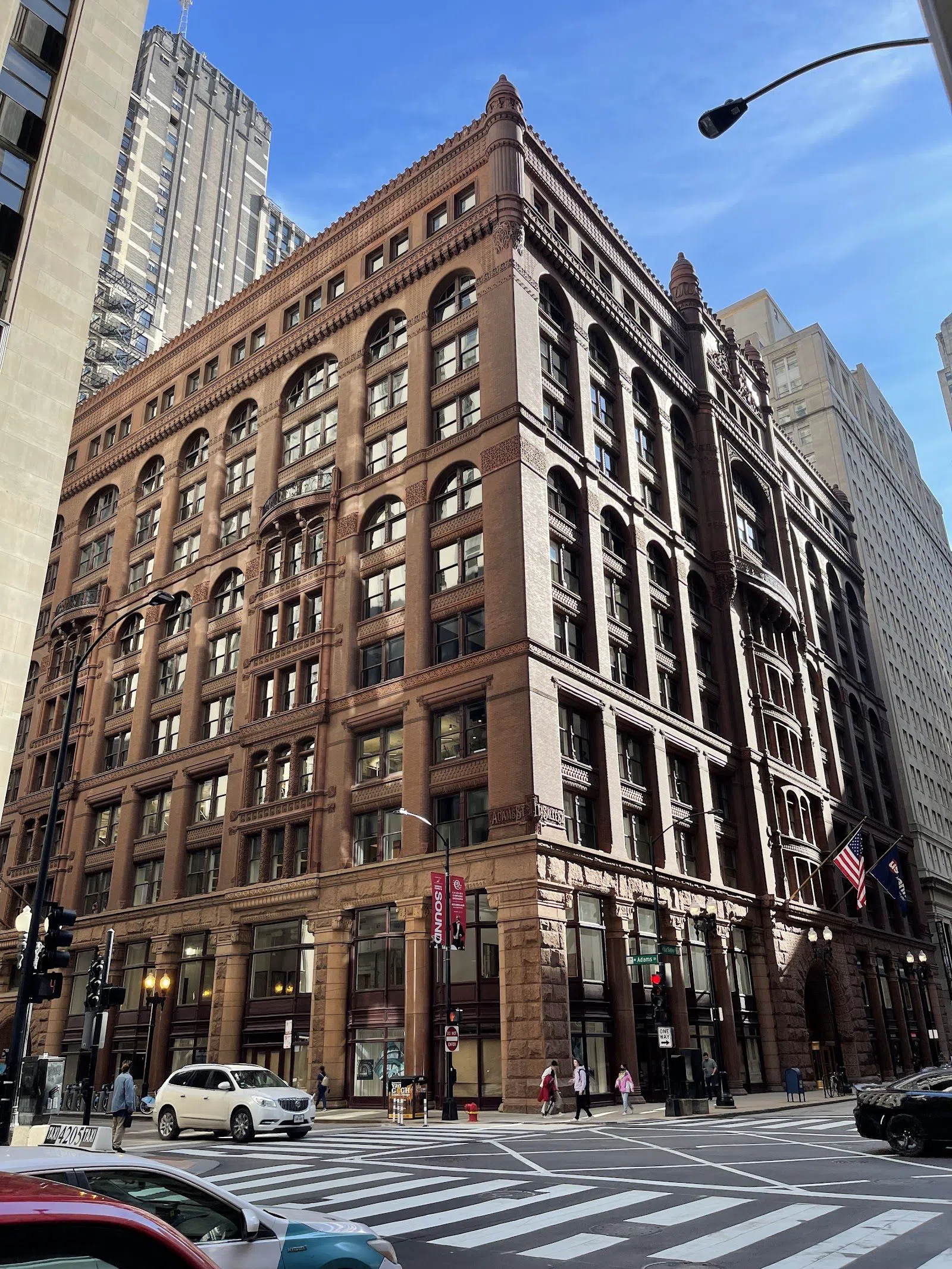
The Loop is a short, dense grid, and the founding monuments sit within a fifteen-minute walk of each other — a perfect self-guided half-day on foot. Start at The Rookery Building (LaSalle Street, in the financial Loop). Burnham and Root threw up its brooding 1888 shell; Frank Lloyd Wright, then a young unknown, remodelled the light court in 1905 into a cathedral of white marble and gold. The lobby is free to walk into during business hours, which makes it the only major Wright interior in the city you can see without paying a cent. If you want the fuller story, the Frank Lloyd Wright Trust runs small guided tours capped at around fifteen people (roughly $15–22); those suit design-minded couples and small groups, less so a party of twenty.
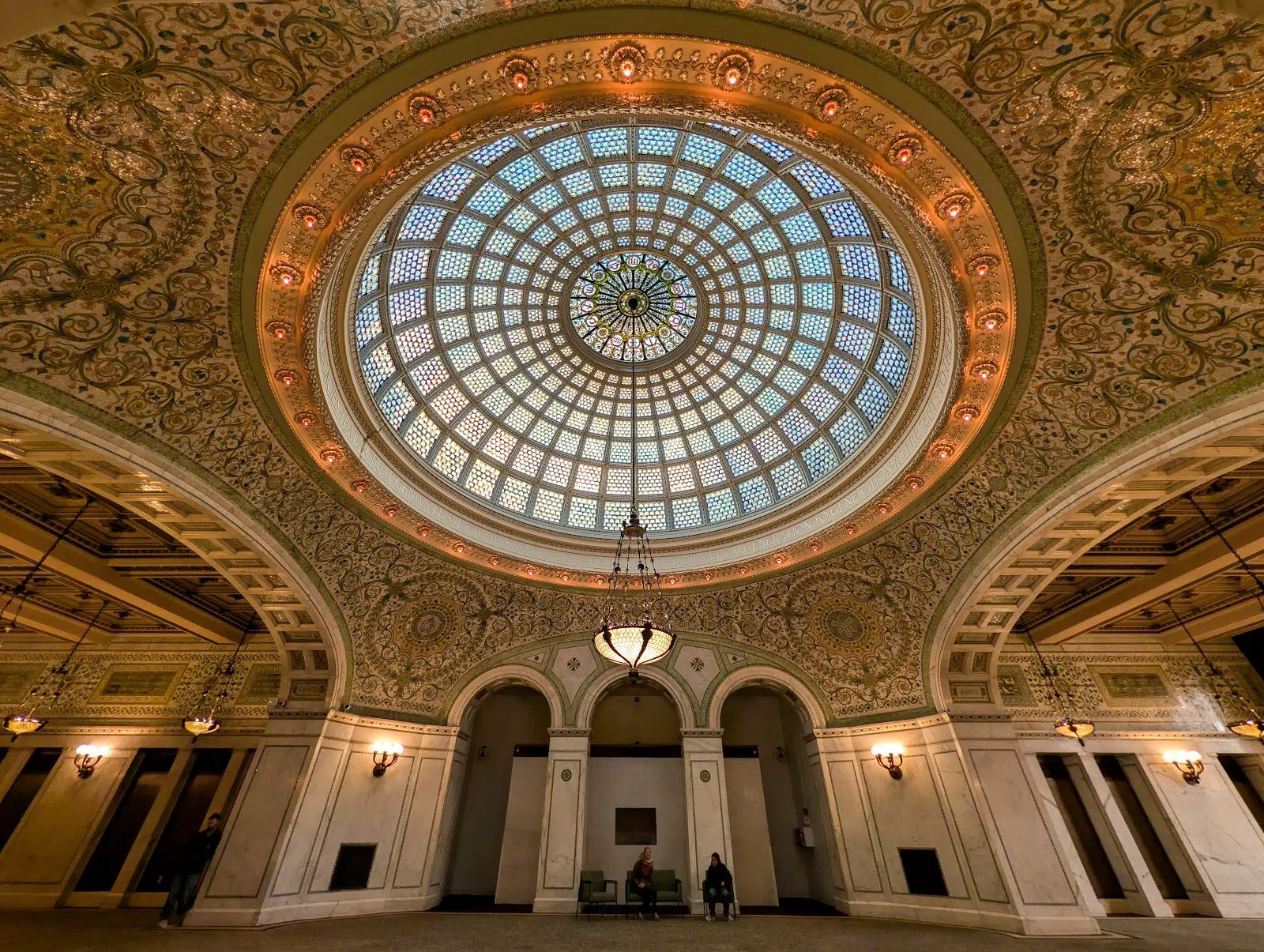
A few blocks east, the Chicago Cultural Center (Michigan Avenue, facing Millennium Park) is the easiest win on this whole itinerary: free, open to all, no ticket, groups walk straight in. It's a Beaux-Arts civic palace from 1897, and its Preston Bradley Hall is crowned by the largest stained-glass Tiffany dome on earth — a genuinely startling forty-foot canopy of coloured glass. Free guided architecture tours run most days if you want them.
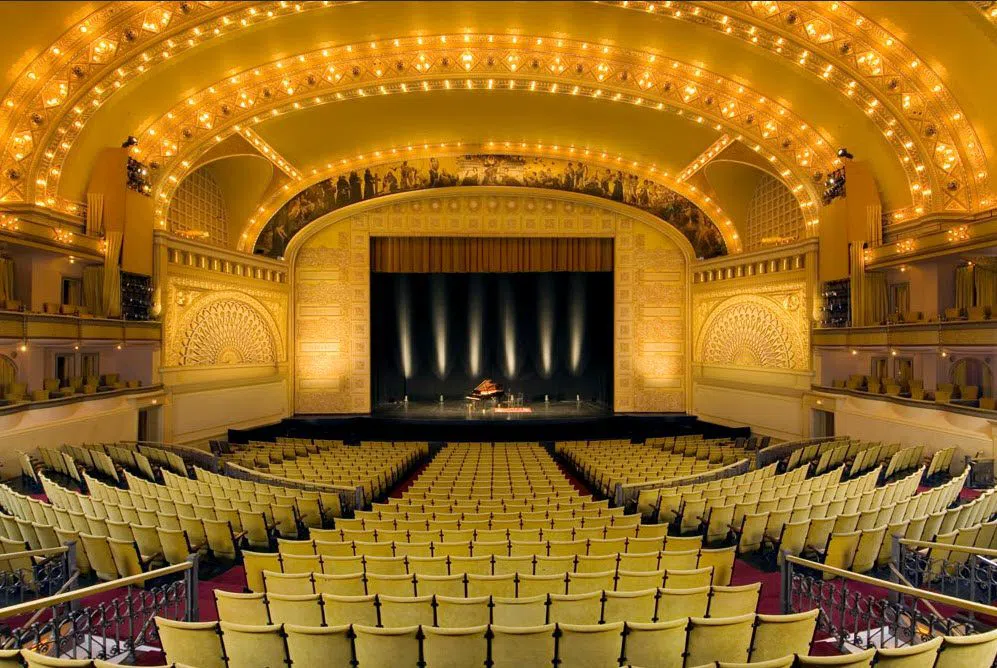
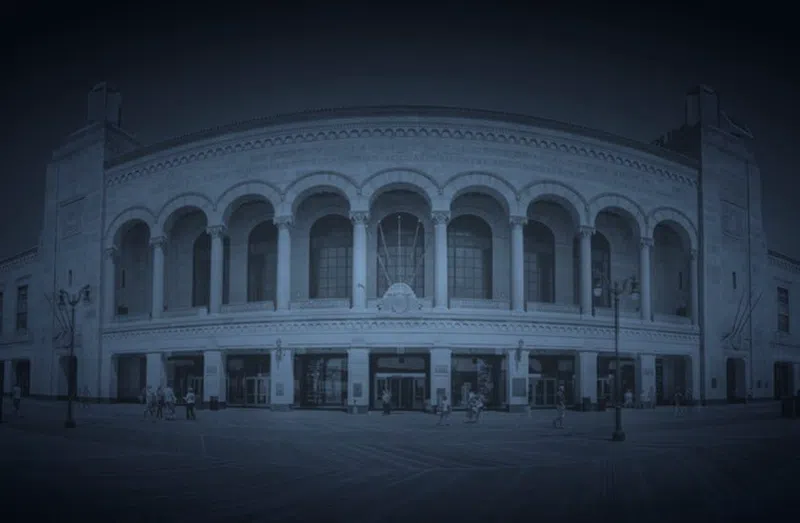
Round the morning off at the Auditorium Theatre (Congress Parkway, southern Loop), Louis Sullivan and Dankmar Adler's 1889 masterpiece and, to my ear, the most important interior in the city. It was engineering and art at once: a hotel, an office block and a theatre with near-perfect acoustics, all wrapped in Sullivan's stencilled gold ornament. Its skylight and atrium restoration runs through 2027, but the theatre stays open for shows and for 80–90 minute historic and backstage tours (around $20–30), which comfortably accommodate larger private groups. This is where you understand that Chicago's architects thought as hard about how a room sounds and feels as how a tower stands up.
The park in the middle
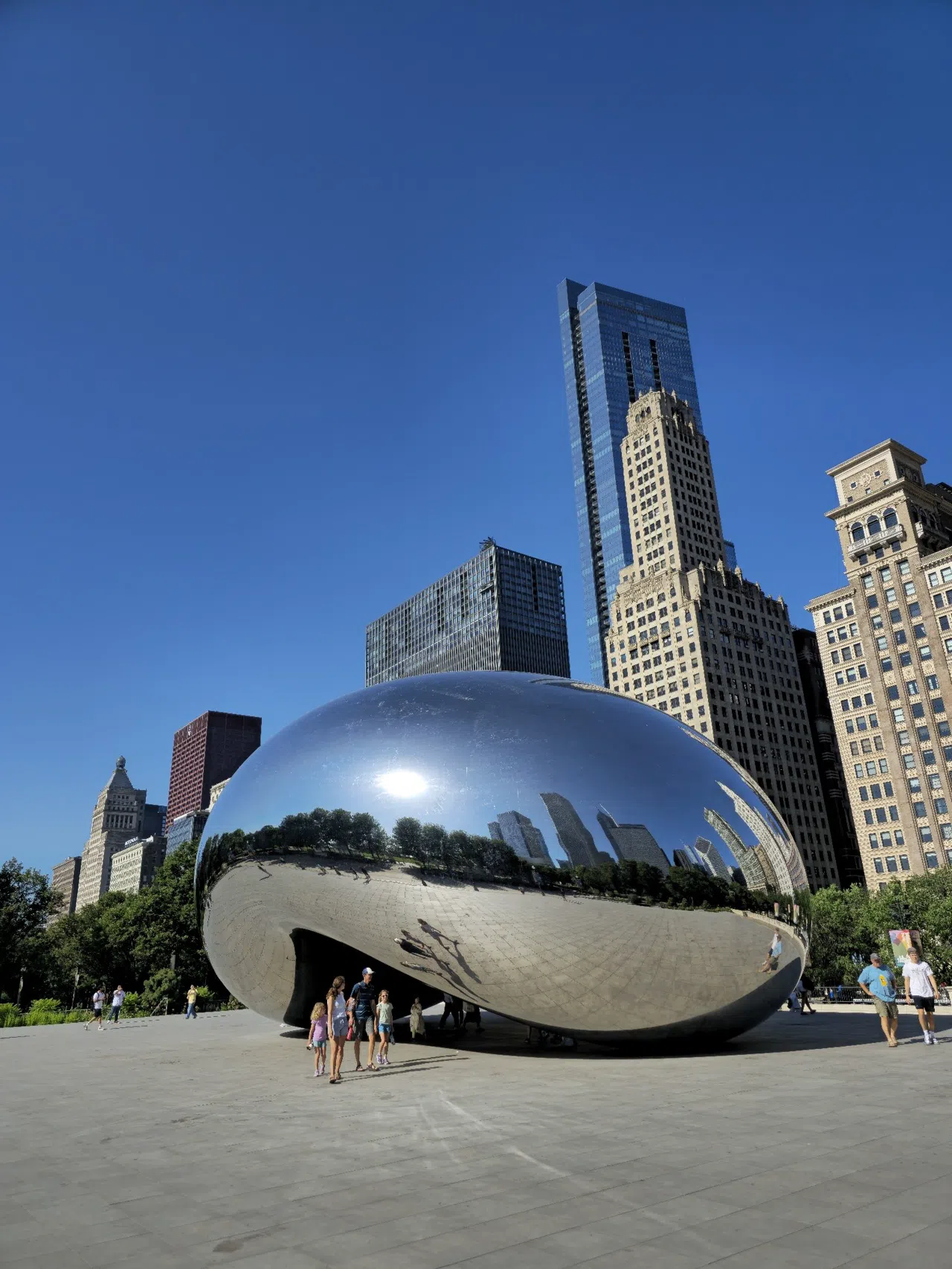
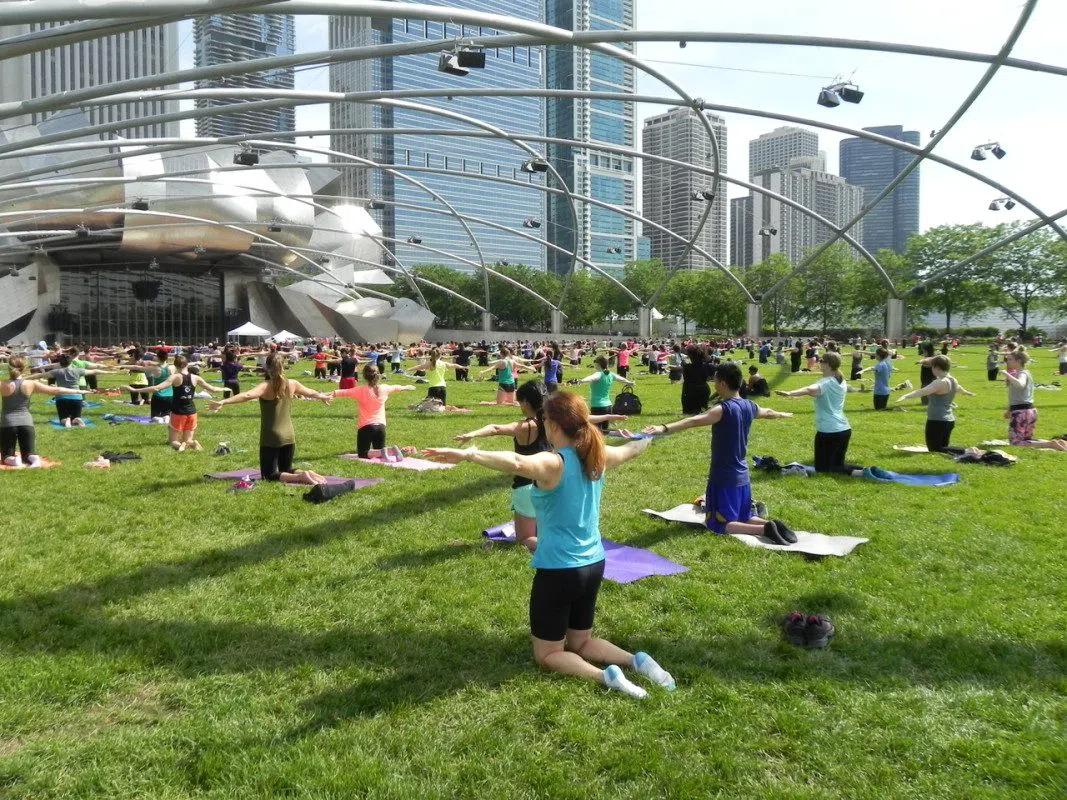
Stitched between the Loop and the lake, Millennium Park (Cloud Gate & Jay Pritzker Pavilion) (Michigan Avenue at Washington) is the free, unbookable, always-open heart of it all — the natural pause between a morning of buildings and an afternoon of views. Anish Kapoor's mirror-polished Cloud Gate — 'The Bean' to everyone who has ever stood under it — is back on a refreshed, more accessible plaza, and Frank Gehry's billowing steel Pritzker Pavilion hosts free classical and jazz concerts through the summer. It handles crowds and groups effortlessly, and it costs nothing; bring a picnic to an evening concert and you've had one of the best-value nights in any big city.
Up into the sky: the high viewpoints
Chicago gives you three very different ways to get above the skyline, and you do not need all three. Choose by temperament.
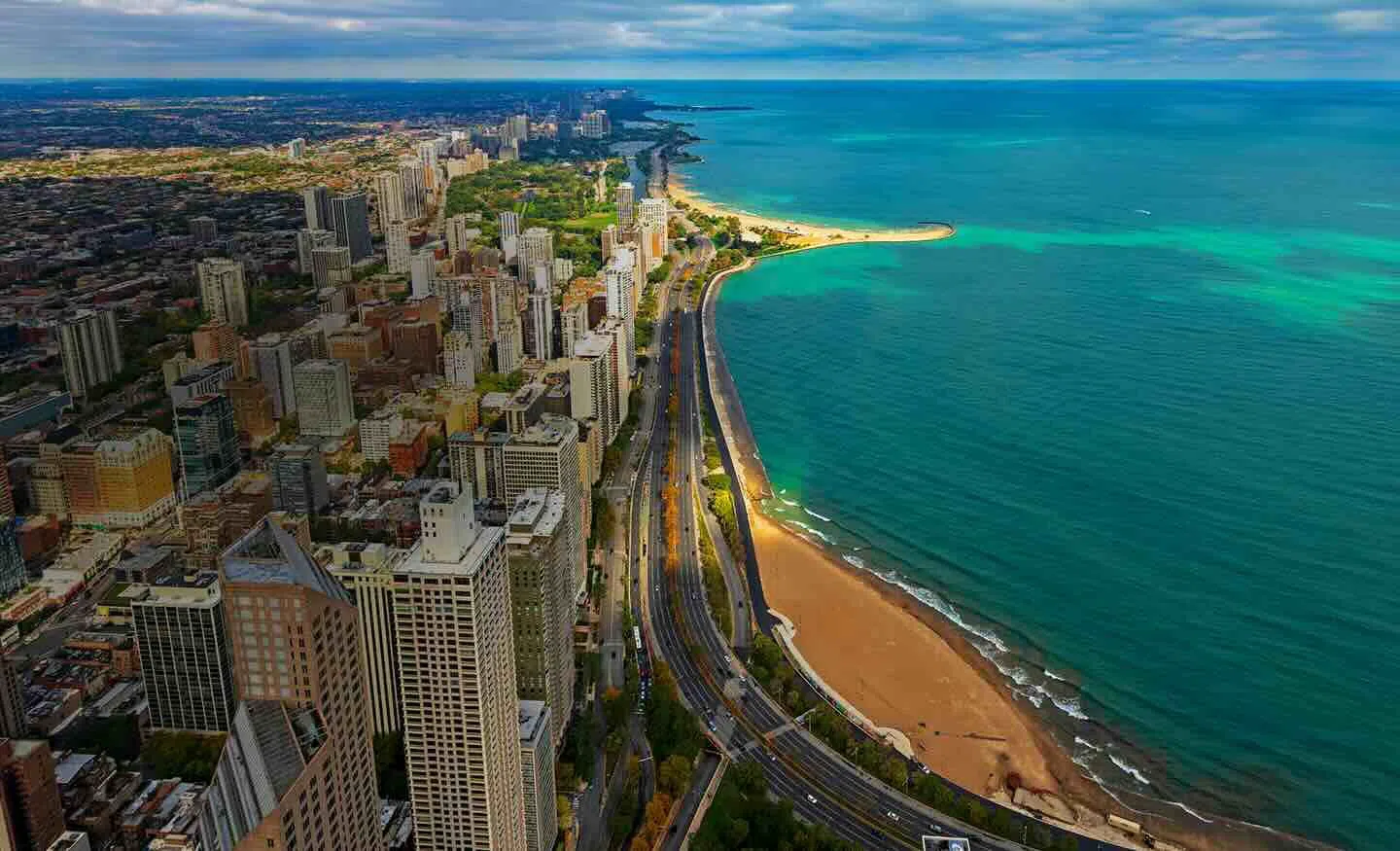
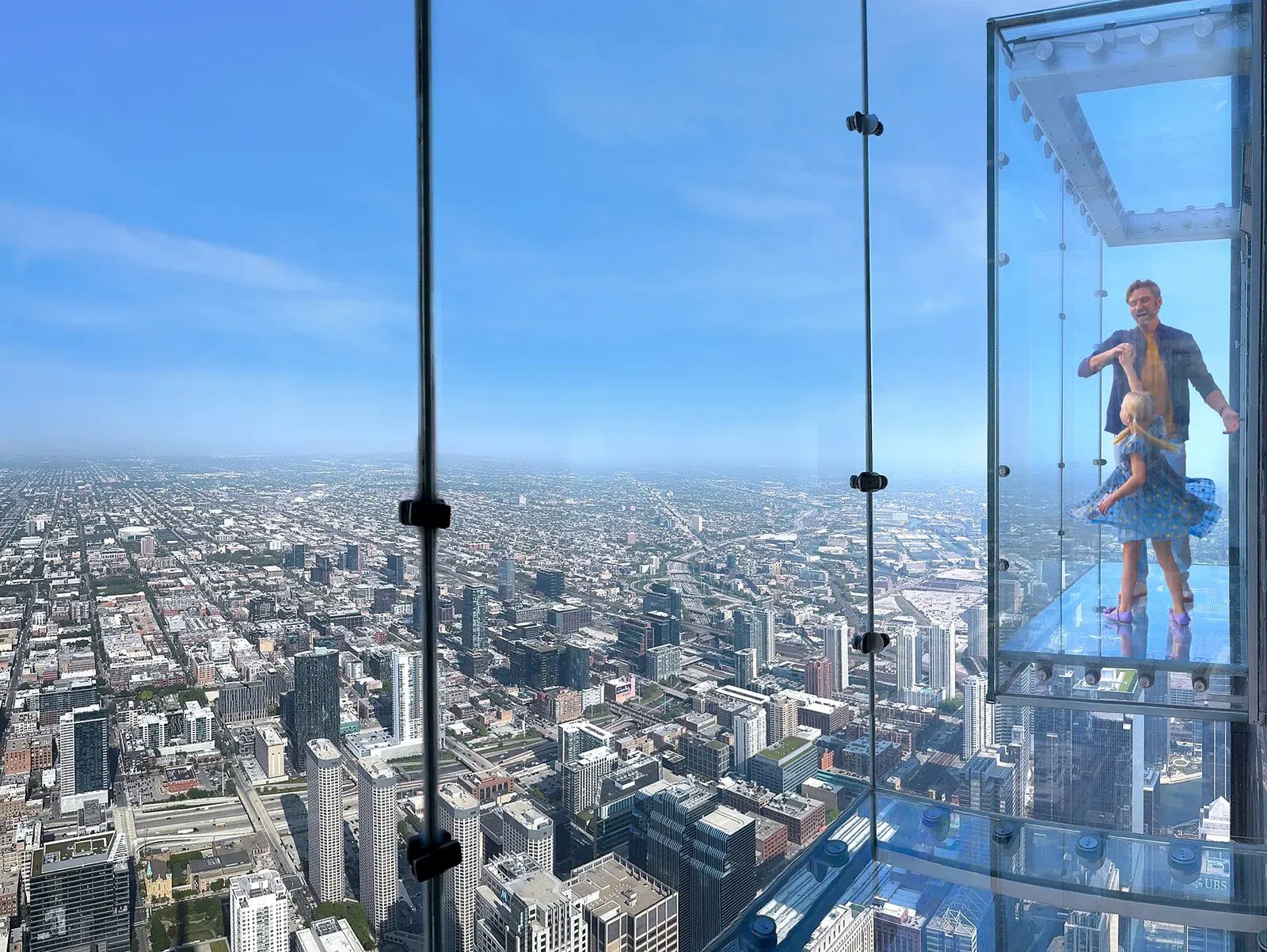
For sheer altitude, the Willis Tower Skydeck (The Ledge) (Wacker Drive, West Loop) is the tallest viewpoint in the city and home to the famous glass Ledge boxes that cantilever you out over 400 metres of nothing. Adult tickets start around $32, with group and expedited-entry options and timed 30-minute windows; go just after opening or after 5pm to dodge the worst queues. For the prettiest view rather than the highest, 360 Chicago (formerly the John Hancock Observatory; on North Michigan Avenue, the Magnificent Mile) has the better sightline — straight up the lakefront and down the Mag Mile — plus TILT, a glass platform that leans you out over the street for a paid $9 add-on. Entry is around $30–35. It's group-friendly, and its 21-and-over CloudBar 'Sip & View' makes it the more sociable option for adult groups; families with children under the drinking age should note that bar is off-limits.
The third option is the most interesting for anyone who's followed the historical thread this far. The St. Regis Chicago (Lakeshore East, by the river) is Jeanne Gang's Studio Gang tower — the old Vista Tower, and the headline building of the contemporary skyline. Its rippling, three-tiered glass facade is a living rebuttal to the flat steel boxes of the mid-century, and you can go up for a drink or a meal at the sky bar and restaurants rather than paying for an observation ticket. It's the priciest of the three (premium drinks and dining; hotel rooms more so), and it suits couples and small groups over big parties. Standing at its bar looking back at Willis Tower is the whole century-long argument in a single glance.
Wright's suburb: an Oak Park half-day
To understand what Chicago did with the horizontal, not just the vertical, you go west to Oak Park, a leafy suburb about a 25-minute ride out on the Green Line. This is where a young Frank Lloyd Wright, having cut his teeth downtown, invented an entirely American architecture.
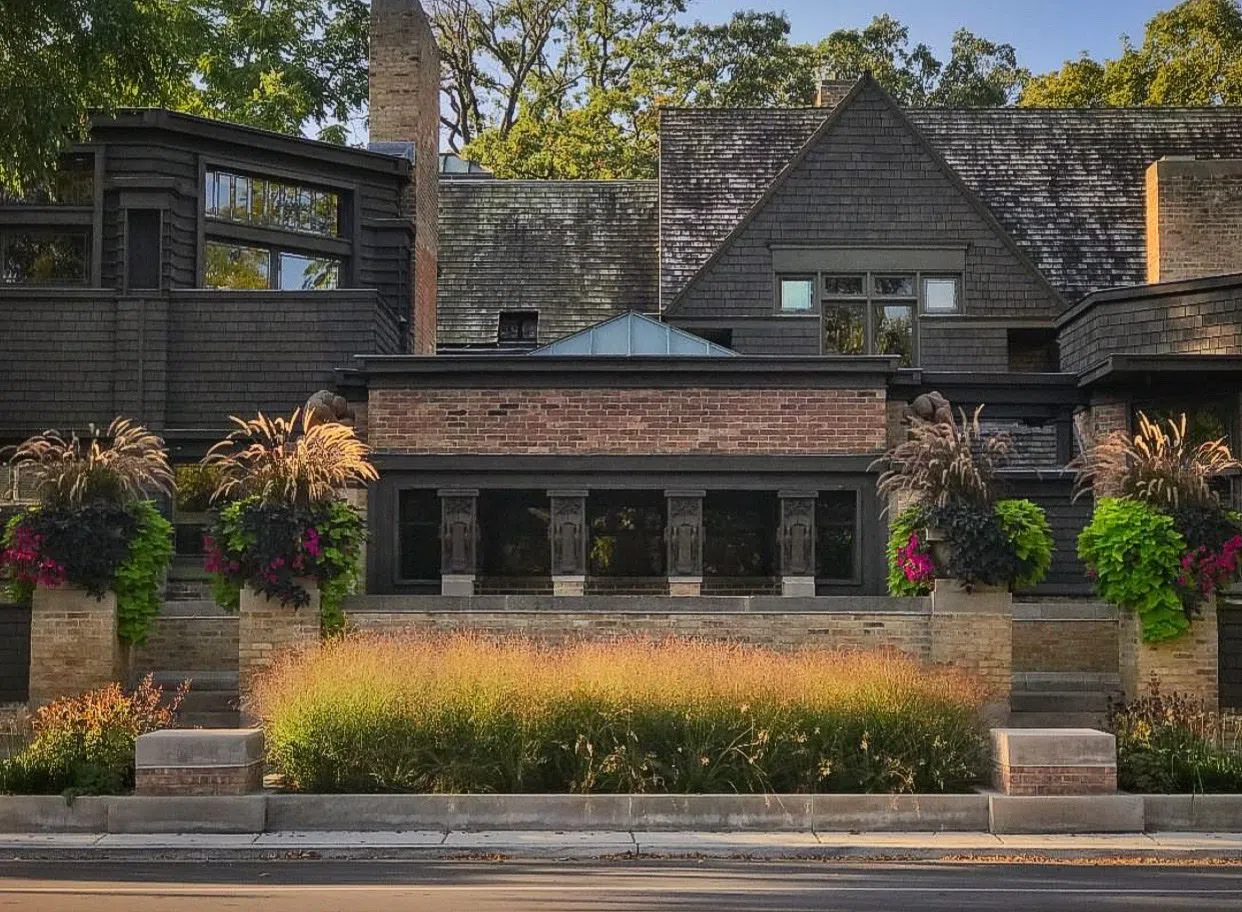
Start at the Frank Lloyd Wright Home and Studio (Oak Park), the house he built for himself and endlessly experimented on — the laboratory where the low-slung, horizontal Prairie School took shape. Guided interior tours run daily (around $25, or roughly $36 in a combo); a small-group 'Wright Around Oak Park' walk is capped at ten and books up, so reserve ahead. Pair it with the self-guided audio walk through the surrounding Historic District, which is dense with Wright-designed houses you view from the street.
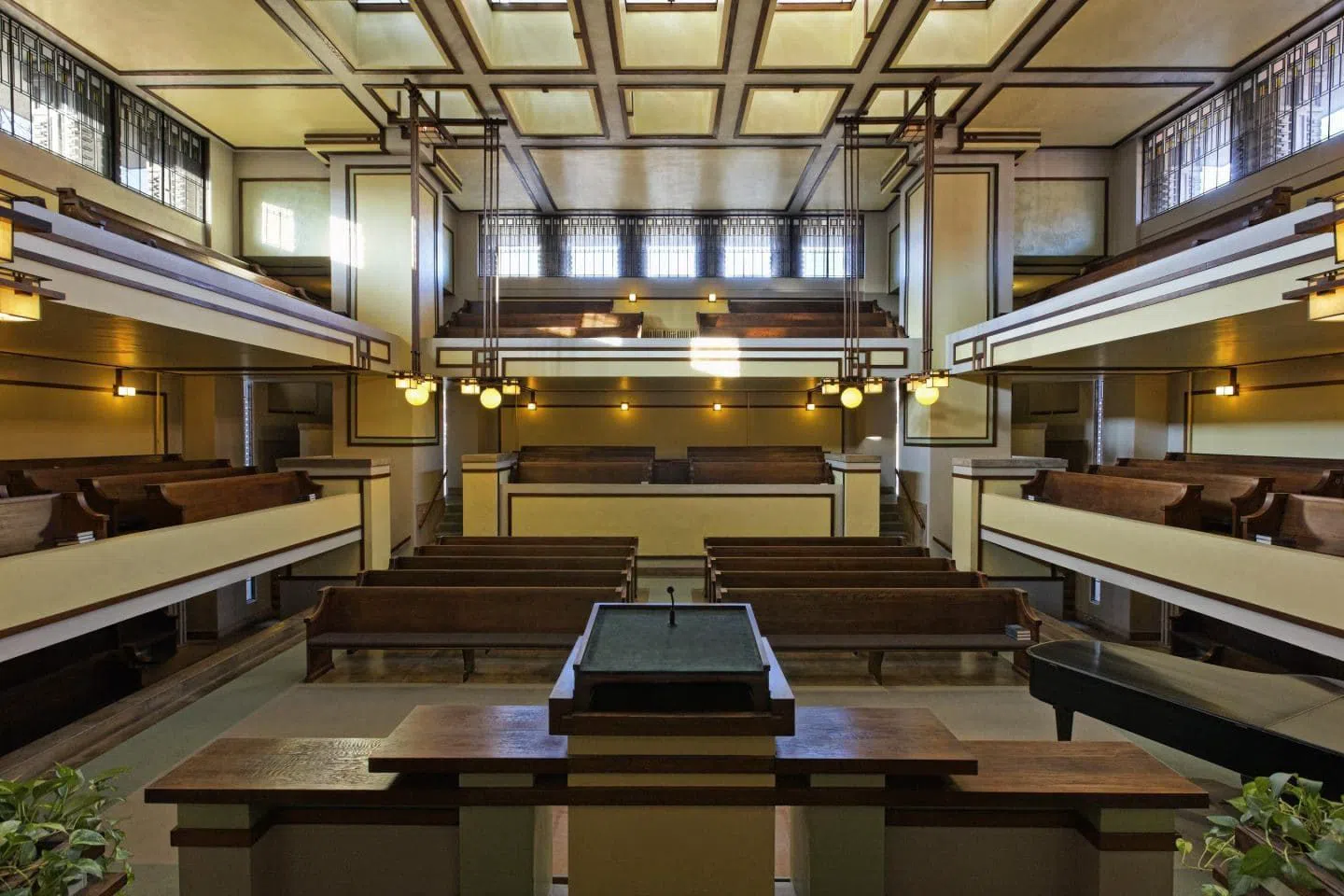
A short walk away, Unity Temple (Oak Park) is Wright's greatest public building of the era and one of America's first monumental poured-concrete structures — a serene, top-lit cube of a worship space that still serves an active congregation. Tours run 45–90 minutes (about $22–30), with scheduled group slots; check the tour calendar against services before you go. It is a quieter, more contemplative stop than the Studio, and worth the hush.
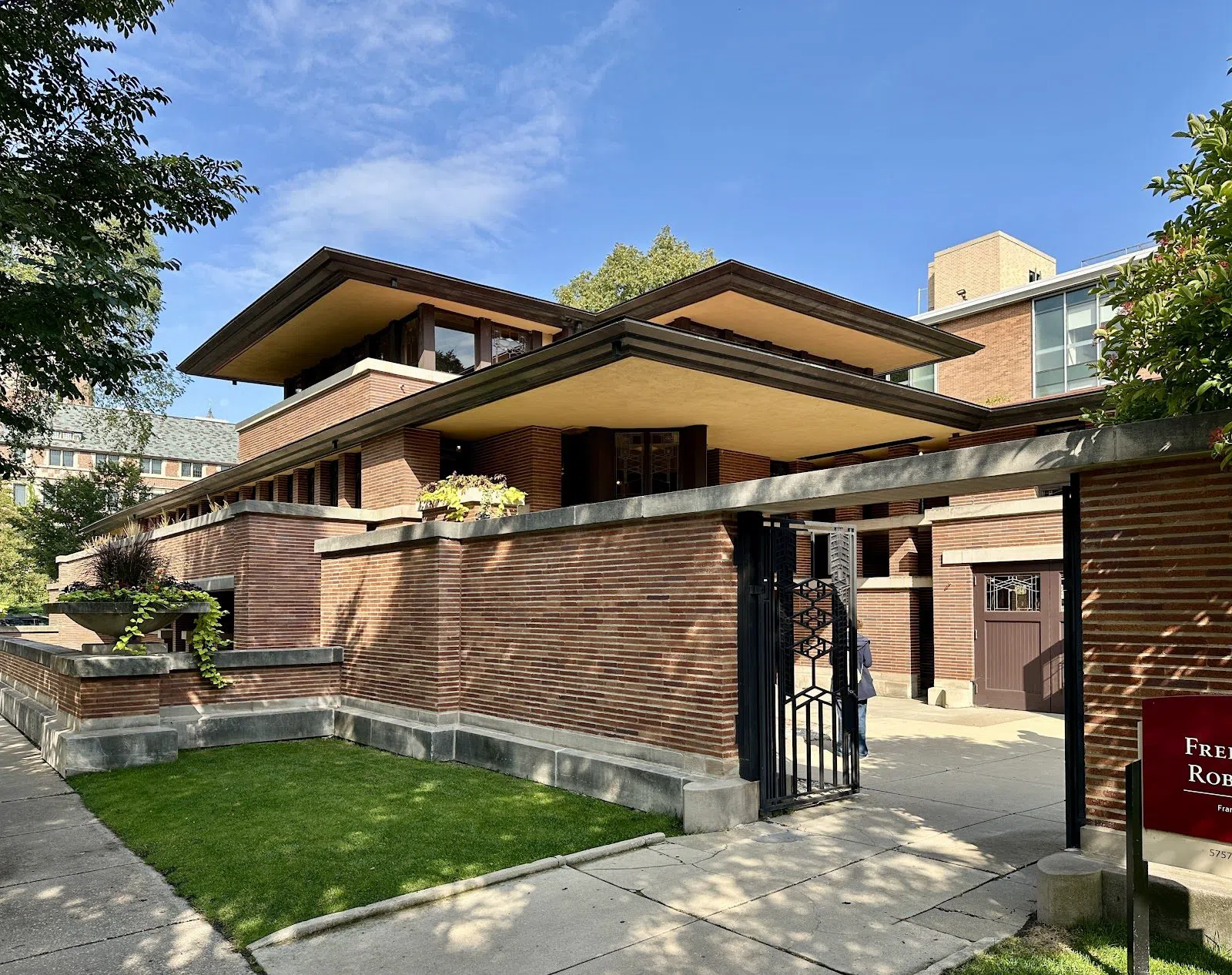
The Prairie School's fullest statement, though, is south of downtown, not west: the Frederick C. Robie House (Hyde Park, by the University of Chicago). Reopened after an $11m restoration to its 1910 vision, it is a UNESCO World Heritage Site and the definitive Prairie house — all cantilevered roofs and unbroken horizontal lines, as if the building were trying to lie down on the flat Midwestern land. Guided and self-guided audio tours (the latter in eight languages) run Thursday to Monday, around $25, with group tours bookable. Because it's on the far south side, treat it as its own half-day paired with the university campus rather than tacking it onto Oak Park.
Two houses, a temple, and a pilgrimage
A handful of essential buildings sit outside the neat downtown-and-Oak-Park loop, and they're worth the effort if your interest runs deep.
Glessner House (Prairie Avenue, South Loop) is the oldest thread in the story. H. H. Richardson's austere 1887 fortress of rough granite directly shaped both Sullivan and Wright, and it anchors what was once the grandest residential street in the country. Docent tours run 75 minutes on Wednesday, Friday and Saturday (about $20), with group and themed architecture walks bookable. It suits history-minded couples and small groups; it is not a walk-in.
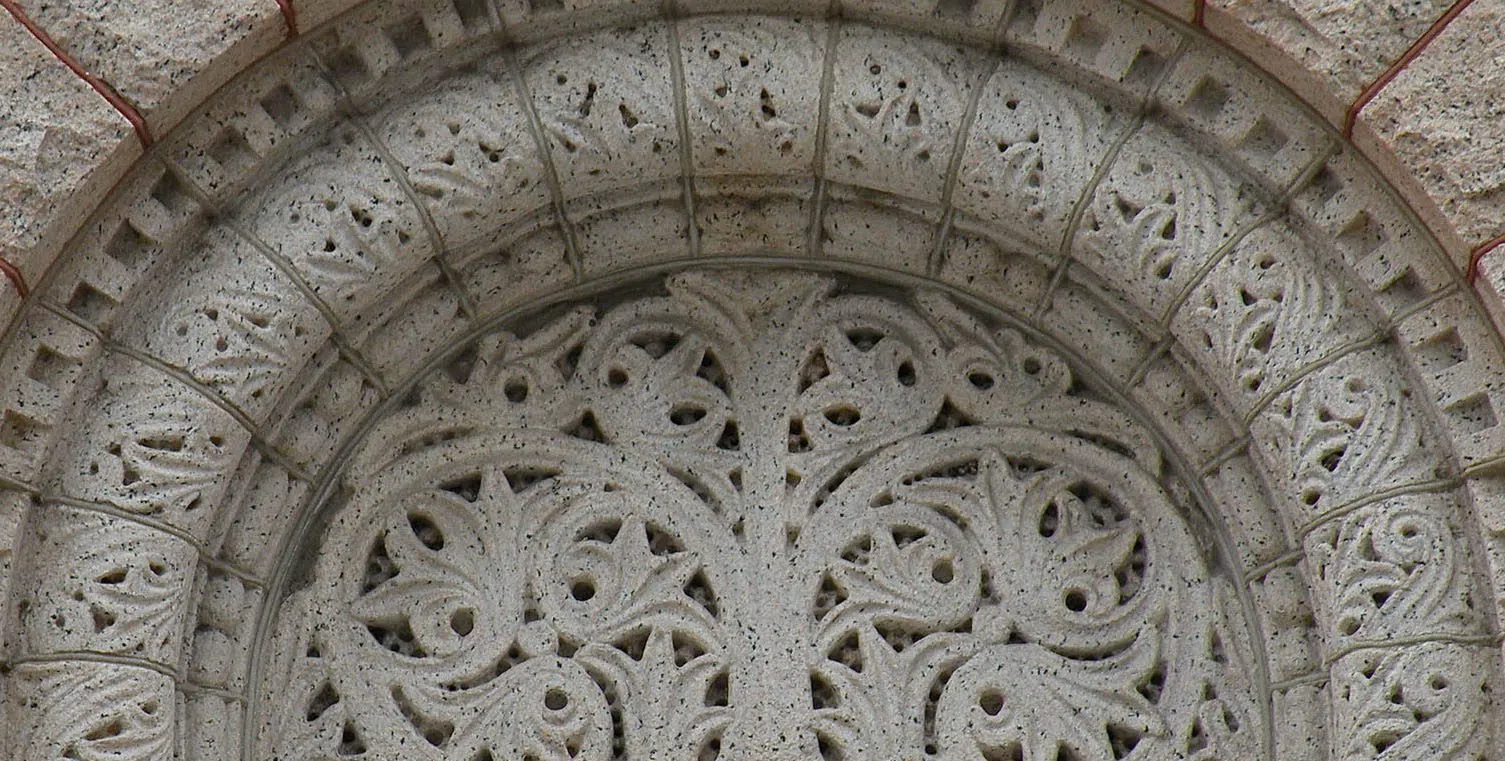
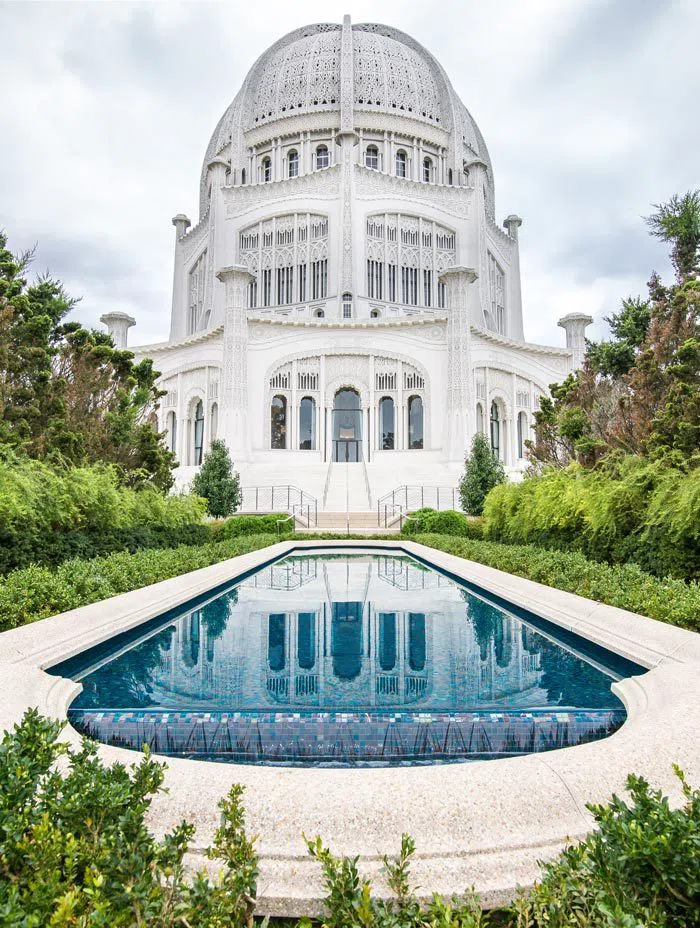
North of the city in Wilmette, the Bahá'í House of Worship (Wilmette, a lakeside suburb) is a change of register entirely — a serene, filigreed nine-sided temple and National Historic Landmark, the oldest surviving Bahá'í House of Worship anywhere. It's free, open to all daily from 6am to 6pm, groups are welcome, and there's a welcome centre on site. The lace-like ornament of its dome is unlike anything else in the region.
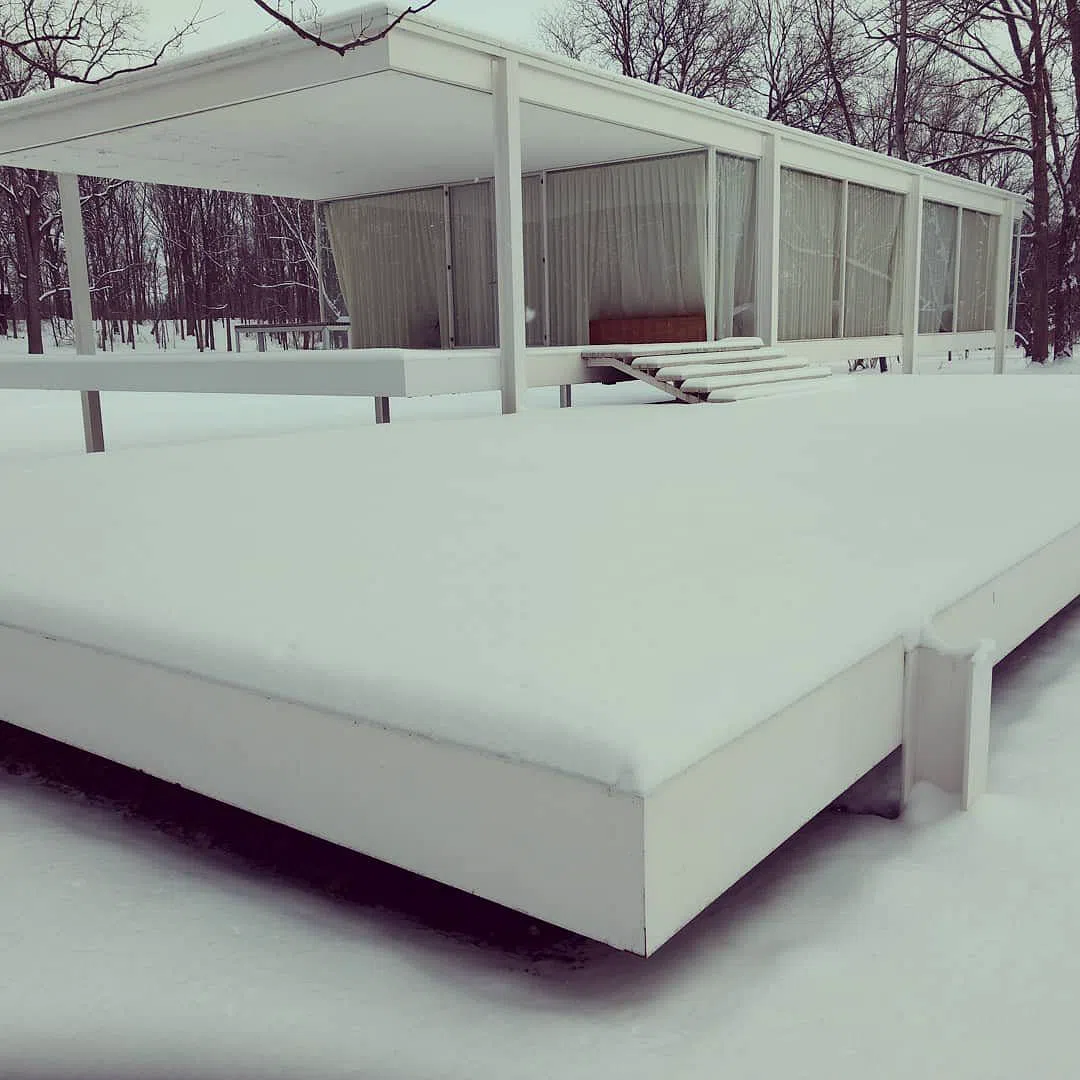
Finally, for true design pilgrims, the Edith Farnsworth House (Plano, roughly 60 miles / 90 minutes west) is the purest built statement of 'less is more' — a single glass-walled room floating above a flood plain. Guided house tours, plus special late-night and creative programmes, run by reservation (around $25–45); groups by arrangement. It is a dedicated day trip, best on a clear day, and honestly wasted on anyone in a hurry. If your architecture appetite stops at the skyline, skip it without guilt; if it doesn't, this is the trip's quiet climax.
Practical notes
Getting around: The downtown sights are walkable, and the 'L' train handles the rest cheaply — the Green Line reaches Oak Park, the Metra Electric line and buses reach Hyde Park, and Wilmette sits at the north end of the Purple Line. A reloadable Ventra card covers trains and buses; a day pass is worth it if you're hopping between the Loop, Oak Park and the temple in one push. Plano and the Farnsworth House realistically need a car.
Cash and tickets: Card is accepted almost everywhere, and the paid sights — cruise, observation decks, house museums — are all timed-entry and best booked online in advance. Summer weekends sell out; the Rookery and Cultural Center are your reliable free, no-booking fallbacks.
Timing: Two full days cover downtown plus Oak Park comfortably; a third lets you add Robie House, Glessner House, the Wilmette temple, or the Farnsworth pilgrimage. Book the river cruise for your first afternoon so the rest of the trip makes visual sense. Late spring through early autumn gives you the open boat decks and the free Pritzker Pavilion concerts; deep winter is spectacular but brutal on the lakefront.
Budget: Free days are genuinely possible here — the Cultural Center, the Rookery lobby, Millennium Park and the Bahá'í temple cost nothing. A paid day with a cruise, one observation deck and a house tour runs roughly $90–130 per person before food. For where to stay, start with a Chicago hotel search; a Loop or River North base keeps you within walking distance of most of the above, and the rest is a short train ride. For the wider city beyond its buildings, see our full Chicago guide.
Before you go
What is the best first thing to do on a Chicago architecture trip?
Take the Chicago Architecture Center River Cruise aboard Chicago's First Lady on your first afternoon. The 90-minute docent-narrated tour along the river gives you a clear chronological map of the skyline, so every building you see afterwards makes visual sense. Book several days ahead in summer — it sells out.
Which Chicago observation deck should I choose?
Willis Tower Skydeck (The Ledge) is the tallest and has the glass Ledge boxes, from about $32. 360 Chicago has the prettier lakefront-and-Mag-Mile view, plus the TILT platform and a 21+ CloudBar. For something different, go up the St. Regis Chicago sky bar for a drink instead of an observation ticket.
Can I see a Frank Lloyd Wright interior in Chicago for free?
Yes — the light court Wright remodelled inside The Rookery Building on LaSalle Street is free to walk into during business hours, making it the only major Wright interior in the city you can see without paying. Paid small-group guided tours (around $15–22) go deeper.
How do I get to Oak Park to see the Frank Lloyd Wright sights?
Oak Park is about a 25-minute ride from downtown on the CTA Green Line. From the station you can walk between the Frank Lloyd Wright Home and Studio, Unity Temple and the Historic District audio walk. Book the Home and Studio tour ahead, especially the ten-cap small-group walk.
How many days do I need for Chicago's architecture?
Two full days cover downtown plus Oak Park comfortably. A third day lets you add the Robie House in Hyde Park, Glessner House, the Bahá'í House of Worship in Wilmette, or a dedicated 90-minute-each-way trip to the Edith Farnsworth House in Plano.