The Chicago issue
Planning a Chicago Marathon Weekend Without Wasting Your Legs
A four-day plan for the 11 October 2026 race: where to sleep for the shortest walk to the corrals, when to face the expo, what to eat, and how to see the city without spending a single mile on it.

By Bram de WitThe long way round any city
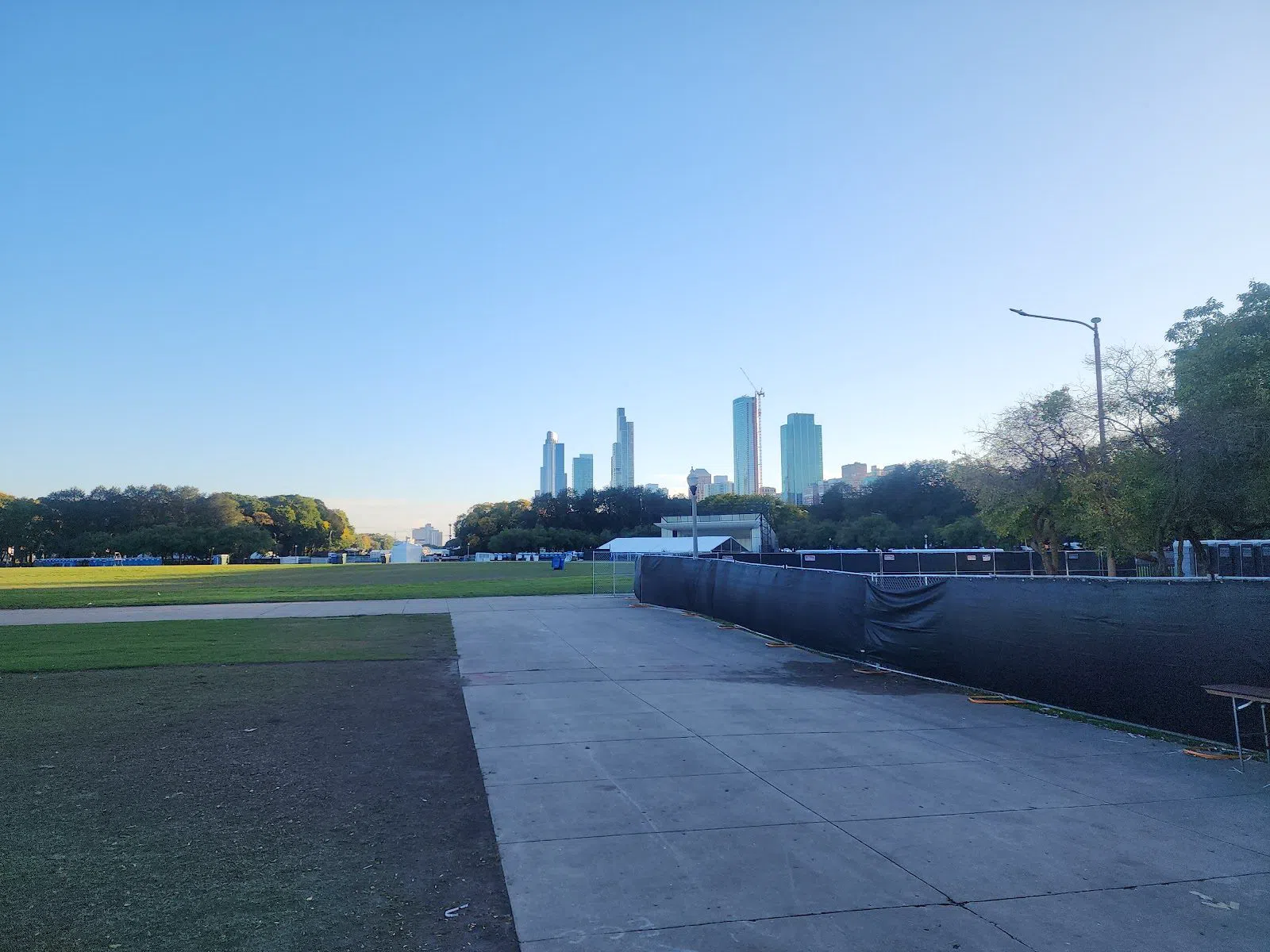
Grant Park is not natural ground. It is rubble from the 1871 fire tipped into Lake Michigan, then defended for decades by a mail-order merchant who sued the city over and over to stop anything being built on it. That stubbornness is why tens of thousands of runners can line up on flat lakefront grass a few hundred metres from their hotel beds on the second Sunday of October, and why a marathon weekend here is planned outward from one fixed point rather than assembled from a list of sights.
The 2026 race runs on Sunday 11 October, first wave away at 7.30am. Everything below hangs off that one time.
Book the walk to the corrals before you book the room
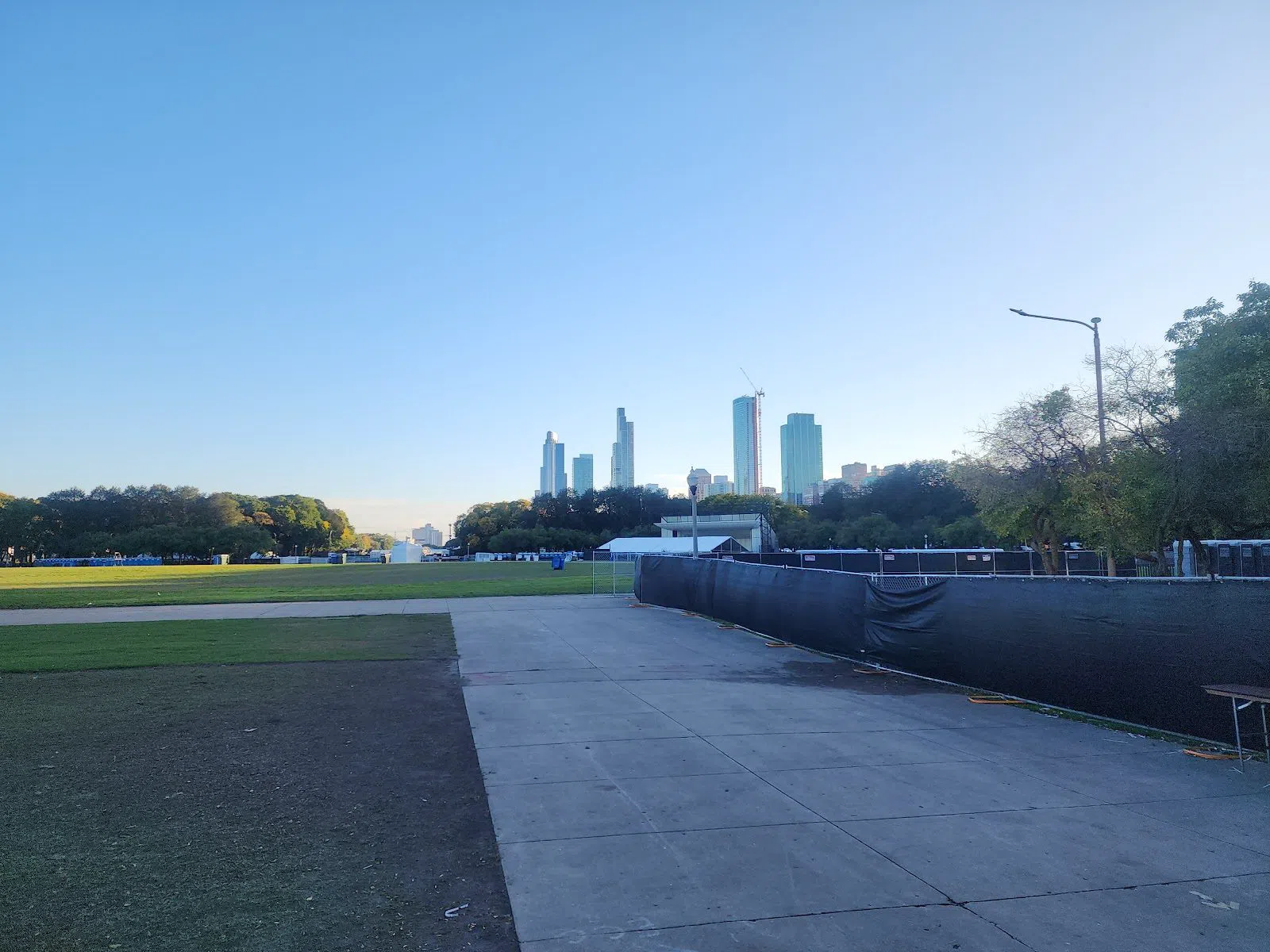
Grant Park (the Loop lakefront, with Butler Field holding both the start and the finish) is ordinary free parkland fifty-one weeks of the year and a fenced grid of lettered corrals and gear-check tents on race morning. Having the start and finish inside the same park is a real luxury: you are not bussed anywhere at 5am, and your bag comes back to you a two-minute walk from where you stopped running. The cost of that convenience is road closures that go up around the park early and stay up for hours. So the distance from your pillow to your corral is the first decision of the trip, and it outranks the room itself.
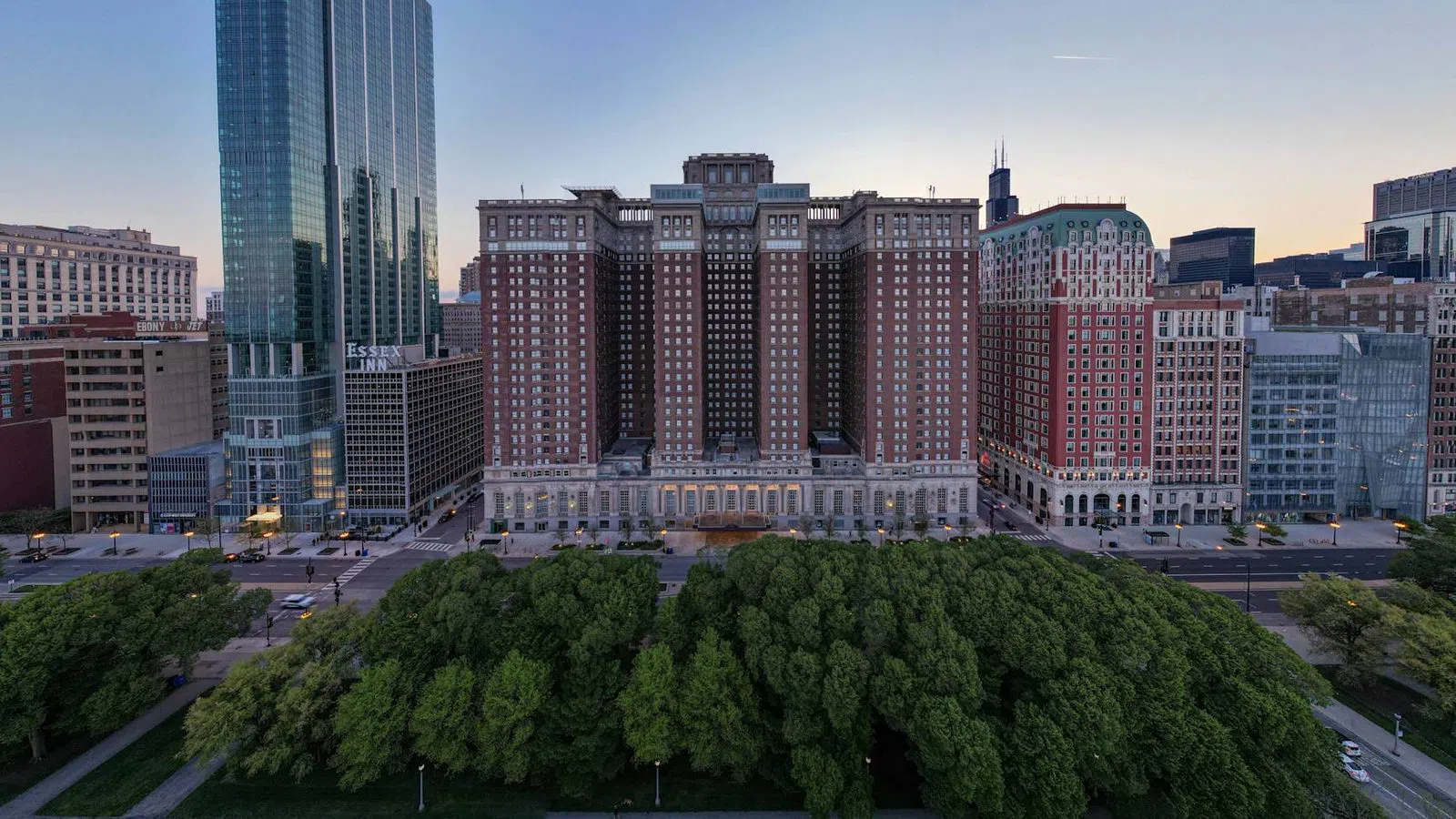
Hilton Chicago (South Loop, on Michigan Avenue) is the official headquarters hotel: 1,544 rooms and full event floors, roughly a five-minute walk to the corrals. It is the one downtown property that can absorb an entire running club without splitting it across three buildings, which matters more than it sounds when eleven people need to leave the lobby together in the dark. Rooms in the official race housing blocks are sold through the marathon's housing partner rather than the hotel's own booking page, and they go months ahead. Be ready for the price. The Hilton is normally mid-range, but race weekend rates sit well above that, so comparing against a random October Tuesday will only annoy you.
Le Méridien Essex Chicago (South Loop, facing the park) usually comes in a notch cheaper for a near-identical walk. It rebranded from Hotel Essex, so search it under the Le Méridien name or you will turn up stale listings and old rates. It takes standard blocks and connecting rooms, which suits families and small groups better than a headquarters hotel does, and the park-side rooms let supporters watch the start area from a warm window rather than standing on a closed street in the cold. Its rooftop bar takes reservations for small parties; anything larger has to go through the events team.
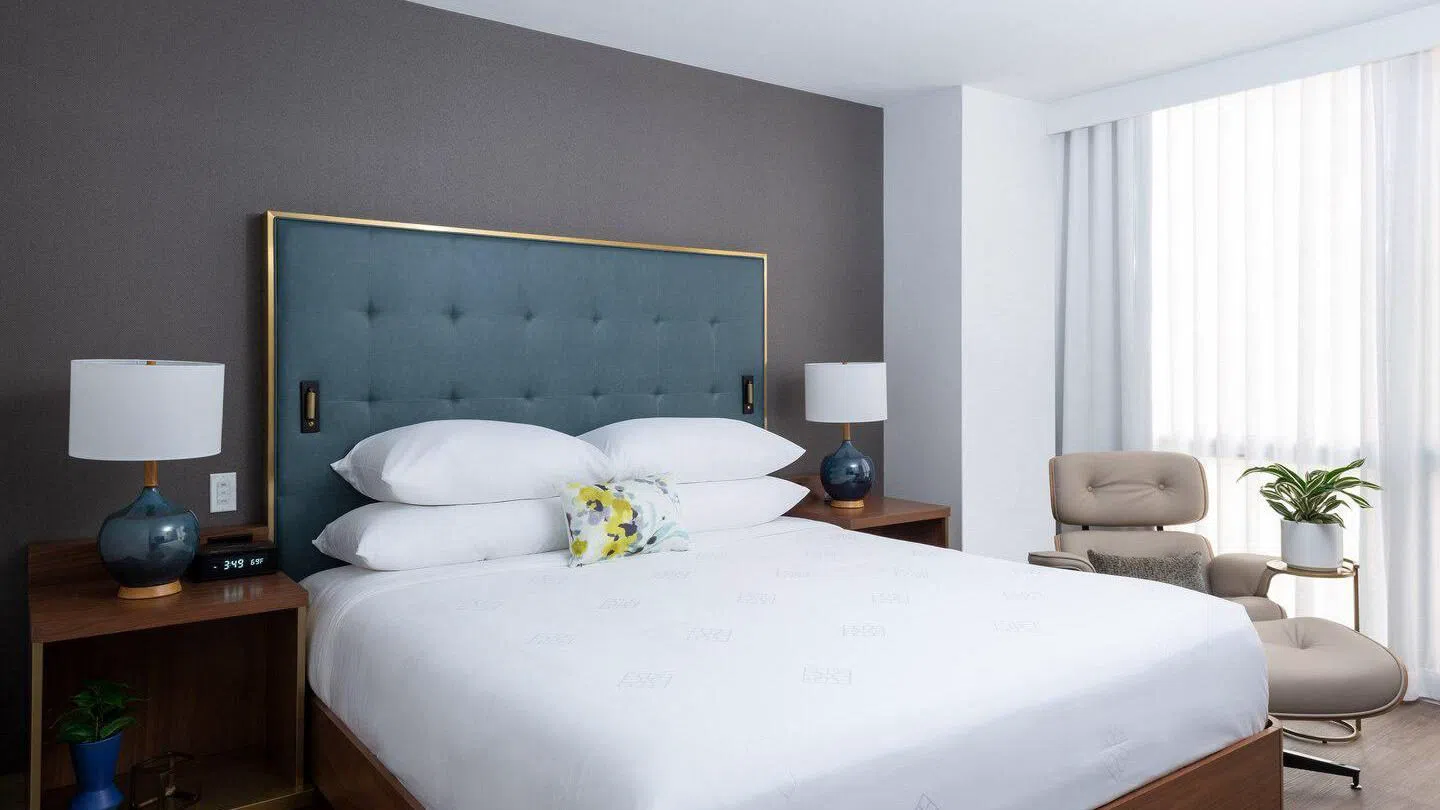
If both are gone (and by midsummer they often are), work outward through the Chicago hotel search and judge every candidate on one test: can you walk from the front door to Butler Field before dawn without needing to cross the course? A cheaper room that requires a rideshare on a morning when half the Loop is barricaded is not cheaper. Splitting a twin room with another runner is common and sensible here; the official housing system and the race's own channels are the safe way to arrange it rather than a stranger's payment link.
Plan your Chicago trip
Live prices from our booking partners.
Free cancellation on many rooms. We may earn a commission when you book.
Packet pick-up is the one fixed appointment of the weekend
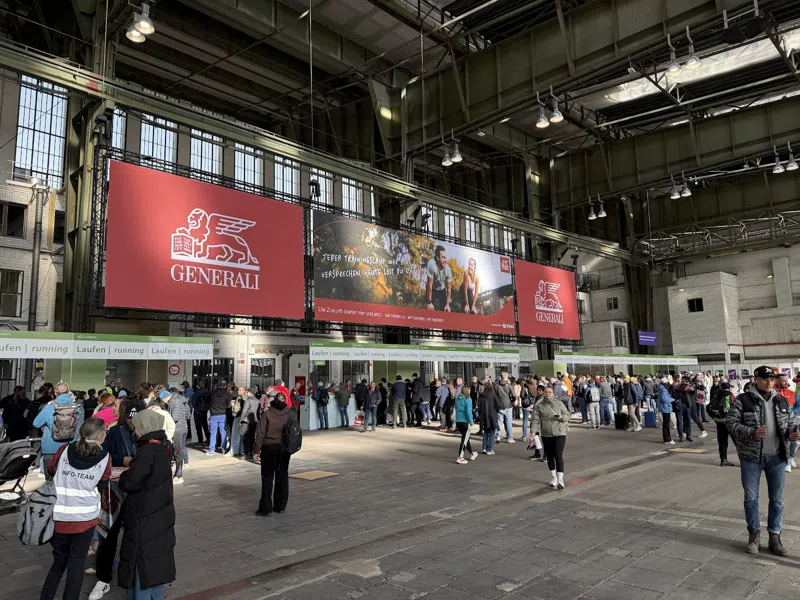
The Abbott Health & Fitness Expo (Near South Side, at McCormick Place, North Building, Hall B1) is where every runner collects their own bib, and the rules are unbending in a way that catches people out. You need photo ID, nobody can collect for anybody else (not your partner, not your coach), and there is no race-day pick-up. If you land Sunday morning without a bib, you do not run.
Thursday 8 October, 10am to 6pm, is the calm day and worth arranging your flights around. Friday 9 and Saturday 10 run 9am to 6pm and are a scrum, with the worst of it late Saturday morning. Entry is free and open to the public, so friends and family can walk in with you and browse while you queue. Allow ninety minutes inside plus travel each way. McCormick Place is a couple of miles south of the Loop, which makes it a bus, a train or a car, never a walk on legs you want fresh.
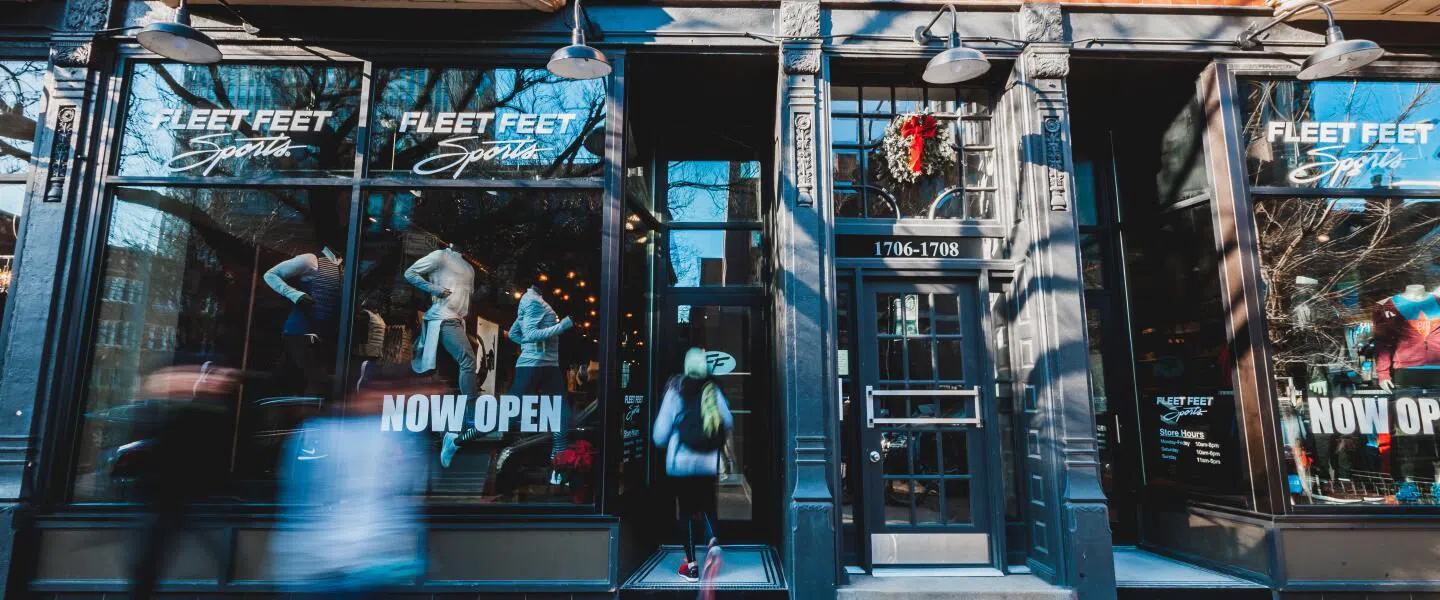
For the small things you forgot rather than the things you want to try on, Fleet Feet Old Town (Old Town) is the better errand: the flagship of the city's running shop chain, and a far quicker way to replace a gel flavour or an anti-chafe stick than forty minutes in an expo queue. It is a small shop, so a dozen people arriving at once fills it. Send two of the group, not all six. They also run free evening group runs on Mondays, Tuesdays and Wednesdays that visitors can simply turn up for, which is a good way to arrive early and shake off a long flight.
Where to shake the legs loose
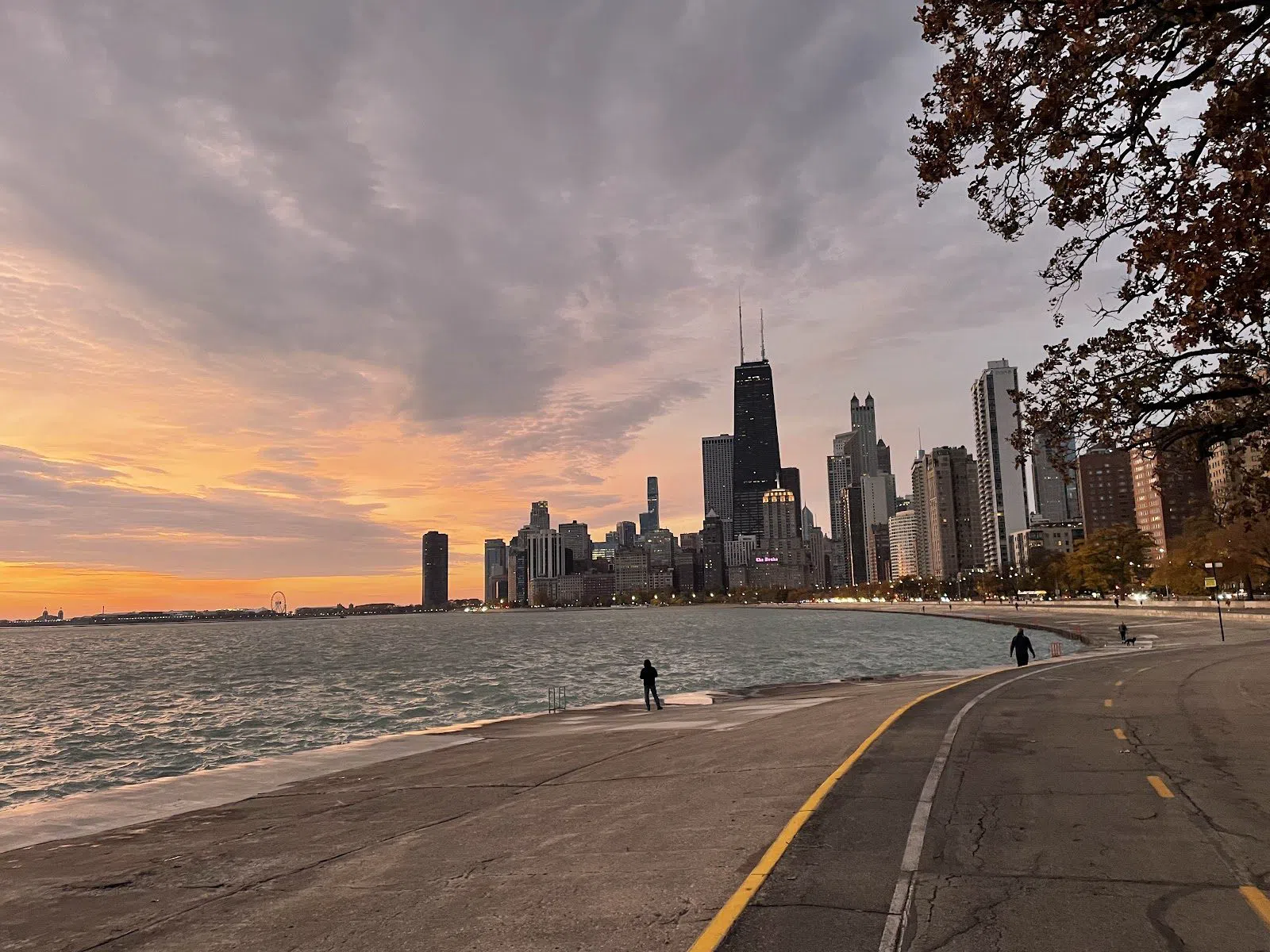
The Chicago Lakefront Trail answers the shakeout question so completely that there is barely a second option. It runs more than eighteen miles along the lake, flat and traffic-free, with pedestrian and cycle paths separated for most of its length, and it starts minutes from the race hotels. Twenty to thirty easy minutes on the Saturday, out and back, is all anyone needs; the temptation to keep going because the water is on your left and the skyline is on your right is the trap. One practical check before you go: the Park District has used the short Oak Street to North Avenue stretch as a construction staging area, so look at their site the week before rather than assuming a clean run north.
The two dinners worth planning around
Monteverde Restaurant & Pastificio (West Loop, on Randolph Street) is the best plate of pasta in the city and the carb-load that people plan whole trips around. Two constraints: it books through Resy and the good slots vanish the moment the window opens, and it is closed Sundays and Mondays. That makes it a Friday or Saturday plan and never a post-race dinner. Tables run small, so a party of eight or more should call or email the restaurant directly instead of fighting the online system.

Quartino Ristorante (River North) is the pragmatic counterweight: Italian small plates built for sharing, moderate prices, private dining rooms for bigger parties, and a kitchen running to 12.30am seven nights a week. It covers both jobs, the night-before plate of pasta when Monteverde is full, and the post-race table for twelve that nobody thought to organise. Turning up at 9pm on Sunday with a group and getting fed is a rare thing, and worth knowing about.
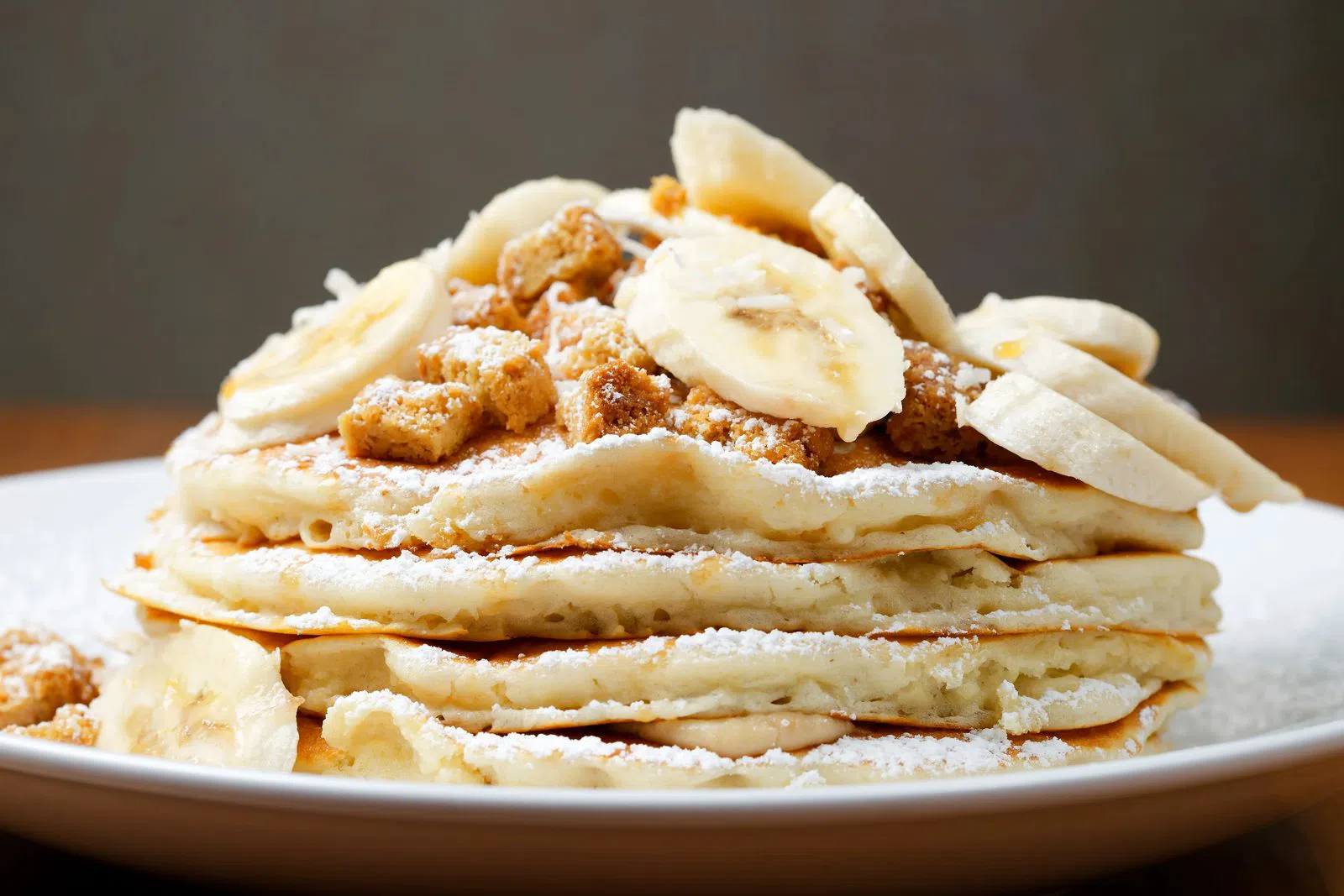
For Saturday breakfast, Wildberry Pancakes and Cafe (Prudential Plaza, two blocks from Millennium Park) is the obvious fuelling stop, open 7am to 2pm with a walk-in waitlist app. Big tables exist, but a group of eight on a Saturday morning should expect to wait, so put your name down and walk the park while it moves. It is no use to you on race morning: a 7am opening is far too late for a 7.30am start, and you should be eating what you trained on, out of your own bag, at five.
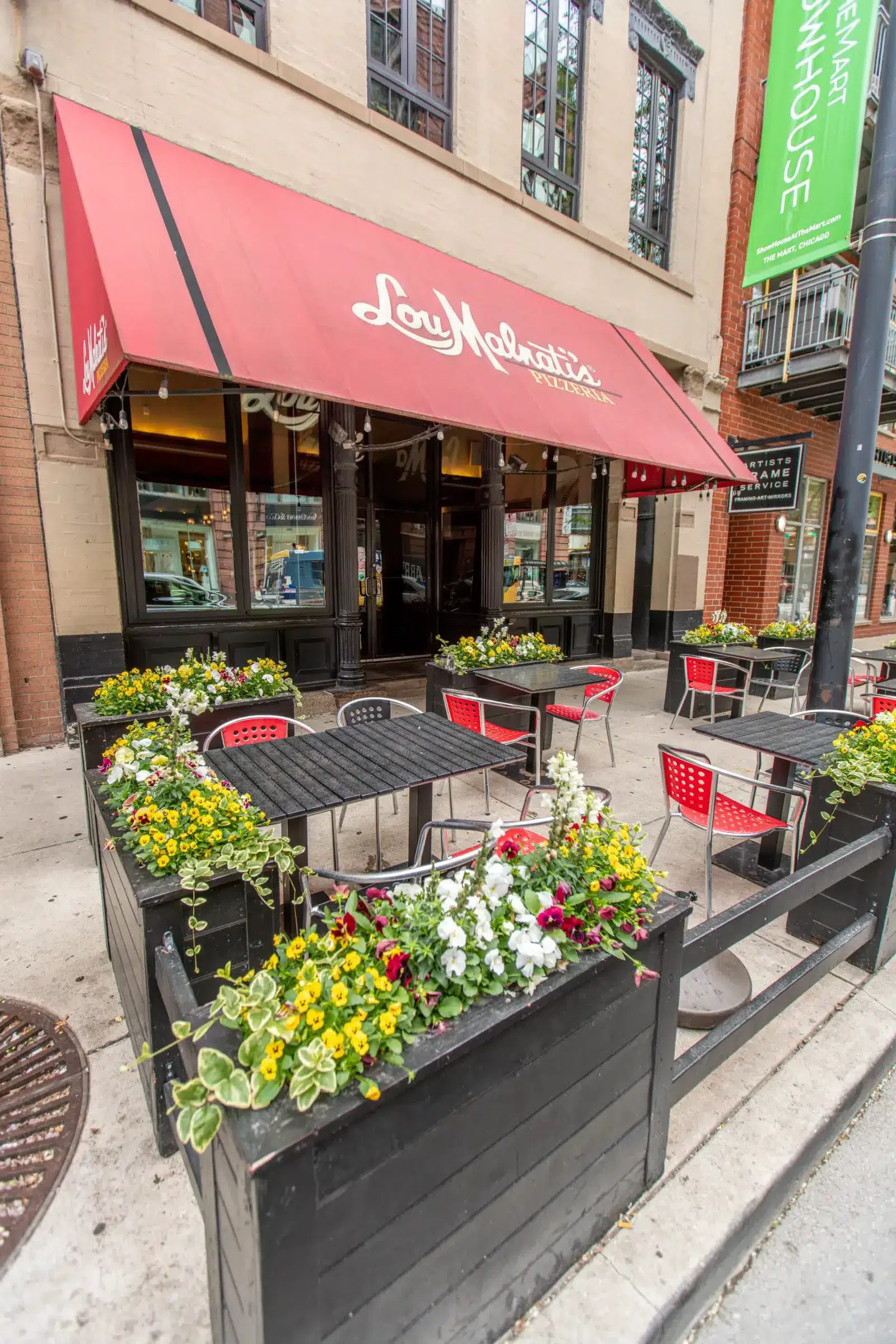
A word on Lou Malnati's Pizzeria (River North) before anyone gets ideas. It is the definitive deep dish and it belongs on this trip, but on Sunday evening, not Saturday. A pizza takes about forty-five minutes to bake, large parties are welcome, and ordering ahead for a crowd or taking it away is the sensible move. Eating one the night before a marathon is a mistake runners make exactly once.
Sightseeing that costs nothing below the knee
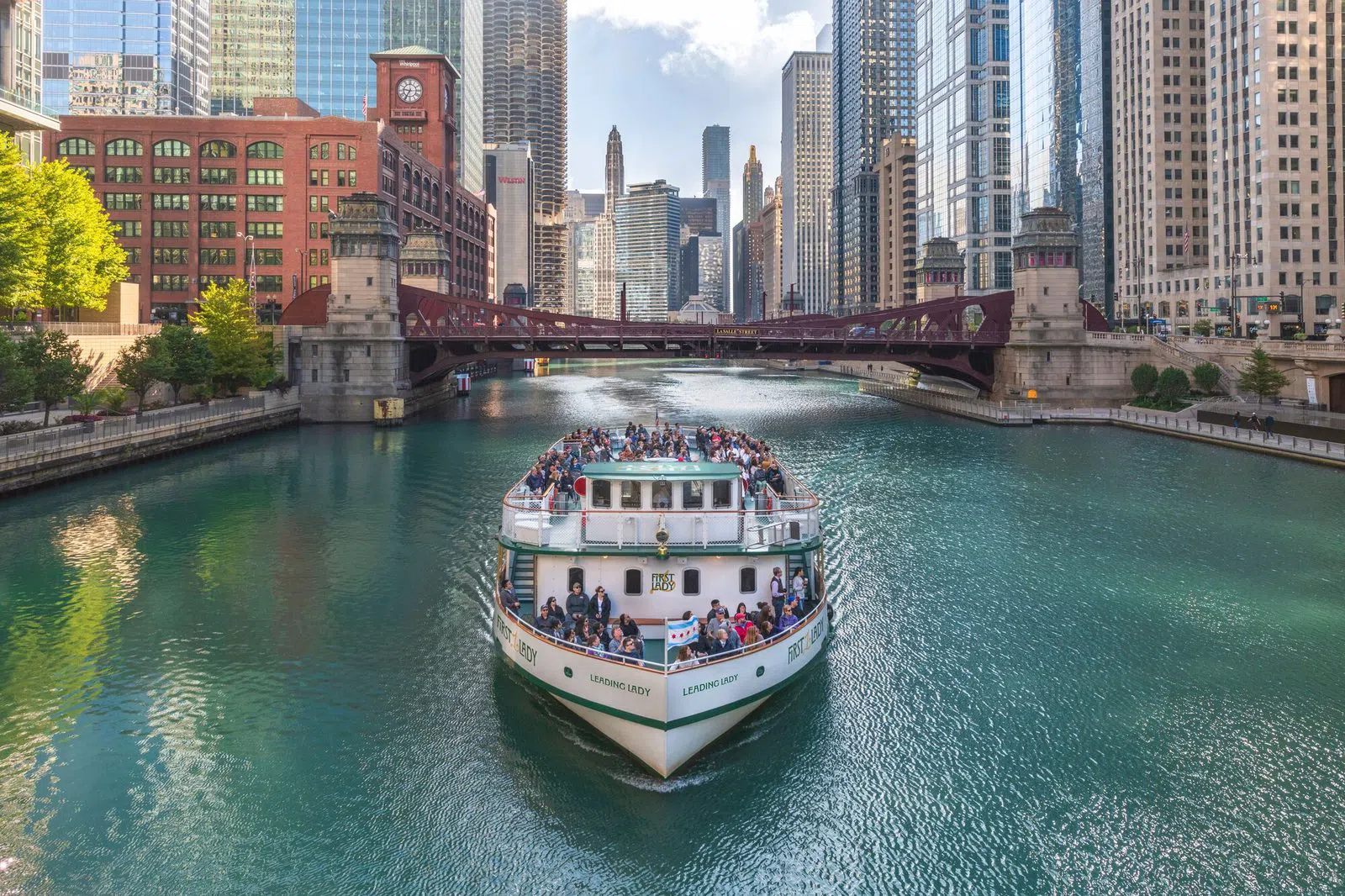
The rule for the two days before is simple: sit down, and see the city from something that moves you. The Chicago Architecture Center River Cruise aboard First Lady (departing the Michigan Avenue Bridge dock) is ninety minutes seated on the water, from about $57 a head, sailing through October. You get the whole argument of the city from a bench: how a fire cleared the ground, how the steel frame let the buildings go up instead of out, and how the river's flow was reversed at the turn of the last century so the sewage stopped running into the drinking water. Parties of twenty or more go through the centre's group and private tours desk; anyone smaller books standard departures online.
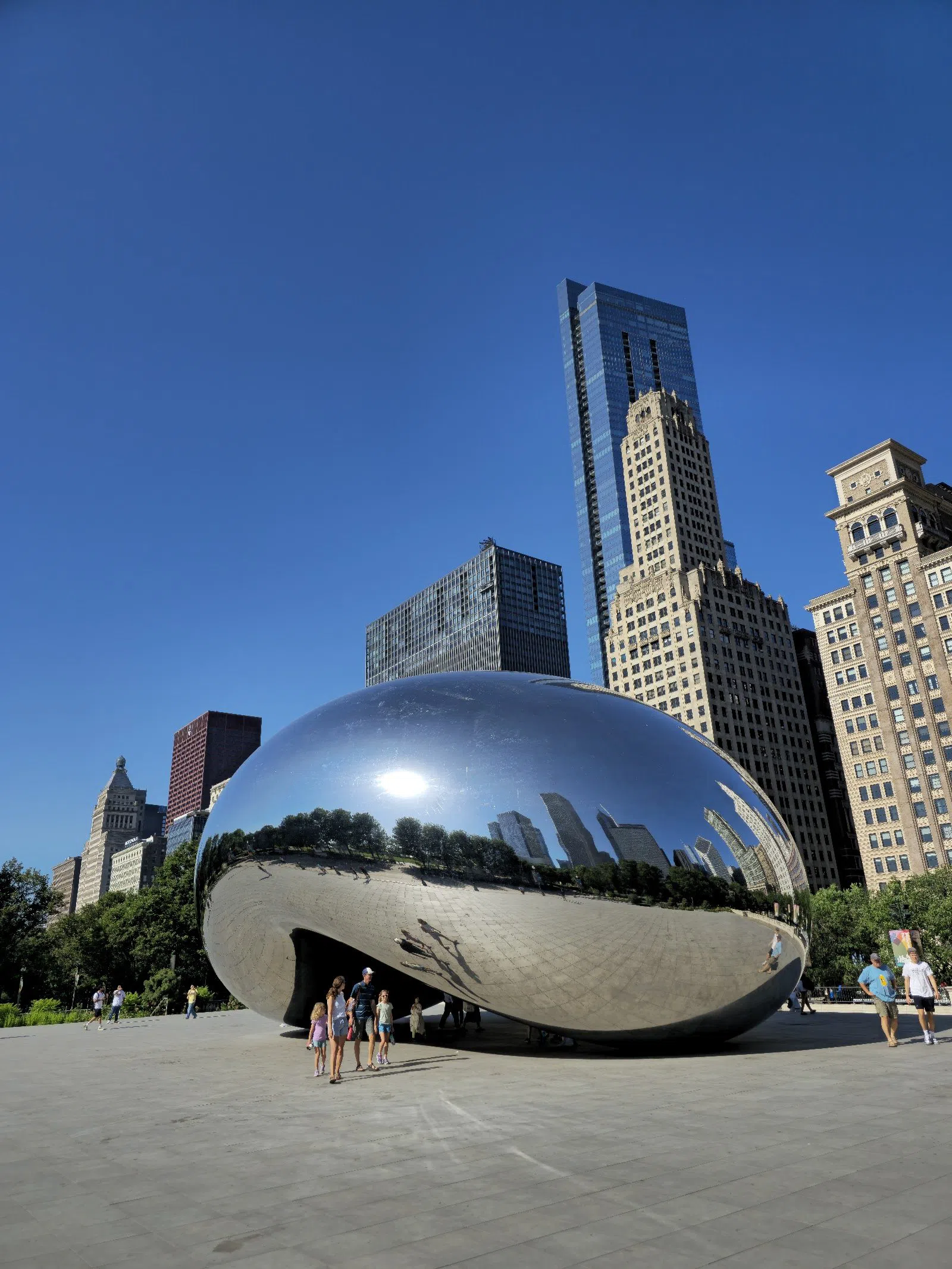
Millennium Park (the Loop) sits directly between the race hotels and the finish line, so Cloud Gate is a five-minute detour rather than an outing. It is free, open daily 6am to 11pm, and the plaza, reopened fully accessible after its rebuild, absorbs a group of any size. Go early if you want a photograph without four hundred people in it.
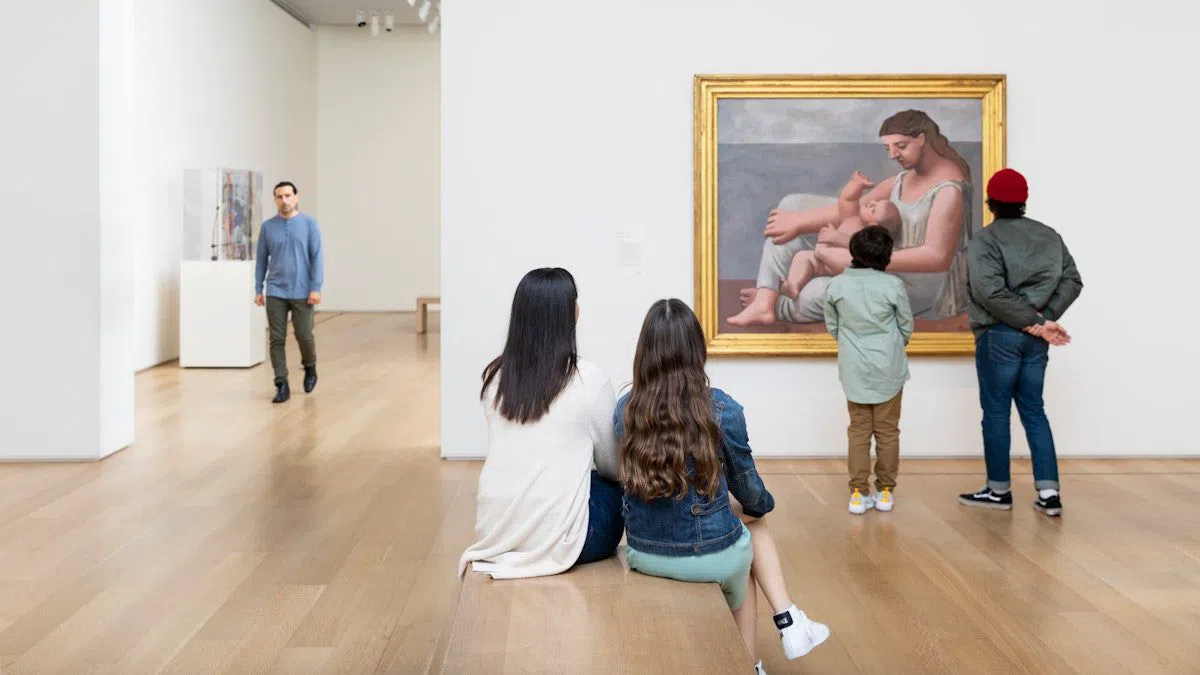
The Art Institute of Chicago (Michigan Avenue, two minutes from the finish) is the single best use of a marathon afternoon, and I say that as somebody who normally thinks museums are wasted on tired people. It has benches. Lots of them. Tickets are timed and booked online at around $32 for an adult non-resident, group rates apply from ten people, and it is open 10am to 5pm on marathon Sunday. Note that it closes on Tuesdays, which catches people extending the trip by a day.
Where the supporters should stand
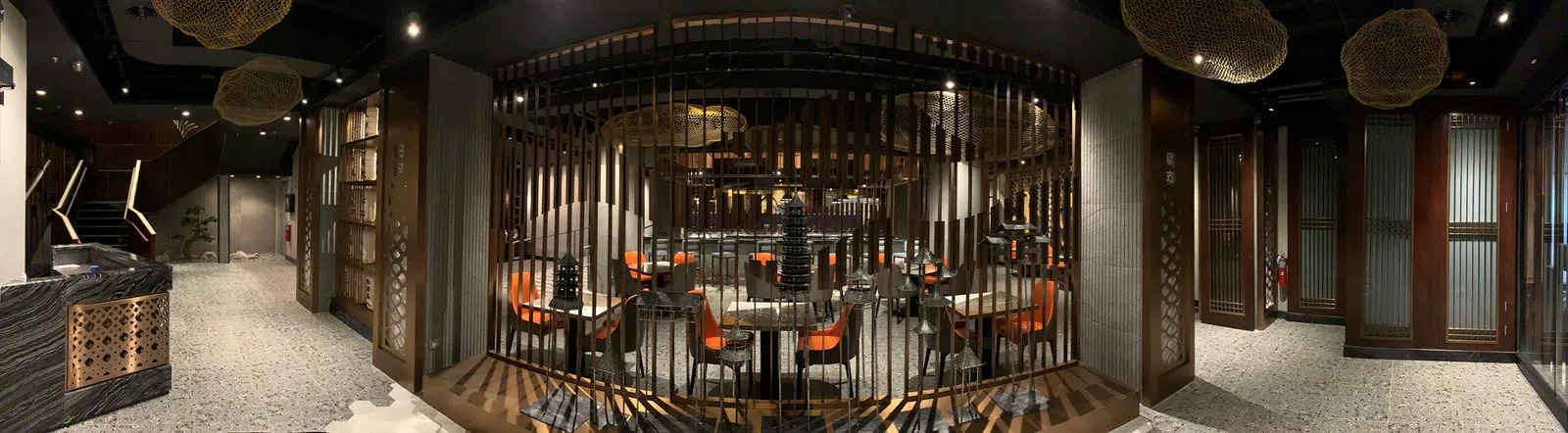
The course turns through Chinatown at around mile 21, which is both the hardest part of the race and the best place to be standing in it. MingHin Cuisine (Chinatown) is a short walk from that turn, a repeat Michelin Bib Gourmand, and one of the easiest places anywhere near downtown to seat a large group without booking a private room: banquet-style round tables, a sharing menu, modest prices. Supporters can cheer, walk two minutes and be eating dim sum before their runner has crossed the line.
The timing takes a little arithmetic. Waves go off from 7.30am and are spread across the following hour or so, so work from your runner's actual corral time rather than the headline start. A first-wave runner on four-hour pace reaches Chinatown late morning; give yourself a buffer of twenty minutes either side and use the race's live tracking. Getting there is the easy part: the 'L' runs while the roads do not, and the Red Line drops you at Cermak-Chinatown.
One thing to settle in advance: race morning splits groups. Runners in different waves are funnelled through different corral entrances with gear check in between, so agree a post-race meeting point that is a named landmark rather than "by the finish", and agree it on Friday, because the mobile network in Grant Park at midday on marathon Sunday is not a plan.
The first hour after the finish
Cindy's Rooftop at the Chicago Athletic Association (Michigan Avenue, looking over Millennium Park) is the celebration drink with the view back down towards the finish. Reservations cap at ten guests through OpenTable and anything larger has to be arranged as a private booking through the venue's events team. Book it weeks out for race Sunday, because every runner in the city works out the same idea by about two in the afternoon, and the walk-in queue on the stairs is long. Prices are what a rooftop with that outlook charges.
Monday belongs to your quads
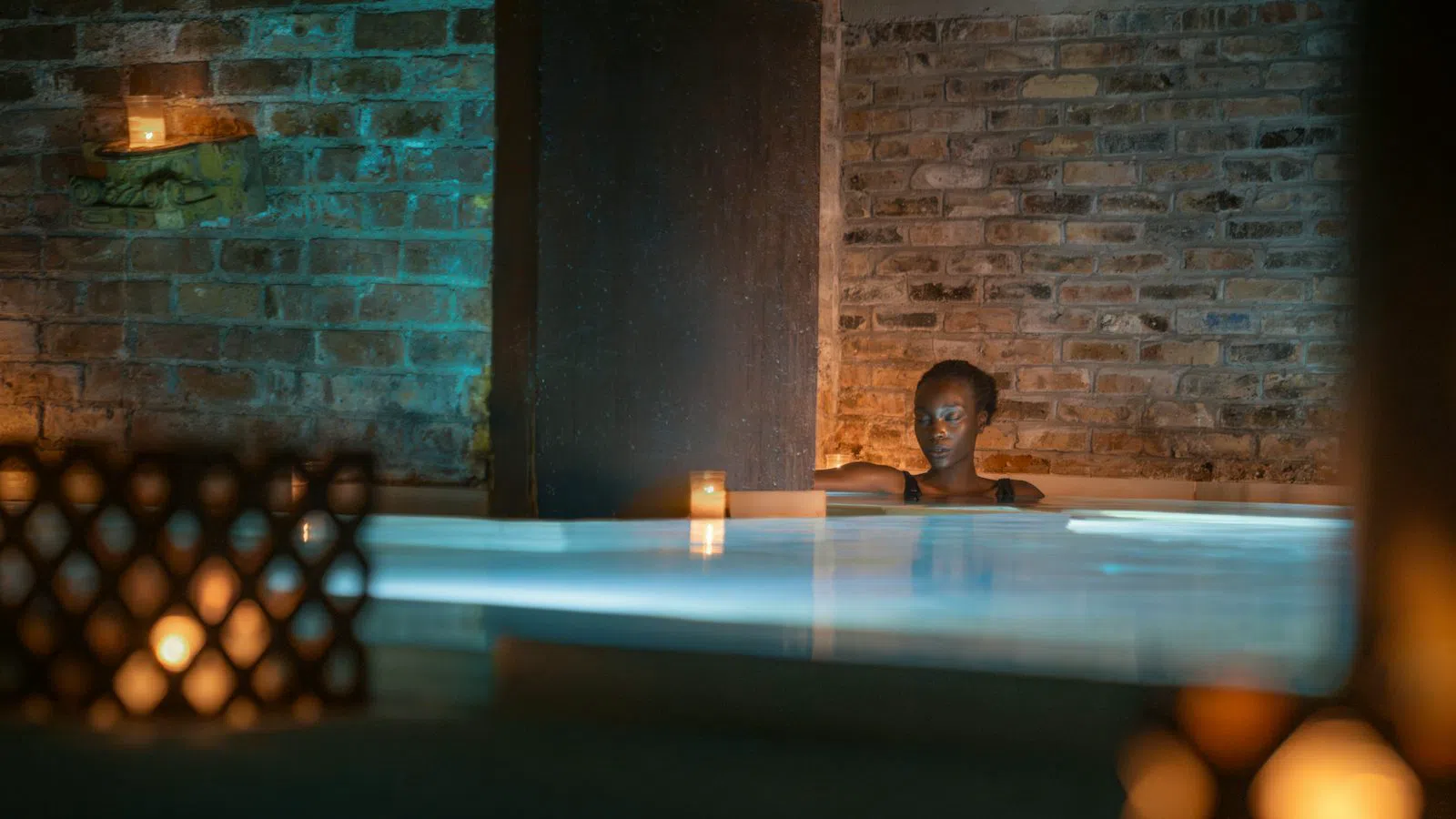
AIRE Ancient Baths Chicago (just west of the river) is the recovery booking, and the day to make it is Monday, not the Saturday before. Sessions are timed and pre-booked, the standard format is built around two people, and the room is deliberately hushed, which suits a pair or a small quiet group and not ten people still celebrating. A hot-and-cold circuit does considerably more for wrecked quads than another beer, and marathon-weekend slots go early, so book it when you book the hotel.
Practical notes for the weekend
Transport is easy. The 'L' is the answer to almost everything, including both airports: Blue Line from O'Hare, Orange Line from Midway, both running into the Loop for a couple of dollars, with a surcharge on trips leaving O'Hare. Tap a contactless card or phone at the gate; a Ventra card is only worth buying if you are here a week. On race morning, assume the streets around Grant Park are shut and walk. Rideshare surge on Sunday afternoon is brutal and the pick-up points move because of the closures.
You will not need cash. Cards and phones work everywhere listed here. Tipping is not optional in restaurants: 18 to 20 percent is normal, and many places now add a service line to the bill, so read it before you double up.
Land Thursday if you can and do the expo the same day. Friday is for the cruise and dinner, Saturday is for a short shakeout and an early night, Sunday is the race, and Monday is the baths and a slow flight. October mornings by the lake are cold and the afternoons are often not, so pack throwaway layers for the corral and something warmer than you think for supporters standing still for four hours.
Room rates are the volatile number, running well above normal for these four nights and rising the longer you leave it. Beyond that, a realistic sketch per person: the boat around $57, the Art Institute around $32, dim sum or small plates well under $50, Monteverde and Cindy's meaningfully more, the lakefront and both parks free. Book the hotel, the packet-pick-up day, Monteverde and the baths first; everything else in this guide can be arranged in the week before. For what to do with the days either side, the wider Chicago guide covers the city at a normal walking pace.
Before you go
When is the 2026 Chicago Marathon, and how early should I book a hotel?
Sunday 11 October 2026, with the first wave starting at 7.30am. Official race housing blocks at the Hilton Chicago and other downtown hotels are sold through the marathon's housing partner and routinely sell out months ahead, so book as soon as your entry is confirmed. Race-weekend rates run well above the usual downtown level, which is normal for the date rather than a listing error.
Can somebody else collect my race packet for me?
No. Every runner must collect their own packet in person at the Abbott Health & Fitness Expo at McCormick Place, with photo ID. There is no proxy pick-up and no race-day pick-up. The expo runs Thursday 8 October, 10am to 6pm, and Friday 9 and Saturday 10 October, 9am to 6pm. Thursday is the calm day; late Saturday morning is the worst.
Which hotel gets me closest to the start line?
The Hilton Chicago is the official headquarters hotel and roughly a five-minute walk to the corrals in Grant Park, with enough rooms and event space to hold a whole club. Le Méridien Essex Chicago faces the park for a near-identical walk and usually costs a little less; book it under the Le Méridien name rather than its former Hotel Essex branding.
Where should friends and family watch the race?
Chinatown, around mile 21, is the most useful place to stand: it is the hardest stretch of the course and easy to reach on the Red Line to Cermak-Chinatown while the roads are closed. MingHin Cuisine is a short walk from the turn and seats large groups at banquet tables, so supporters can cheer and then eat before the runner finishes. Agree a named post-race meeting point in advance, because mobile coverage in Grant Park at midday is unreliable.
What should I plan for the days either side of the race?
Keep your feet up. A 90-minute Chicago Architecture Center river cruise aboard First Lady is the best pre-race sightseeing because you sit down for all of it, and Millennium Park is a five-minute detour rather than an outing. Afterwards, the Art Institute of Chicago is open 10am to 5pm on marathon Sunday, two minutes from the finish and full of benches, and AIRE Ancient Baths is worth booking for the Monday.